
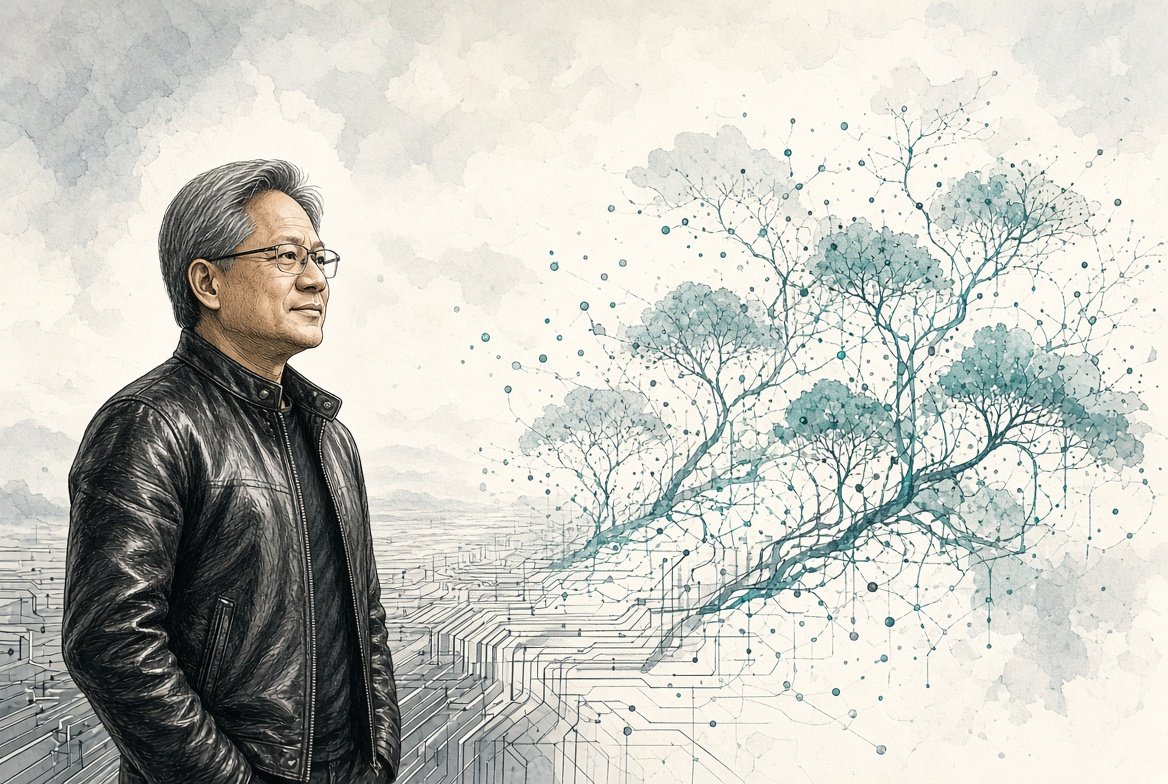
In an era where tech executives frequently parade before parliamentary committees and congressional hearings pleading for government oversight, Nvidia CEO Jensen Huang stands out as a clear, unyielding exception. While leaders from rival AI organizations warn of existential catastrophes and advocate for strict federal licensing regimes, Huang remains firmly unconvinced that we need a new rulebook for artificial intelligence.
To understand why the head of the world’s most crucial AI hardware supplier holds this view, one has to understand how he views the technology itself. Huang doesn’t see artificial intelligence as a mythical, autonomous entity rapidly escaping human comprehension. To him, AI is an extraordinary achievement in software engineering—and like any software, its control remains strictly in the hands of those who build it.
An Engineering Problem, Not an Alien Mind
The core of Huang’s philosophy rests on a fundamental distinction: AI safety is an engineering discipline, not a regulatory problem. When software engineers design autonomous vehicles, aircraft flight software, or medical imagery instruments, they do not wait for new legislation before deciding how to make these systems safe. They build redundancy, run rigorous stress tests, set boundary controls, and create strict fail-safe mechanisms.
“When you view artificial intelligence as a complex engineering system rather than an unpredictable force, safety becomes a technical requirement, not a legislative debate.”
Huang argues that AI models should be evaluated through the exact same lens. Developers can—and must—build technical guardrails directly into the architecture of neural networks. If a model generates hallucinatory outputs, leaks restricted data, or exhibits unsafe behaviors, that represents a system flaw to be debugged, tested, and resolved through better red-teaming and alignment techniques. Seeking a government mandate to solve a code-level defect misdiagnoses the nature of the challenge.
The False Choice Between Speed and Control
A central pillar of the regulatory debate is the assumption that tech companies are caught in a reckless race, forced to choose between speed and safety. Tech leaders seeking government intervention frequently point to this dynamic, arguing that without a universal, legally enforced pause, competitive pressure will force everyone to ship dangerous tools.
Huang rejects this premise outright, viewing it as a false dilemma. In his view, a company can operate with extreme speed while maintaining full operational control over its releases. If an AI lab discovers that its model is behaving unpredictably or failing safety protocols, the solution isn’t to petition lawmakers for an industry-wide slowdown—it is to exercise basic engineering discipline and hold back deployment until the model is ready.
The responsibility, Huang maintains, rests squarely on the shoulders of the builders. A self-imposed pause by a company that takes pride in its product quality is far more effective and responsive than bureaucratic slow-downs dictated by legislative bodies struggling to keep pace with code updates.
Existing Laws Already Apply to AI
Another key argument against new AI-specific rules is that the modern legal system is far from a lawless frontier. Opponents of fresh regulation point out that existing legal frameworks—covering product liability, fraud, intellectual property, corporate negligence, and consumer protection—already cover the misuse or harm caused by software, regardless of whether that software relies on basic algorithms or deep neural networks.
The Industry Split:
- Pro-Regulation Camp (e.g., Anthropic, OpenAI): Advocates for government licensing, oversight bodies, and coordinated industry slowdowns to prevent systemic existential risks.
- Pragmatic Camp (e.g., Nvidia, Meta): Argues that existing liability laws, market pressures, and technical guardrails provide sufficient accountability without stifling innovation.
If an automated financial system commits fraud, or if an AI-driven medical advice tool causes physical harm, existing liability frameworks provide clear avenues for accountability. Furthermore, market forces act as a powerful, real-time regulator. In a commercial landscape where trust is paramount, shipping unreliable, unsafe, or harmful software inflicts catastrophic brand damage and crippling financial losses. These real-world risks provide companies with an inescapable incentive to self-regulate thoroughly before pushing code to production.
Cutting Through Doomsday Hyperbole
Underlying much of the call for new legislation is the fear of existential threat—scenarios in which superintelligent systems outsmart human control and pose a threat to civilization. Huang has consistently pushed back against these sensationalized narratives, framing them as counterproductive distractions that shift focus away from actionable, everyday software safety.
By framing AI as a manageable technological tool rather than an existential menace, Huang advocates for a grounded, pragmatic approach. Premature, sweeping regulations run a heavy risk of locking in incumbent dominance, stifling open-source innovation, and slowing down beneficial applications in healthcare, science, and energy—all while doing little to improve the actual technical safety of the software.
Ultimately, Jensen Huang’s perspective is a vote of confidence in the fundamentals of sound engineering and existing legal accountability. In his view, the path forward doesn’t require new government bureaucracies or complex regulatory regimes—it simply requires developers to take responsibility, test thoroughly, and build software that works.