
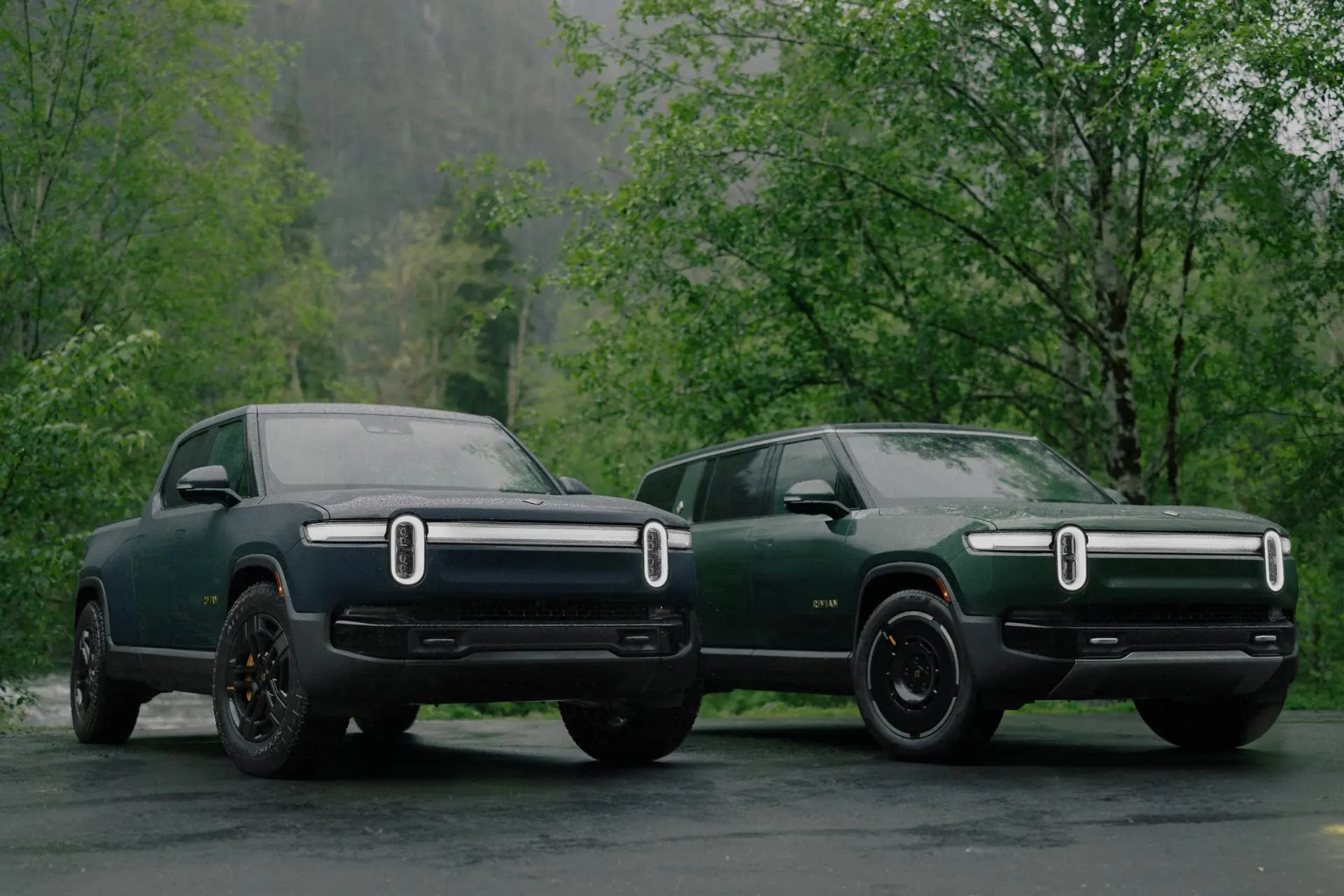
In the cutthroat world of electric vehicles, where slowing demand, fierce competition, and massive capital requirements have claimed casualties like Fisker and challenged even giants like Tesla, Rivian Automotive is charting a bold path to longevity. No longer content to rely solely on selling premium trucks and SUVs, the company is transforming into a multifaceted technology platform. At its inaugural Autonomy & AI Day on December 11, 2025, in Palo Alto, California, Rivian laid out an ambitious vision: recurring software revenue, advanced autonomy, commercial fleet dominance, strategic partnerships, and even ventures into adjacent industries like robotics and micromobility.
This multi-pronged strategy isn’t just about survival—it’s about positioning Rivian as a leader in the software-defined future of mobility. As CEO RJ Scaringe emphasized during the event, the goal is to create vehicles that continuously improve over time, generating high-margin income streams while scaling production with more affordable models like the upcoming R2 SUV.
The Core Challenge: A Tough EV Market
Rivian has delivered impressive vehicles—the R1T pickup and R1S SUV have earned accolades for their performance, off-road capability, and innovative design. But the broader EV landscape in 2025 has been challenging. High interest rates, waning consumer incentives, and increased competition have slowed growth. Rivian, like others, has faced production ramps, cost pressures, and the need for continuous capital infusions.
Yet, unlike pure hardware-focused automakers, Rivian is betting big on software and services to create recurring revenue and reduce dependency on volatile vehicle sales margins.
Autonomy as the Cornerstone: From Hands-Free to Eyes-Off
The star of Autonomy & AI Day was Rivian’s push into advanced driver assistance and eventual full autonomy. The company introduced Autonomy+, a subscription service launching in early 2026 priced at $2,500 one-time or $49.99 per month. This unlocks “Universal Hands-Free” driving—point-to-point hands-free (but eyes-on) capability across more than 3.5 million miles of roads in North America, covering most marked streets.
This is a significant leap from current systems limited to mapped highways. Features like lane changes on command are included, with auto-parking and on-ramp-to-off-ramp navigation coming soon.
Looking further ahead, Rivian unveiled in-house hardware to enable eyes-off and eventually Level 4 autonomy (full self-driving in defined conditions). Key announcements:
- Rivian Autonomy Processor (RAP1): A custom 5nm chip replacing Nvidia suppliers, designed for multimodal AI processing.
- Gen 3 Autonomy Computer (ACM3): Delivering massive compute power, paired with enhanced sensors including lidar for precise 3D mapping.
- Large Driving Model (LDM): An AI system trained on vast real-world data from Rivian’s fleet, continuously improving via over-the-air updates.
These upgrades debut on the R2 in late 2026, meaning early R2 buyers will get initial features, with advanced hardware added later. Rivian aims for “personal L4” autonomy, where owners could summon their vehicle for tasks like picking up family members.
The R2, priced around $45,000 and launching in the first half of 2026, is pivotal. This midsize SUV targets mainstream buyers, dramatically scaling volume beyond the premium R1 lineup.
Beyond Cars: Commercial Vans and Partnerships
Rivian’s commercial vehicle business provides a steadier revenue stream. Initially exclusive to Amazon (which has over 20,000 vans delivering billions of packages), Rivian opened sales to all fleets in 2025. The Electric Delivery Van (EDV), available in 500 and 700 configurations, is now accessible to businesses of any size, offering lower total cost of ownership and advanced safety features.
A major boost comes from the $5.8 billion joint venture with Volkswagen Group, launched in late 2024. Now over a year old, it’s progressing rapidly: over 1,500 employees, engineering prototypes in testing, and winter trials planned for early 2026. The JV develops zonal architectures and software for future VW, Audi, and Scout vehicles, with the first model (a compact EV) launching in 2027. This partnership validates Rivian’s tech and provides non-dilutive funding.
AI Integration and Broader Ecosystem
Rivian also unveiled the Rivian Assistant, an AI-powered voice interface launching in early 2026, using large language models for intuitive control. Broader AI efforts include predictive maintenance and service improvements.
Ventures like Mind Robotics (industrial AI) and ALSO (e-bikes and micromobility) hint at diversification, potentially licensing Rivian’s custom chips or autonomy tech.
The Road Ahead: Risks and Rewards
Wall Street reacted positively to the tech reveals, though concerns about capital needs and EV demand persist. With the R2 ramp-up, autonomy subscriptions, fleet growth, and VW partnership, Rivian is building multiple pillars for sustainability.
In a market where hardware alone isn’t enough, Rivian’s bet on software, AI, and ecosystems could redefine what an automaker can be. As Scaringe puts it, this is about creating vehicles that get better with time—and a company built to thrive for decades.