
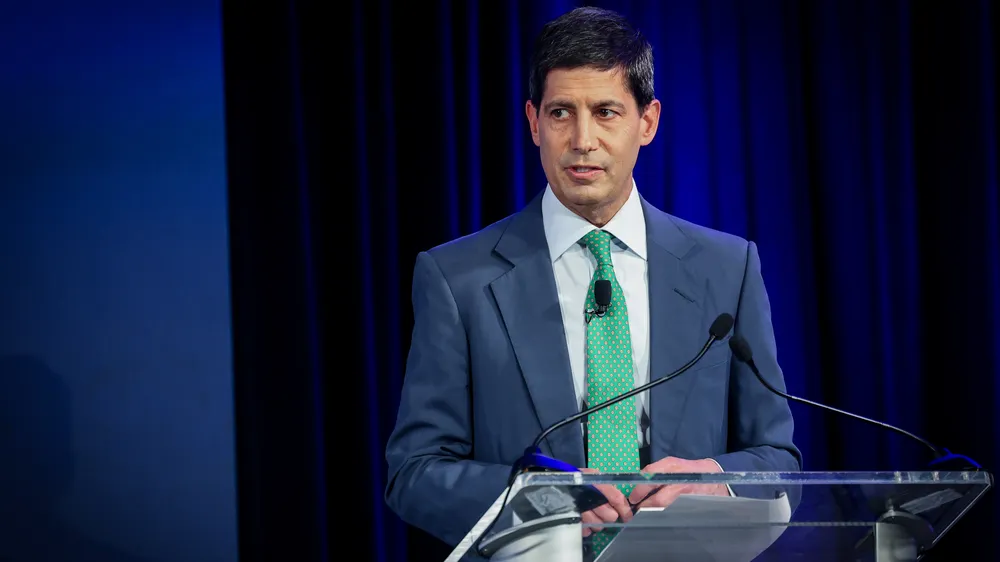
President Donald Trump has made a striking claim: the U.S. economy could grow at 15% annually—or higher—if his newly nominated Federal Reserve Chair, Kevin Warsh, performs effectively.
In a February 9, 2026, interview with Larry Kudlow on Fox Business, Trump praised Warsh, a former Fed governor he nominated on January 30 to replace Jerome Powell (whose term ends in May). Trump said bluntly: “If Warsh does the job that he’s capable of, then we can grow at 15%, I think more than that.” He added that choosing Powell over Warsh in 2017—one of the top contenders at the time—was a major mistake.
A 15% annual GDP growth rate would be extraordinary for a mature economy like the United States. For perspective, the highest postwar annual real GDP growth was roughly 8.7% in 1950, during the postwar boom, while the strongest recent year was 7.3% in 1984 under Reagan. In the past few decades, U.S. growth has typically ranged between 2% and 3%, with brief spikes above 4% considered strong. Economists widely view sustained double-digit growth as unrealistic without extreme conditions, such as recovery from a deep recession or disruptive technological breakthroughs.
Trump’s optimism reflects his administration’s emphasis on deregulation, tax cuts, energy independence, and trade reform—policies he believes a supportive Fed chair could amplify through appropriate monetary policy. Warsh, known during his 2006–2011 Fed tenure for hawkish views on inflation and regulatory restraint, is seen by supporters as aligned with pro-growth priorities.
As the Senate prepares to review Warsh’s nomination, markets and analysts are weighing whether such ambitious targets are aspirational rhetoric or achievable under the right conditions. Whatever the outcome, Trump’s 15% claim has reignited debate about the upper limits of American economic growth.