
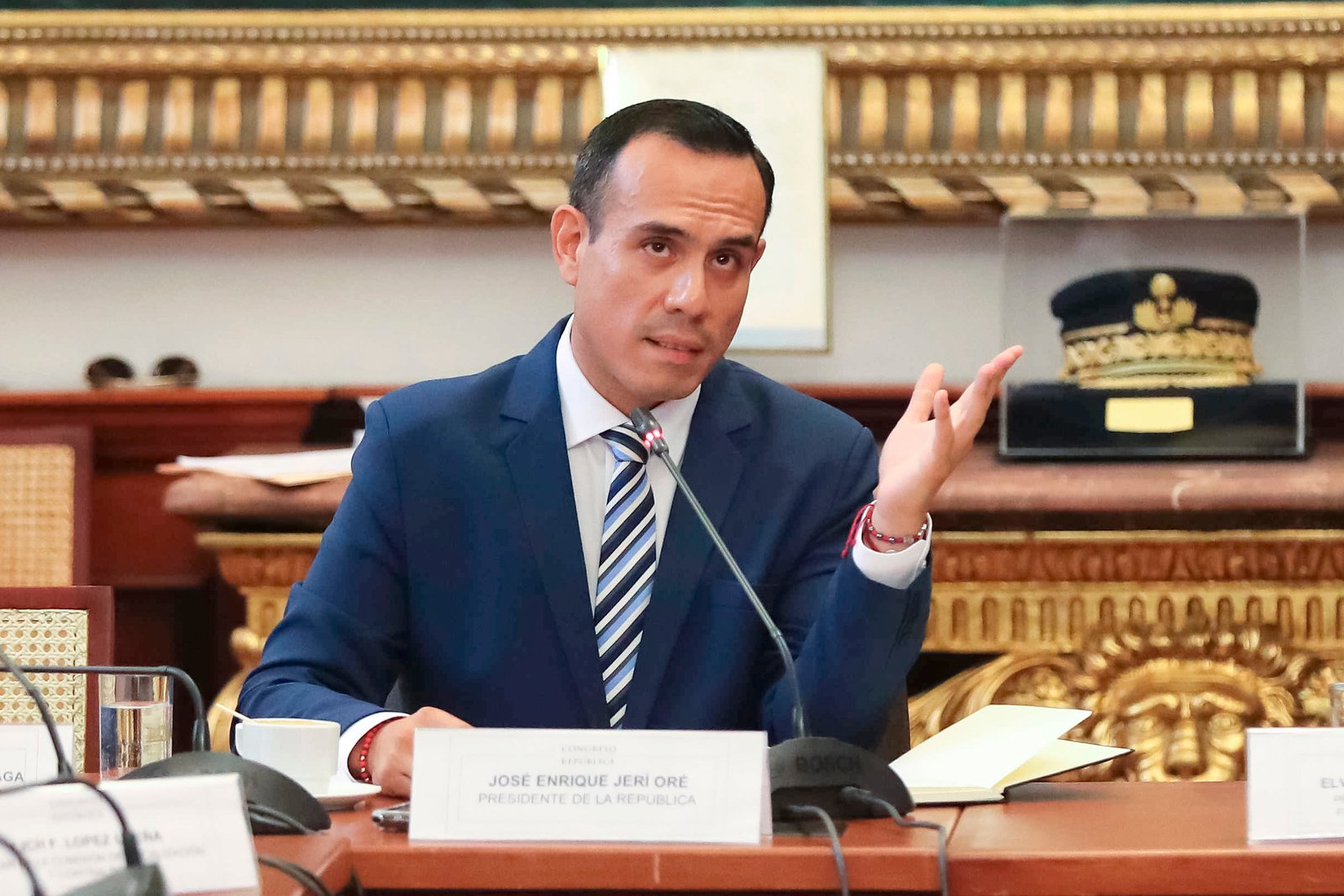
LIMA – Peru’s Congress voted overwhelmingly on February 17, 2026, to remove interim President José Jerí after only four months in office, plunging the Andean nation deeper into a decade-long cycle of political instability.
Lawmakers approved the motion of censure by 75 votes to 24, with three abstentions. The 39-year-old conservative lawyer and former Congress president was accused of failing to disclose secret meetings with Chinese businessman Zhihua Yang, whose companies hold Peruvian state contracts in energy and infrastructure. Leaked videos showed Jerí arriving hooded or disguised at a chifa (Peruvian-Chinese restaurant) on December 26 and again in early January — encounters absent from his official schedule.
The scandal, quickly dubbed “Chifagate,” raised concerns over transparency and potential influence-peddling. Jerí denied wrongdoing, describing the meetings as “circumstantial” and cultural, and publicly apologized for not reporting them. He insisted no favors were exchanged. Congress, however, ruled he had become unfit for office.
Jerí took power on October 10, 2025, after Congress impeached predecessor Dina Boluarte amid protests and a surge in organized crime. He now becomes the third consecutive president ousted by lawmakers — and roughly the eighth leader in ten years. Since 2016, Peru has cycled through short-lived governments marked by corruption probes, congressional fragmentation, and public frustration over crime, the economy, and governance paralysis.
The easy removal mechanism in Peru’s constitution — a simple majority can declare a president “morally incapacitated” — has fueled the revolving door. While the mining-rich economy has shown resilience, repeated crises have eroded trust in institutions.
On February 18, Congress is scheduled to elect a new head of the legislature, who will automatically become interim president until the winner of the April 12 general election is sworn in on July 28. Acting Congress president Fernando Rospigliosi has already declined the role, meaning lawmakers must choose a successor from among themselves.
Jerí, one of the world’s youngest heads of state during his brief tenure, said he would respect the vote. Analysts warn the latest upheaval could further complicate efforts to stabilize the country ahead of elections, where voters are expected to prioritize governance reform and security.
Peru’s political class faces mounting pressure to break the cycle. Whether the April ballot delivers a stable majority capable of working with the executive remains the central question for a nation weary of turmoil.