
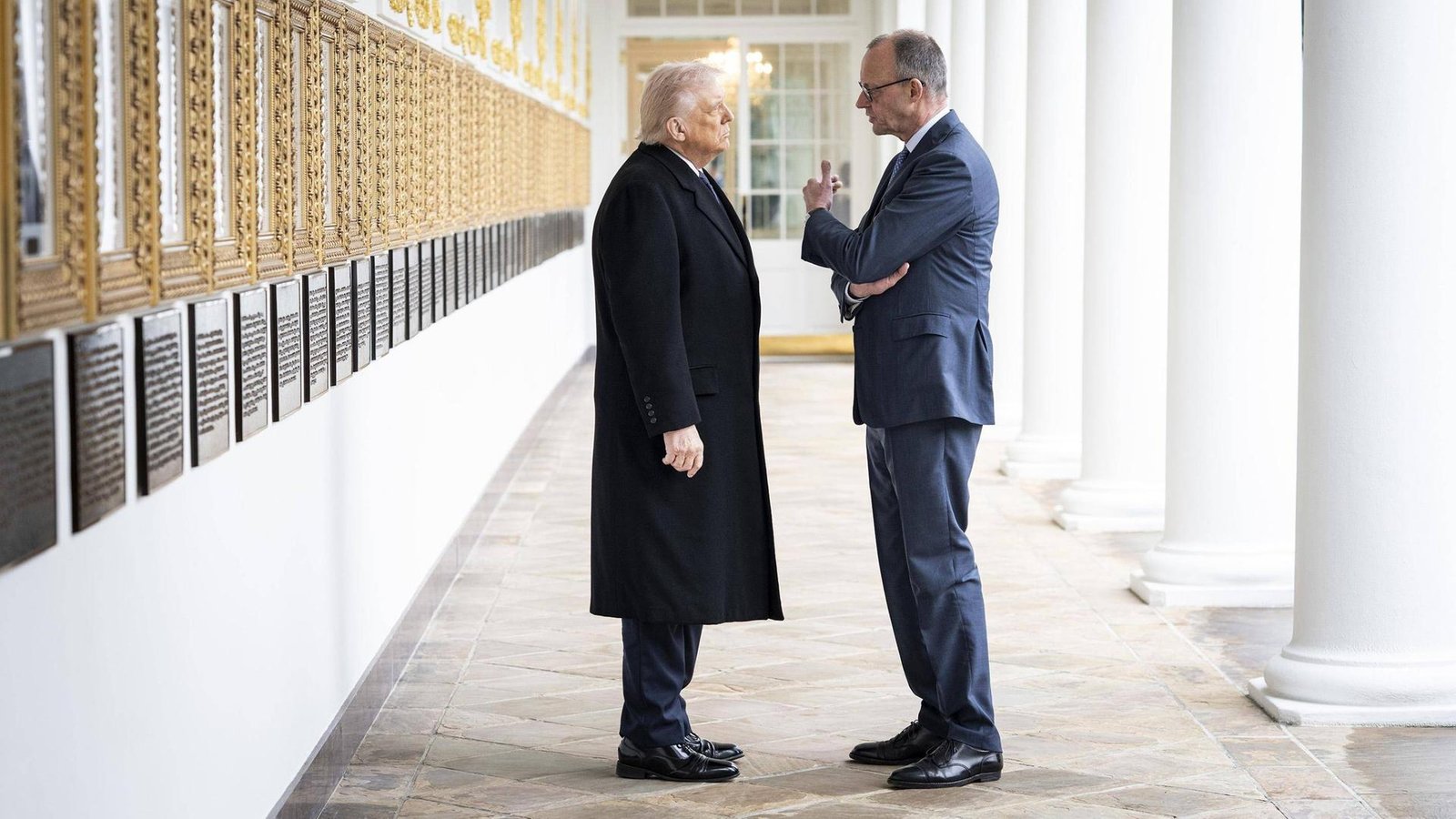
The transatlantic alliance is facing one of its most severe tests in years. In early May 2026, US President Donald Trump announced a sharp increase in tariffs on European Union cars and trucks — from 15% to 25% — citing non-compliance with a 2025 trade deal. The move, which comes amid a public clash with German Chancellor Friedrich Merz over the ongoing Iran conflict, has reignited debates about trade fairness, NATO obligations, and the value of long-standing US defense commitments in Europe.
This escalation is more than a simple trade dispute. It reflects deeper frustrations over burden-sharing, strategic priorities, and reciprocity in the US-EU relationship. As markets react and European leaders prepare responses, the episode highlights fundamental questions about the future of the alliance.
The Tariff Announcement and Immediate Fallout
On May 1, 2026, President Trump posted on Truth Social that the EU had failed to uphold its part of a trade agreement struck in summer 2025 at his Turnberry golf course in Scotland. Effective the week of May 4, tariffs on EU cars and trucks would rise to 25%. Trump framed the decision as both enforcement and economic strategy: it would generate billions for the US while pressuring European manufacturers to relocate production stateside.
German MEP Bernd Lange, chair of the European Parliament’s International Trade Committee, quickly denounced the move. In an appearance on Euronews’ Europe Today, Lange called it a “political decision” aimed squarely at Germany, home to major automakers like BMW, Mercedes-Benz, Volkswagen, and Porsche. He estimated an additional €15 billion hit to the German economy, with broader ripple effects across the EU’s integrated auto supply chains in countries like Czechia, Slovakia, and France.
Stock markets reflected the anxiety. German auto shares dropped sharply, with analysts projecting earnings hits of 9-21% for key players in 2026-27. The European Commission stated it would “keep options open” for retaliation, while rejecting US claims of non-compliance. The 2025 deal had capped tariffs at 15% in exchange for certain commitments; Brussels insists it is implementing them through normal legislative processes.
Chancellor Friedrich Merz downplayed the idea that Germany alone was targeted, saying the tariffs hit the EU as a whole. Yet the timing — days after Merz publicly criticized the US approach in Iran, suggesting America was being “humiliated” — fueled perceptions of linkage. Trump has also threatened reductions in US troop levels in Germany, Italy, and Spain.
Roots in the Iran Conflict
The trade spat cannot be separated from the broader geopolitical context. Since late February 2026, the US and Israel have conducted military operations against Iran. The conflict has strained global energy markets, particularly around the Strait of Hormuz, and prompted US requests for allied support — including naval presence and base access.
Many European allies have offered limited logistical or intelligence help but stopped short of direct combat involvement. Leaders described it as “not our war,” noting the absence of an attack on a NATO member. Spain restricted airspace and base usage, while others hesitated to commit forces to Hormuz operations. This reluctance angered the Trump administration, which views it as a lack of reciprocity given decades of US security investment.
Are US Expectations for NATO Help Legally Valid?
Under the 1949 Washington Treaty, NATO’s Article 5 establishes collective defense: an armed attack against one member is considered an attack against all. Allies must take actions they “deem necessary,” but this is not an automatic trigger for offensive operations outside the North Atlantic area.
The Iran conflict does not qualify as an Article 5 situation. No NATO member was attacked; the US (with Israel) escalated against Iran. Requests for support are political and diplomatic, not legally binding treaty obligations. NATO as an organization has largely stayed on the sidelines, with individual members deciding based on national interests.
This gap between legal minimums and political expectations lies at the heart of current tensions. Trump’s “America First” approach emphasizes transactional reciprocity. European leaders, facing domestic politics and war fatigue, prioritize strategic autonomy.
The US Defense Spending Question: Why Keep Investing?
This brings us to a core debate: What is the point of continued US military spending and troop presence in Europe?
Strategic benefits for the US include:
- Power projection: Bases in Germany (e.g., Ramstein) serve as critical hubs for operations in Europe, Africa, and the Middle East. Maintaining forward presence is cheaper and faster than relying solely on stateside deployments.
- Deterrence: US forces and the nuclear umbrella help stabilize Europe against Russia and other threats, preventing a more dangerous global environment that could eventually require even greater US involvement.
- Economic stability: A secure, prosperous Europe supports massive US trade and investment flows. European companies employ millions of Americans.
- Influence: NATO leadership gives Washington significant sway over European security policy, standards, and alignment on issues like China.
However, burden-sharing numbers tell a nuanced story. In 2025, the US still accounted for roughly 59-64% of total NATO defense spending despite Europe’s surge. All European allies now meet or exceed the old 2% GDP target, with a 20% real increase in European spending that year. New longer-term goals aim for 5% of GDP (including 3.5% core defense) by 2035. Germany has significantly ramped up, reaching over 2% for the first time in decades.
Critics of the status quo argue Europe free-rode for years on generous US guarantees, allowing larger welfare states. With Europe now spending more due to Russia’s war in Ukraine and US pressure, the gap is narrowing — yet the US provides unique high-end capabilities (advanced intelligence, strategic airlift, command structures). Recent moves like partial troop reductions from Germany signal a shift toward expecting Europe to handle more of its own conventional defense.
Broader Implications and Risks
Escalation carries costs for both sides. Higher tariffs raise consumer prices, disrupt supply chains, and could spark retaliatory measures reminiscent of past steel-aluminum disputes. For the US auto industry, including Ford, GM, and Stellantis with European ties, the picture is mixed. Geopolitically, weakened transatlantic unity benefits adversaries like Russia and China.
On the positive side, pressure from Washington has accelerated European defense investment and discussions of strategic autonomy. Initiatives like EU defense industry cooperation and burden-shifting (giving Europeans more command roles) are gaining traction.
Chancellor Merz and other leaders have urged calm and faster implementation of existing deals, while emphasizing that Europe must do more for its own security. President Trump continues to use tariffs and troop posture as leverage for better terms on trade, defense, and allied support.
Outlook: Toward a New Equilibrium?
The current crisis is a symptom of a post-Cold War alliance adapting to new realities: a more assertive China, persistent Russian threats, Middle East volatility, and shifting US domestic priorities. The old model — heavy US subsidization of European security in exchange for broad alignment — is under strain.
A more balanced partnership, with Europe assuming primary responsibility for its conventional defense while the US retains critical enablers and global projection, could emerge. Achieving it will require diplomacy, compromise, and realism on both sides of the Atlantic.
As Bernd Lange and others warn, unpredictability in US policy risks eroding trust. Yet sustained European effort on defense and trade compliance could rebuild it. The coming weeks — with potential EU retaliation, further troop announcements, and Iran developments — will determine whether this becomes a lasting rift or a painful but productive reset.