
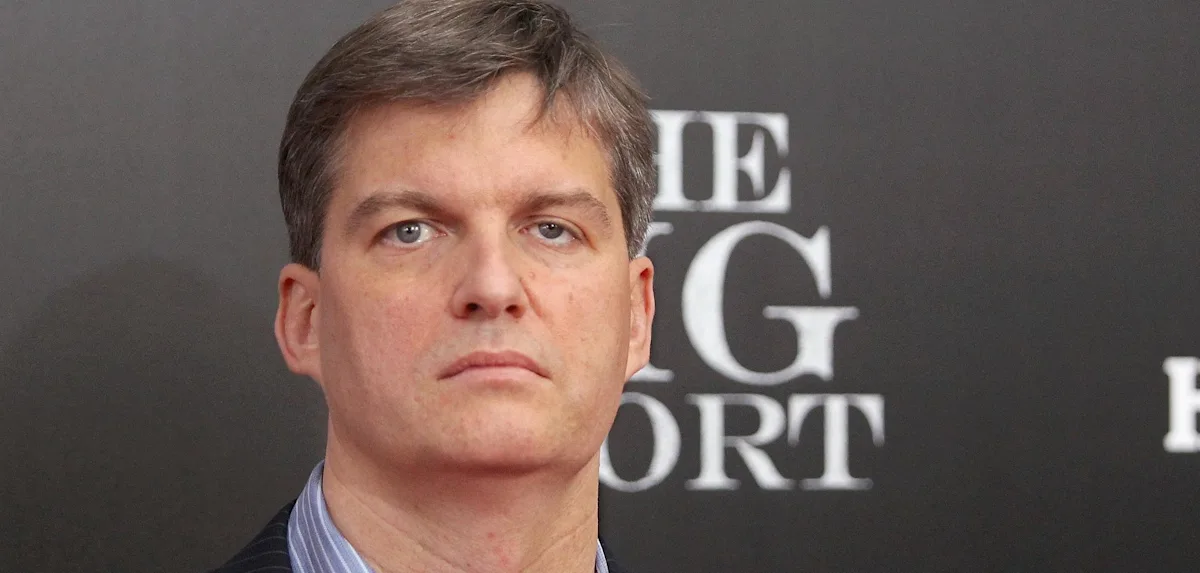
The man who famously ignited the first fuse of the GameStop ($GME) moonshot has officially left the building. Michael Burry, the legendary investor portrayed in The Big Short, has reportedly sold his entire remaining position in GameStop, marking a historic end to his involvement with the “meme stock” that redefined retail investing.
The liquidation, disclosed via his Substack newsletter Cassandra Unchained and corroborated by market reports today, May 5, 2026, follows a radical shift in GameStop’s corporate strategy that Burry claims “shatters” his investment thesis.
Why Did Michael Burry Sell GameStop?
For months, Burry had been bullish on GameStop’s evolution, frequently comparing CEO Ryan Cohen’s capital allocation to the early days of Warren Buffett’s Berkshire Hathaway. He envisioned a lean, cash-rich company that would slowly compound value through disciplined, small-scale acquisitions.
That vision died this week with GameStop’s unsolicited $56 billion bid to acquire eBay.
1. The Death of the “Mini-Berkshire” Thesis
Burry’s investment was predicated on GameStop as a “deep value” play with a pristine balance sheet. The eBay deal, however, transforms GameStop into a highly leveraged conglomerate. To fund the $125-per-share offer, GameStop has already secured a $20 billion debt commitment from TD Bank—a move Burry views as a fatal departure from fiscal discipline.
“Wall Street mistakes debt for creativity, and does so constantly,” Burry noted in his exit memo. “I of all people should have known.”
2. Over-Ambitious Synergy
Ryan Cohen’s plan involves turning GameStop’s 1,600 physical stores into eBay fulfillment and authentication hubs for collectibles. While retail enthusiasts are cheering the “Amazon-killer” narrative, Burry remains a skeptic of the math. He characterized the integration as over-complex, stating, “No amount of cut fat makes this deal work.”
3. A Shift in Risk Appetite
As a value investor, Burry looks for asymmetric upside with limited downside. By taking on tens of billions in debt to swallow an e-commerce giant four times its size, GameStop has effectively flipped the script. For Burry, the stock is no longer a value play; it is now a high-stakes gamble on a total retail transformation—a trade he is unwilling to bankroll.
Market Reaction: The End of an Era?
The news of Burry’s exit sent $GME shares tumbling over 10% in early trading. For the “HODL” community, Burry’s departure is a significant psychological blow. While Ryan Cohen remains at the helm with a loyal following, losing the endorsement of the man who spotted the GME opportunity at $4 a share signals a transition from the “Value Era” to the “Empire Building Era.”
What’s Next for Burry?
With Scion Asset Management now operating under a more private structure, Burry appears to be rotating capital into “beaten-down” AI software and physical commodities, signaling he believes the era of the retail-driven conglomerate is nearing a reckoning.