
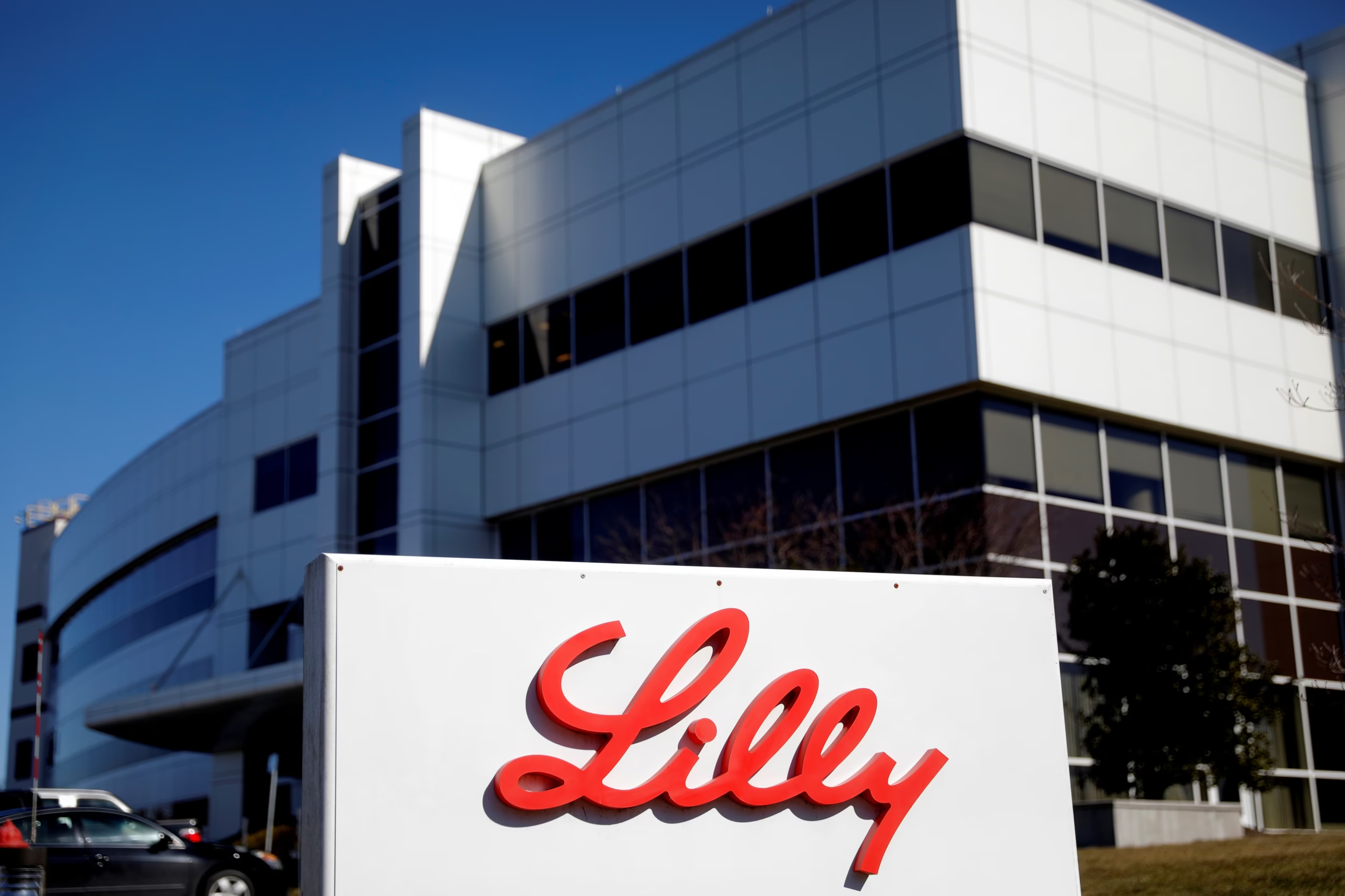
In a seismic shift for the pharmaceutical industry, Eli Lilly and Company (NYSE: LLY) has etched its name into the annals of Wall Street lore. On November 21, 2025, the Indianapolis-based drugmaker briefly surged past a $1 trillion market capitalization, becoming the world’s first healthcare company to join the elite “trillion-dollar club”—a roster long dominated by tech behemoths like Apple, Microsoft, and Nvidia. Though shares dipped slightly in subsequent trading, closing the week around $1,059.70 and valuing the company at approximately $950 billion as of November 24, the milestone underscores Lilly’s meteoric ascent amid the global obesity epidemic and the explosive demand for its groundbreaking weight-loss therapies.
This isn’t just a fleeting spike; it’s the culmination of a transformative era for Lilly, propelled by blockbuster drugs that have redefined healthcare economics. With shares up 38% year-to-date and a staggering 645% over the past five years, Lilly’s valuation has ballooned by nearly $700 billion since the end of 2022. Analysts now project the global weight-loss drug market—where Lilly reigns supreme—could swell to $150 billion by the early 2030s, cementing the company’s position as a non-tech powerhouse in an AI-saturated investment landscape.
The GLP-1 Revolution: From Niche Treatment to Trillion-Dollar Catalyst
At the heart of Lilly’s triumph lies tirzepatide, the active ingredient in two of the most sought-after medications on the planet: Mounjaro for type 2 diabetes and Zepbound for chronic weight management. Approved by the FDA in 2022 and 2023, respectively, these GLP-1 receptor agonists mimic hormones that regulate blood sugar and appetite, delivering unprecedented results—up to 20% body weight loss in clinical trials.
The numbers tell a blockbuster story. In the third quarter of 2025 alone, Mounjaro and Zepbound generated a combined $10.1 billion in revenue, accounting for over 57% of Lilly’s total $17.6 billion quarterly sales. Mounjaro’s sales nearly doubled to $6.52 billion, smashing expectations, while Zepbound tripled to $3.57 billion. This propelled tirzepatide past Merck’s cancer drug Keytruda to become the world’s best-selling medicine, with Lilly capturing nearly 60% of U.S. GLP-1 prescriptions—far outpacing rival Novo Nordisk’s 42% share.
The frenzy has broader implications for U.S. healthcare. In 2024, these drugs cost the system $31.7 billion, and with Medicare coverage now expanding to include them for 68 million enrollees (albeit at reduced prices like $299 per month for Zepbound), access is set to explode. Yet, this boom isn’t without controversy: Supply shortages persist, and compounding pharmacies have eroded some market share, contributing to Novo’s $400 billion valuation drop since mid-2024.
A Storied Legacy Meets Modern Innovation
Founded in 1876 by Colonel Eli Lilly—a Civil War veteran with a vision for reliable medicines—the company has long been a pillar of pharmaceutical progress. Early triumphs included insulin in the 1920s and Prozac in the 1980s, but the GLP-1 era marks a paradigm shift. Under CEO David A. Ricks, Lilly has invested heavily in metabolic health, diversifying beyond injections with oral candidates like orforglipron, which could hit the market via fast-track FDA approval as early as next year.
Recent pipeline wins bolster the bullish case. A Phase 2 trial of eloralintide, an amylin-based injectable, showed up to 20% weight reduction over 48 weeks—potentially combinable with tirzepatide for even greater efficacy. Wall Street’s optimism is palpable: BMO Capital’s Evan Seigerman noted the valuation reflects “investor confidence in the longer-term durability of the company’s metabolic health franchise,” while price targets climb as high as $1,300 per share.
| Key Financial Highlights (Q3 2025) | Value |
|---|---|
| Total Revenue | $17.6B |
| Mounjaro Revenue | $6.52B |
| Zepbound Revenue | $3.57B |
| Year-to-Date Stock Gain | +38% |
| 5-Year Stock Gain | +645% |
Rivals in the Rearview: Why Lilly Pulled Ahead
Novo Nordisk, the Danish pioneer behind Ozempic and Wegovy, once led the pack but now trails with a sub-$200 billion market cap. Novo’s first-mover edge has waned amid manufacturing hiccups and competition, while Lilly’s superior execution—bolstered by U.S.-centric supply chains—has won investor favor. Even giants like Johnson & Johnson ($491 billion) and Merck lag far behind, highlighting healthcare’s new pecking order.
Broader market dynamics play a role too. As tech stocks grapple with AI hype fatigue, Lilly offers “predictable, near-term revenue growth tied to an expanding addressable market,” as one Invezz analyst put it. It’s the second non-tech U.S. firm to hit $1 trillion, following Berkshire Hathaway, and signals a diversification of mega-cap power.
Challenges Ahead: Sustainability in the Spotlight
For all its glory, Lilly faces headwinds. Pricing pressures from the White House and Medicare could cap margins, while patent cliffs loom for older drugs. Competition intensifies—Pfizer’s $10 billion acquisition of obesity specialist Metsera is a wake-up call—and ethical debates swirl around the societal impacts of widespread GLP-1 use, from muscle loss to long-term safety.
Yet, the trajectory points upward. With a robust pipeline spanning oncology, immunology, and neuroscience, plus trillions in untapped obesity demand, Lilly isn’t just a pharma play—it’s a bet on humanity’s health revolution. As shares hover near all-time highs of $1,067, investors are wagering this is merely the opening act.
Eli Lilly’s trillion-dollar breakthrough isn’t just a stock story; it’s a testament to innovation’s power to heal—and enrich—in equal measure. In an industry often criticized for high costs, Lilly has shown that solving global health crises can yield historic rewards. The trillion-dollar question now: How high can it climb?