
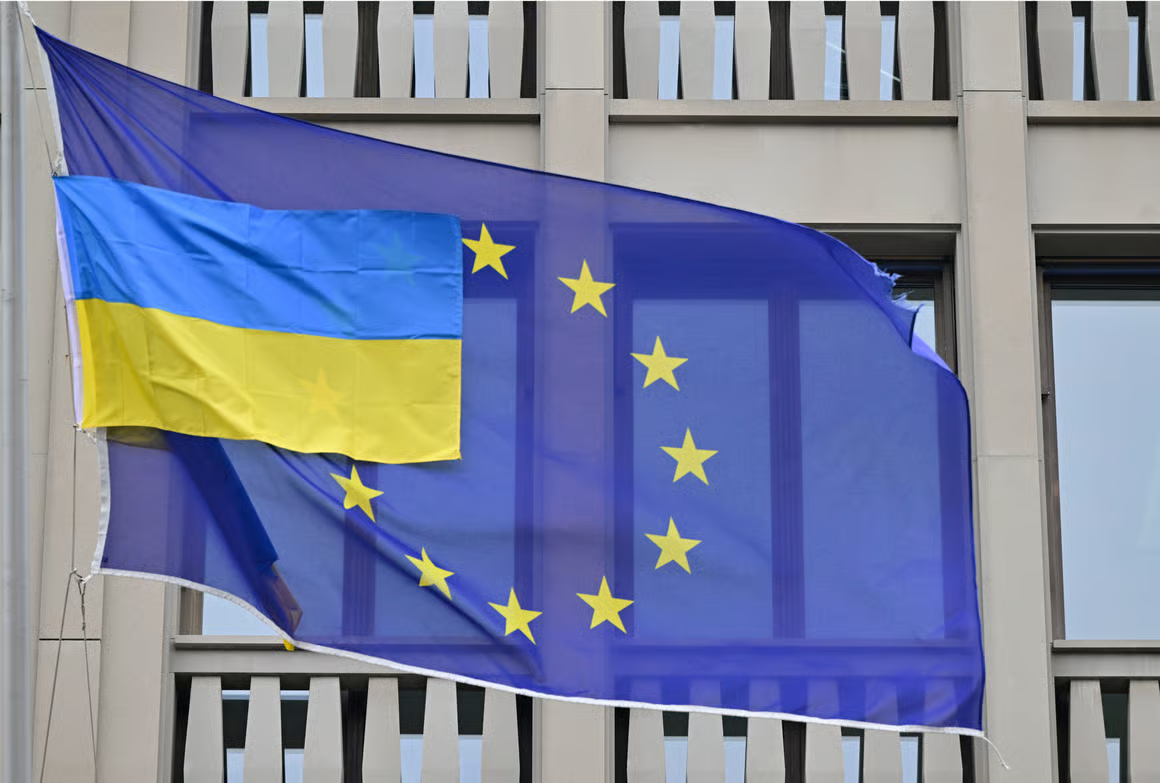
After marathon negotiations lasting over 15 hours at the European Council summit, EU leaders unanimously approved a historic €90 billion (approximately $105-106 billion USD) financial support package for Ukraine on December 19. This interest-free loan, targeted at covering Ukraine’s critical needs for 2026 and 2027, marks one of the bloc’s strongest demonstrations of solidarity since Russia’s full-scale invasion in February 2022.
European Council President António Costa announced the breakthrough early Friday morning: “We have a deal. Decision to provide 90 billion euros of support to Ukraine for 2026-27 approved. We committed, we delivered.” The package aims to provide long-term predictability for Kyiv as it faces intensifying Russian assaults and uncertainties in global support.
Detailed Breakdown of the Package
The €90 billion loan is a standalone initiative, separate from the existing €50 billion Ukraine Facility (2024-2027), which focuses on recovery, reconstruction, and EU-aligned reforms.
Key components include:
- Scope and Purpose: The funds will address Ukraine’s external financing gap for 2026-2027, estimated by the International Monetary Fund (IMF) at around €137 billion ($160 billion) in total. The EU contribution covers roughly two-thirds of this shortfall. Specifically:
- Support for military and defense expenditures (e.g., sustaining Ukraine’s armed forces amid ongoing combat).
- Coverage of civilian budgetary needs (e.g., salaries for public servants like teachers and doctors, pensions, and essential services).
- Prevention of economic collapse, with warnings that without new funding, Ukraine could face liquidity crises as early as spring 2026.
- Loan Structure:
- Interest-free with no immediate interest payments for Ukraine.
- Repayment is conditional and deferred: Ukraine would only repay the principal if and when Russia provides war reparations for damages inflicted.
- If Russia refuses reparations, the EU reserves the right to use immobilized Russian assets to cover repayment.
- Funding Source: The EU will raise the money through joint borrowing on international capital markets, backed by the EU budget’s “headroom” (unused margins). This avoids direct national budget contributions and circumvents some unanimity requirements.
The Controversy Over Frozen Russian Assets
The summit’s most contentious issue was the proposed use of €210-300 billion in frozen Russian central bank assets, primarily held by Belgium’s Euroclear depository.
- Initial proposals included a “reparations loan” directly backed by these assets, effectively making Russia foot the bill.
- Belgium raised strong objections, citing legal risks, potential Russian retaliation (e.g., lawsuits against Euroclear), and financial stability concerns.
- Compromise: Assets remain indefinitely immobilized (extended sanctions against Russia for another six months). No immediate tapping of principal or cash balances, but the EU explicitly “reserves the right” to utilize them later for repayment or costs.
German Chancellor Friedrich Merz, a key proponent, stated: “Ukraine will receive an interest-free loan of 90 billion Euros… This sends a clear signal from Europe to Putin: This war will not be worth it.” He emphasized that frozen assets would stay blocked until Russia pays reparations.
Reactions from Leaders and Ukraine
- Volodymyr Zelenskyy (who attended the summit): Expressed gratitude, calling it vital for Ukraine’s resilience. He had warned that without swift aid, Kyiv might need to cut critical programs like drone production.
- Viktor Orbán (Hungary): Criticized the package as “lost money” and opposed deeper involvement, but did not block the unanimous decision.
- Other voices: French President Emmanuel Macron hailed it as a “major advance.” Polish Prime Minister Donald Tusk framed it starkly: “Money today or blood tomorrow.”
Broader Context and Implications
This approval comes amid shifting global dynamics:
- Reduced U.S. aid under the new administration.
- Russia’s escalated attacks on Ukrainian energy infrastructure.
- Ongoing debates over peace negotiations and security guarantees.
Since 2022, EU and member states’ total support to Ukraine exceeds €187-197 billion (financial, military, humanitarian). This new package reinforces Europe’s role as Ukraine’s largest donor, signaling unwavering commitment while navigating internal divisions.
As the war enters its fourth year, the €90 billion loan not only bolsters Ukraine’s defenses but also strengthens its position in potential future talks. It underscores a core message from Brussels: Europe’s support for Ukraine’s sovereignty and resilience remains firm, with pressure on Moscow through sustained sanctions and asset immobilization.