
In a landmark moment for sustainable aerospace innovation, Heven AeroTech has rocketed into the elite ranks of unicorn startups, securing $100 million in a Series B funding round that catapults its valuation to $1 billion. Announced on December 1, 2025, the investment underscores surging global demand for long-endurance, hydrogen-fueled unmanned aerial systems (UAS) amid escalating needs in defense, public safety, and commercial sectors. Led by quantum computing powerhouse IonQ (NYSE: IONQ), the round also features participation from returning investor Texas Venture Partners, signaling strong confidence in Heven’s fusion of clean energy and cutting-edge drone technology.
Founded in 2019 by Israeli entrepreneur Bentzion Levinson, Heven AeroTech—headquartered in Sterling, Virginia, with global operations—has rapidly emerged as a leader in hydrogen fuel cell propulsion for aerial vehicles. Unlike traditional battery-powered drones limited to short flights, Heven’s platforms deliver extended endurance, enabling missions that stretch over 10 hours and cover more than 600 miles on a single tank of hydrogen. This breakthrough addresses critical pain points in operational resilience, particularly in environments where refueling or recharging isn’t feasible, such as remote battlefields or disaster zones.
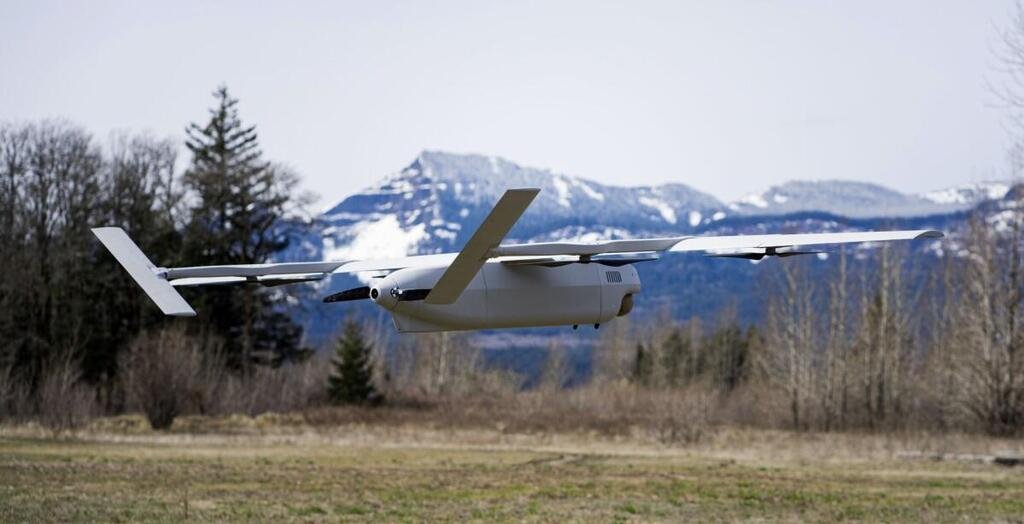
At the heart of Heven’s portfolio is the flagship Z1 platform, a versatile UAS designed for high-payload, long-range operations. Capable of carrying sensors, surveillance equipment, or delivery payloads while maintaining silent, zero-emission flight, the Z1 has already garnered interest from the U.S. Special Operations Command, combatant commands, and allied forces. “Reaching unicorn status validates not just our technology, but our execution,” Levinson stated in the company’s press release. He emphasized the firm’s commitment to “building for the battlefield of today and tomorrow,” highlighting how hydrogen power provides energy independence in contested environments.
The “quantum-defense” angle in this funding round isn’t mere hype—it’s a strategic pivot that marries Heven’s hardware prowess with next-generation computing. IonQ, valued at over $17 billion and a frontrunner in trapped-ion quantum systems, isn’t just writing a check; it’s forging a partnership to embed quantum technologies into Heven’s ecosystem. Proceeds from the raise will fuel three core priorities: scaling U.S.-based manufacturing to onshore production and mitigate supply chain vulnerabilities; accelerating quantum-secure communications to protect data against emerging cyber threats; and advancing AI-driven autonomous navigation, including GPS-alternative positioning for denied environments.
This infusion of capital comes at a pivotal time for the defense-tech sector. With geopolitical tensions rising—from the Indo-Pacific to Eastern Europe—militaries worldwide are racing to deploy resilient, sustainable UAS that outlast adversaries. Heven’s hydrogen solutions offer a green alternative to fossil fuel-dependent systems, aligning with broader U.S. initiatives like the Department of Defense’s push for net-zero emissions by 2050. Public safety agencies, too, stand to benefit: Imagine search-and-rescue drones that loiter for hours over wildfires or floods without the logistical nightmare of battery swaps. Commercially, applications in precision agriculture, infrastructure inspection, and logistics could disrupt markets dominated by short-haul electric drones.
IonQ’s involvement deepens its footprint in Israel’s vibrant defense-tech ecosystem, where Heven’s roots trace back to Levinson’s vision. Just weeks prior, IonQ co-led a $30 million round for quantum software firm Classiq, another Israeli innovator. As part of the Heven deal, Jordan Shapiro, IonQ’s President and General Manager for Quantum Networking, Sensing & Security, will join the board—poised to guide integrations like quantum-encrypted links that could render drone swarms unhackable.
Industry observers are buzzing about the implications. On X (formerly Twitter), venture trackers hailed the round as a “unicorn alert” for hydrogen aviation, with posts from accounts like @TradedVC detailing the Z1’s specs and @DroneXL1 spotlighting Heven’s Israeli-U.S. hybrid model as a blueprint for global scaling. Defense reporters, such as @calvinb21 from Defense Daily, noted the funding’s focus on rapid fielding to meet urgent national security demands.
Yet, challenges loom. Hydrogen infrastructure remains nascent, and regulatory hurdles for UAS in shared airspace persist. Heven, however, is well-positioned: Its prior seed and Series A rounds (details undisclosed) built a robust IP portfolio, and partnerships with entities like the U.S. Air Force have validated real-world deployments. With this $100 million war chest, the company aims to triple production capacity within 18 months, targeting a pipeline of contracts worth hundreds of millions.
Heven AeroTech’s ascent isn’t just a funding story—it’s a harbinger of a hydrogen-fueled future for drones, where endurance meets unbreakable security. As Levinson put it, “This capital will enable us to scale U.S. manufacturing capacity, accelerate quantum-enabled capabilities across our platform, and deliver long-endurance hydrogen-powered systems at the speed and volume our national security customers demand.” In an era of hybrid warfare and climate imperatives, Heven is priming for takeoff, proving that clean tech can be as formidable as it is forward-thinking.