
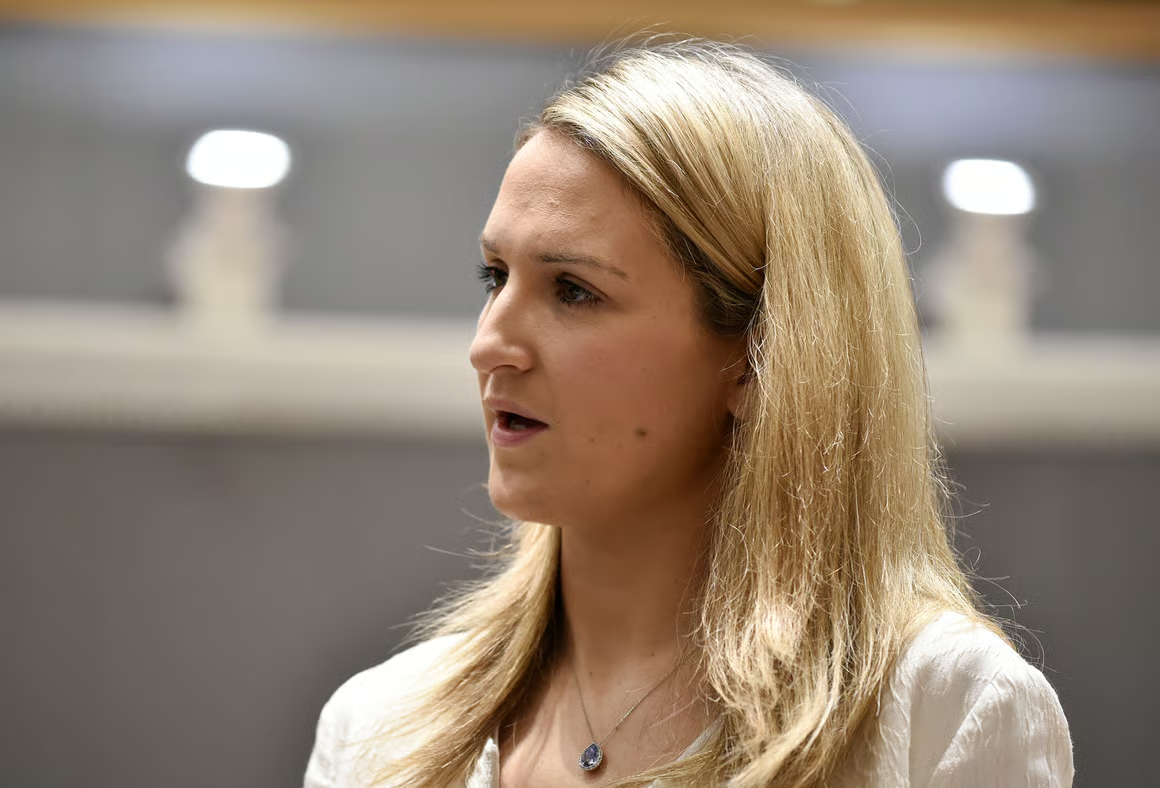
Ireland’s Defence Minister Helen McEntee has sparked controversy by declaring “diversification” a top priority for the Irish Defence Forces, emphasizing the recruitment of more women and people from diverse backgrounds at a time when the military is grappling with severe personnel shortages and retention crises.
Speaking on February 10, 2026, while launching a new Strategic Framework for the Transformation of the Defence Forces, McEntee stated: “It will focus on diversification within the Defence Forces, which means diversifying in every way possible, increasing the number of women that we recruit.” She framed this as essential cultural change, alongside proposals to fast-track Irish citizenship for foreign nationals who serve in the military.
While diversity initiatives sound progressive on paper, McEntee’s fixation on them reveals a troubling disconnect from the real challenges facing Ireland’s military. The Defence Forces are critically understrength, hovering well below their authorized level of 9,500 personnel despite a modest net gain of over 200 in 2025. Recruitment remains abysmal, with high dropout rates during training and experienced personnel leaving for better-paid civilian jobs. Pay, conditions, and outdated equipment are the core issues repeatedly highlighted by serving members and independent reports, including the 2022 Commission on the Defence Forces.
Yet, instead of aggressively tackling these fundamentals—such as substantial pay rises, improved allowances, or modernizing infrastructure—McEntee elevates social engineering to the forefront. This approach risks prioritizing ideological goals over operational effectiveness. Critics argue that forcing diversity targets could lead to lowered entry standards or quotas that undermine merit-based selection, essential in a profession where lives depend on competence and cohesion.
One prominent voice, Independent Senator Gerard Craughwell—a former soldier and longtime Defence Forces advocate—branded the government’s diversity-driven recruitment plan “absolute rubbish.” He argues it distracts from urgent needs like retaining skilled troops and building genuine capability. Public reaction has been similarly scathing, with many viewing McEntee’s comments as emblematic of a “woke” agenda imported from larger militaries, ill-suited to Ireland’s small, neutral forces.
The proposal to fast-track citizenship for non-Irish recruits adds another layer of concern. While presented as a way to widen the pool, it raises questions about loyalty, integration, and whether Ireland should follow the path of countries using military service as a shortcut to citizenship amid migration pressures. In an era of heightened European security threats, including Russian aggression and hybrid warfare, Ireland cannot afford a military weakened by misplaced priorities.
McEntee’s emphasis on gender and ethnic diversification ignores a harsh reality: women currently comprise only about 7-8% of the Defence Forces, and efforts to increase this have yielded minimal results despite years of similar rhetoric. Mandatory gender and unconscious bias training has already been rolled out, yet it has done little to stem the exodus. Throwing more resources at “cultural change” while core grievances fester suggests a minister more attuned to progressive optics than to building a robust defence posture.
Ireland’s historical neutrality and limited defence spending demand a pragmatic approach. The Defence Forces exist to protect the state, not to serve as a social experiment. McEntee’s strategy risks alienating traditional recruits—who form the backbone of the military—while failing to address why capable Irish men and women are choosing not to join or stay.
Until ministers prioritize pay, conditions, and capability over diversity checkboxes, the Defence Forces will continue to decline. McEntee’s leadership, regrettably, appears more concerned with virtue-signaling than with forging a military fit for purpose in an uncertain world.