
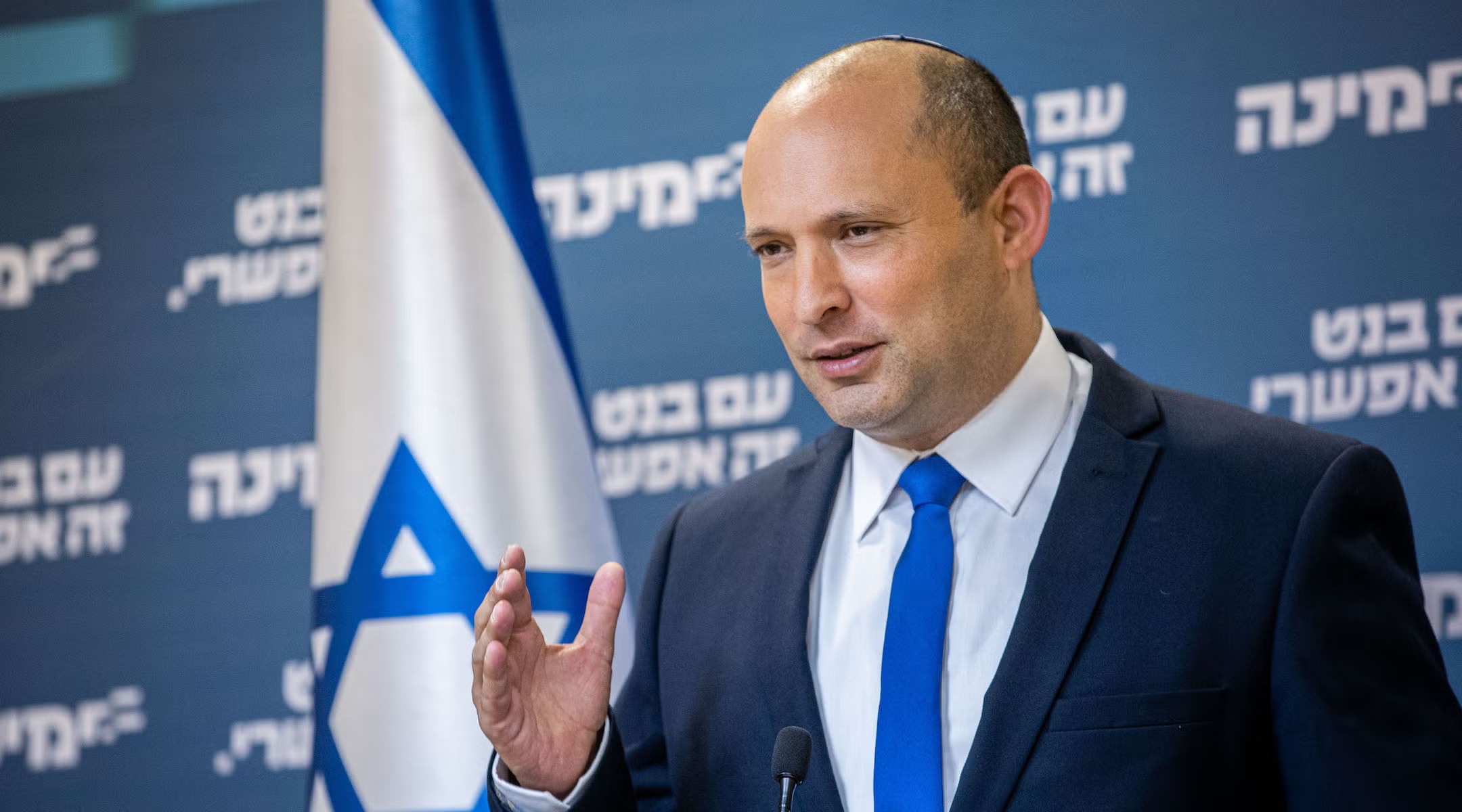
In a stark reminder of the ongoing shadow war between Israel and Iran, Israeli authorities announced on December 25, 2025, the impending indictment of a 40-year-old Israeli citizen accused of conducting espionage activities on behalf of Iranian intelligence. The suspect, Vadim Kupriyanov, a resident of Rishon LeZion, was arrested earlier in December after being caught filming near the private residence of former Prime Minister Naftali Bennett in Ra’anana.
Details of the Alleged Espionage
According to a joint statement from the Shin Bet (Israel’s internal security agency) and the Israel Police, Kupriyanov had been in contact with Iranian handlers for approximately two months. During this period, he allegedly carried out a series of security-related tasks in exchange for monetary payments.
Key activities included:
- Photographing locations in Rishon LeZion and other cities across Israel.
- Purchasing a dash camera specifically for surveillance purposes.
- Conducting filming operations near Naftali Bennett’s home, which ultimately led to his detection and arrest.
The investigation, led by the elite Lahav 433 police unit, revealed that Kupriyanov transferred various images and materials to his foreign contacts. Prosecutors from the Central District Attorney’s Office are set to file formal charges against him in the Lod District Court, with espionage and contact with a foreign agent among the likely offenses.
This case highlights Iran’s persistent efforts to recruit ordinary Israeli citizens through online platforms, often offering financial incentives for seemingly innocuous tasks that escalate into intelligence gathering.
Naftali Bennett’s Response
Former Prime Minister Naftali Bennett, who served from 2021 to 2022 and remains a prominent political figure, responded defiantly to the news. In a statement posted on social media, he declared: “Iran’s efforts to harm me will not stop me from my life’s mission. Am Yisrael Chai.”
Bennett’s resolve comes amid a series of recent Iranian-linked threats targeting him personally. Just days earlier, an Iranian hacker group known as Handala claimed responsibility for breaching his Telegram account, leaking thousands of contacts and messages. While Bennett initially downplayed the incident as limited to Telegram, the leaks underscored the multifaceted nature of Tehran’s hybrid warfare tactics—combining cyber operations with human intelligence recruitment.
Broader Context: Iran’s Espionage Campaign in Israel
The Kupriyanov case is not isolated but part of a surging wave of Iranian espionage attempts inside Israel throughout 2025. Israeli security officials have warned of a dramatic increase in recruitment efforts, with thousands of Israelis reporting suspicious contacts via text messages, phone calls, or encrypted apps like Telegram.
Iranian operatives typically approach potential recruits with offers of payment for simple tasks—photographing public areas, infrastructure, or even personal residences—which can later be used for targeting or planning attacks.
Notable recent cases include:
- A Russian foreign worker indicted in December 2025 for filming Israeli ports, warships, and oil refineries on behalf of Iran.
- Multiple arrests of Israeli citizens, including reservists and teenagers, for gathering intelligence on military bases, hospitals (including during Bennett’s stay), and public figures.
- According to think tanks like The Washington Institute, Iran has orchestrated dozens of plots involving Israeli nationals since 2013, with a sharp uptick in recent years.
These activities are often attributed to Iran’s Islamic Revolutionary Guard Corps (IRGC) Quds Force, the elite unit responsible for extraterritorial operations.
Israeli authorities emphasize that while many recruitment attempts fail, successful ones pose significant risks, especially amid ongoing tensions following missile exchanges and cyber skirmishes between the two nations.
Implications for Israeli Security
The Shin Bet and police have repeatedly urged the public to report any unsolicited contacts from foreign entities offering payment for information or tasks. “These cases exemplify the ongoing efforts by Iranian intelligence to recruit Israelis for missions that harm state security,” officials stated.
As Israel navigates heightened regional threats, incidents like this serve as a sobering alert to the vulnerabilities posed by human intelligence in the digital age. Financial motivations appear to drive many recruits, exploiting economic pressures to turn citizens against their own country.
Rishon LeZion, Kupriyanov’s hometown, is a bustling central Israeli city known for its beaches and vineyards—a far cry from the clandestine world of espionage now linked to one of its residents.
As the indictment proceeds, this case will likely fuel further debate on counterintelligence measures and the enduring Iran-Israel rivalry. For now, it reinforces Bennett’s message of resilience: Iran’s shadow operations may persist, but they will not deter Israel’s defenders or its leaders.