
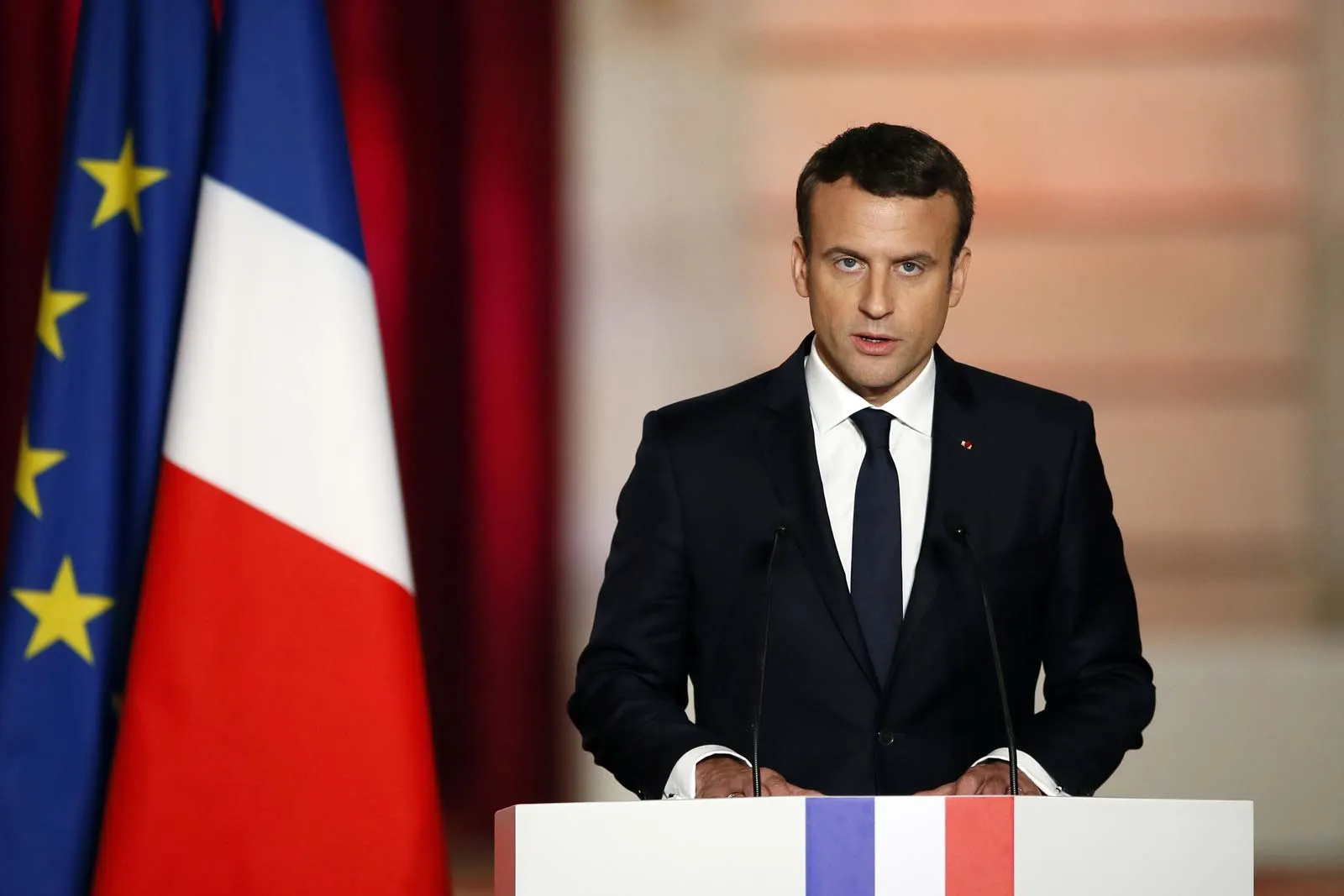
Paris/Beijing, December 7, 2025 – French President Emmanuel Macron has delivered one of the bluntest European warnings yet to Beijing: correct the “unsustainable” trade surplus with the European Union or brace for protective tariffs modeled on those imposed by the United States.
In an interview published Saturday in the French financial daily Les Echos, just days after concluding a high-profile state visit to China, Macron declared that the EU’s goods trade deficit with China – which soared past €300 billion in 2024 – is no longer tolerable.
“If China does not react, we Europeans will be forced, in the coming months, to take strong measures following the example of the United States – that is, to impose tariffs on Chinese products,” Macron said. “This surplus is self-destructive for China itself because it ends up killing its own customers.”
The numbers underline his concern. Europe’s trade deficit with China has ballooned nearly 60% since 2019, driven by a flood of Chinese electric vehicles, batteries, solar panels, and machinery, while European exports to the world’s second-largest economy remain stubbornly constrained. France alone recorded a bilateral goods deficit of more than €50 billion last year.
Macron’s threat comes at a delicate moment. The return of Donald Trump to the White House in January 2025 has already seen U.S. tariffs on Chinese goods climb to an effective rate of 47% (down from an initial 57% after a limited October deal). Many analysts believe those measures have simply redirected Chinese exports toward a more open European market, effectively “dumping” excess capacity on the continent.
Caught in the middle, the EU now faces what Macron called “a matter of life or death” for its industrial base. “We are between American protectionism and Chinese overcapacity,” he said. “If we do nothing, we will lose entire sectors – automotive, machine tools, green technologies – and with them hundreds of thousands of European jobs.”
While trade policy is an exclusive competence of the European Commission, Macron is pushing hard for a unified EU response. Brussels has already imposed tariffs of up to 45.3% on Chinese electric vehicles and launched multiple anti-subsidy and anti-dumping investigations. Macron’s public ultimatum is widely seen as an attempt to build political momentum among the bloc’s 27 members, some of whom (notably Germany) remain wary of a full-blown trade war that could hurt their own exporters.
During his December visit to China, Macron floated several carrots alongside the stick:
- Greater openness to Chinese direct investment in Europe to help rebalance capital flows.
- A possible EU relaxation of controls on exports of advanced semiconductor equipment in exchange for China lifting its own restrictions on rare-earth minerals.
- Deeper cooperation on climate goals and reform of the World Trade Organization.
Beijing has so far given no public reply to Saturday’s interview. Chinese state media have limited coverage to factual reporting of Macron’s visit, emphasizing the “friendly and frank” atmosphere.
Markets, however, are already pricing in escalation risk. European automakers and luxury-goods stocks dipped in early trading Monday, while defense and “onshoring” shares rose on expectations of a more protectionist continent.
Analysts warn that any EU tariffs would invite swift Chinese retaliation – French cognac, German cars, Italian fashion, and European agricultural products have all been targeted in past disputes.
For now, Macron insists negotiation remains his preference. But his tone has unmistakably hardened: Europe, he said, “will no longer be naïve.” If Beijing does not offer meaningful concessions in the coming months, 2026 could mark the beginning of a new era of transatlantic-aligned trade barriers against the world’s factory floor.