
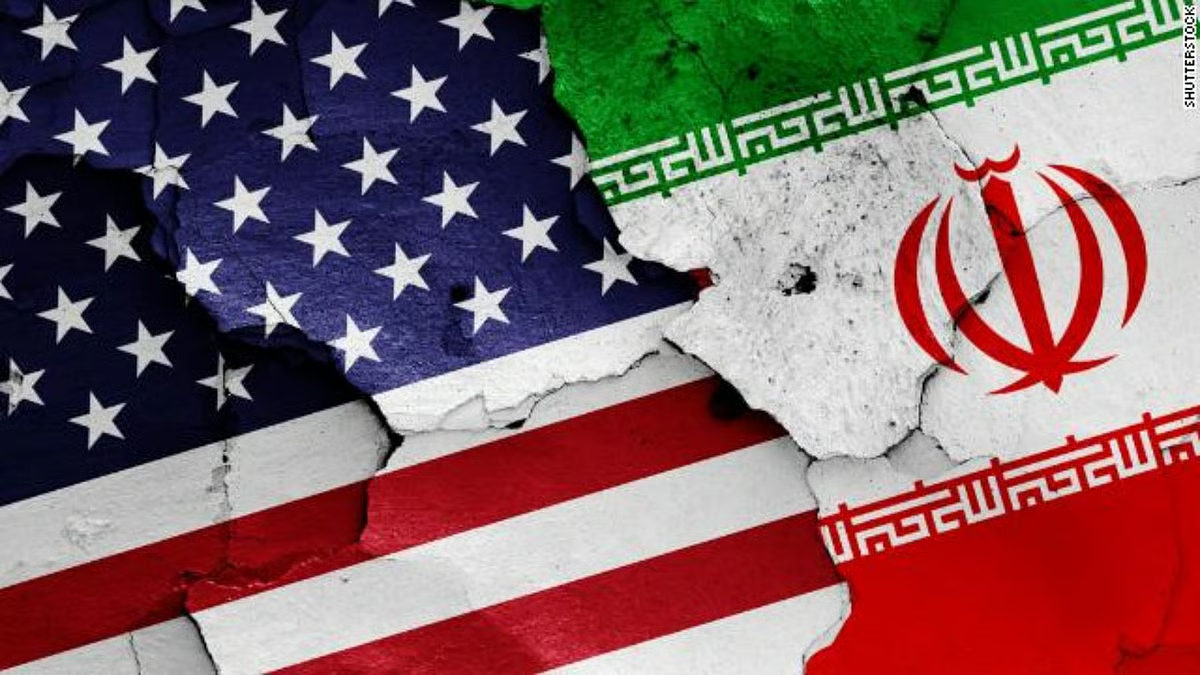
As of February 7, 2026, global oil markets are on edge amid escalating tensions between the United States and Iran. Traders and analysts warn of a heightened risk of a U.S. military strike against Iranian targets, potentially as soon as this weekend. This geopolitical uncertainty has injected volatility into crude prices, reversing recent declines and keeping investors cautious.
On February 6, Brent crude, the international benchmark, settled at $68.05 per barrel, gaining 0.7% for the day despite a 1.8% weekly drop. West Texas Intermediate (WTI), the U.S. benchmark, closed at $63.55 per barrel, up 0.4% on the session but down 2.6% over the week. These modest recoveries came as markets digested persistent risks, with traders avoiding aggressive short positions ahead of the weekend.
The latest flare-up stems from failed nuclear talks in Oman on February 6. Indirect negotiations, mediated between U.S. and Iranian officials, ended without progress on key issues like Iran’s uranium enrichment, ballistic missile program, and support for regional proxies. Although both sides agreed to continue discussions, fresh U.S. sanctions targeting Iran’s oil revenues have ratcheted up pressure. Analysts describe the probability of military action—whether by the U.S. or Israel—as “increasingly likely,” with timing unpredictable but potentially influenced by upcoming events like Ramadan beginning February 17.
A major concern is the Strait of Hormuz, a narrow waterway through which about 20% of the world’s oil supply flows daily. Any disruption here could send prices soaring.
Iran has previously threatened to close the strait in response to aggression, a move that would choke global supplies and trigger a severe energy crisis. Oil tankers navigating these waters are already under scrutiny, heightening insurance costs and risk premiums.
Market sentiment reflects this nervousness. While some de-escalation signals—such as open communication channels—have prevented sharper spikes, a geopolitical risk premium remains embedded in prices. Volatility indicators for Brent have surged to levels not seen since previous Middle East crises.
Experts caution that the situation is fluid. A strike could push Brent toward $80 or higher rapidly, impacting inflation, transportation costs, and economies worldwide. Conversely, successful diplomacy might ease pressures. For now, oil markets brace for potential weekend developments that could redefine energy prices in 2026.