
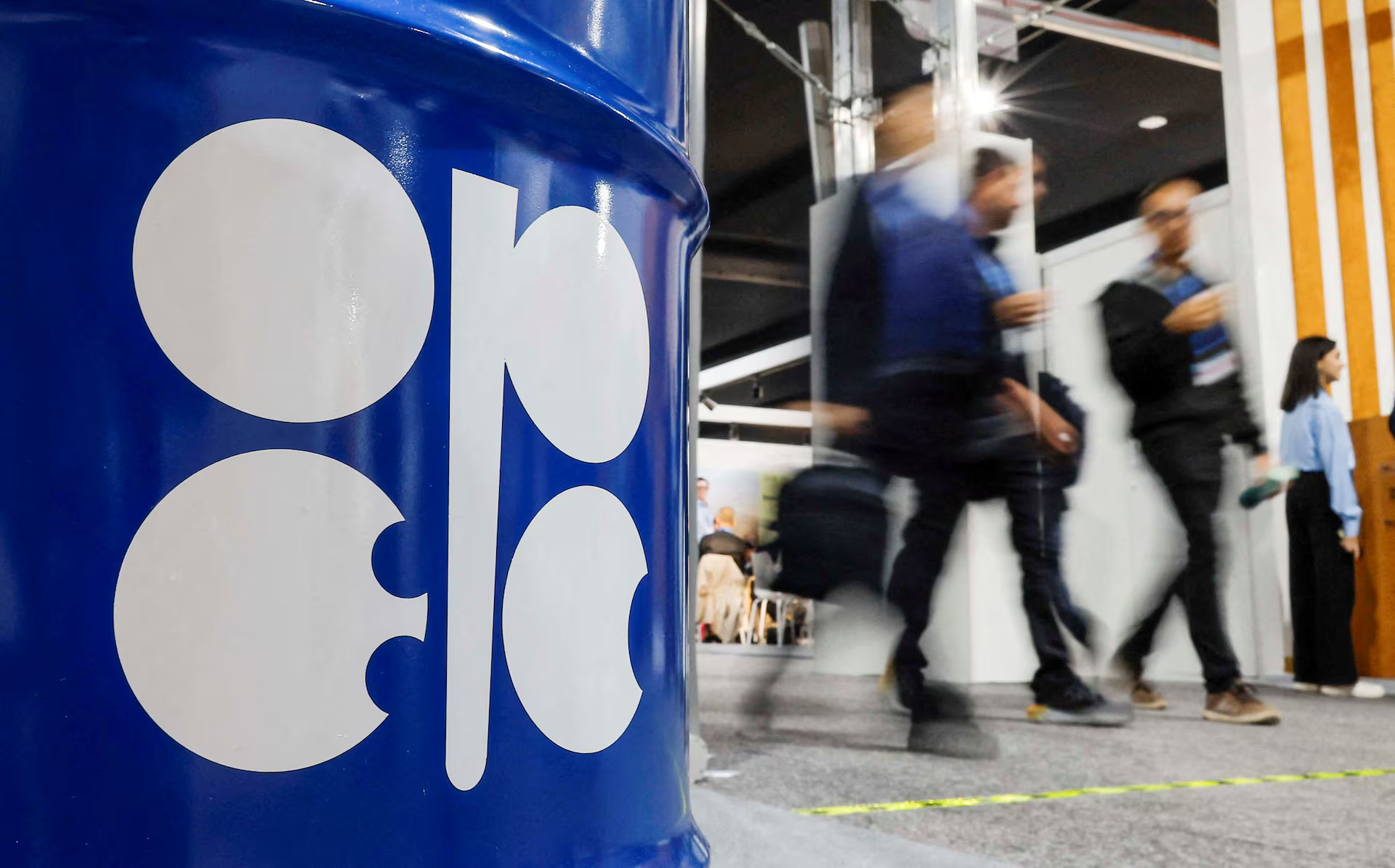
February 1, 2026 – OPEC+ is expected to confirm its planned pause on oil production increases for March when key ministers meet virtually today, according to three delegates who spoke to Reuters. The decision comes even as crude prices have climbed to six-month highs amid fears of a potential U.S. military strike on Iran, an OPEC member.
Brent crude settled near $70 per barrel on Friday and briefly touched $71.89 earlier in the week, buoyed by a geopolitical risk premium and supply disruptions, such as issues in Kazakhstan. Market watchers have closely monitored signals from Washington, where the incoming Trump administration has taken a harder line on Tehran. Despite the upward price pressure, OPEC+ appears unmoved, prioritizing longer-term market stability over short-term volatility.
The alliance—comprising OPEC nations led by Saudi Arabia and non-OPEC partners, notably Russia—had spent much of 2025 gradually unwinding earlier production cuts. Late last year, however, the group opted to freeze further increases from January through March 2026, citing typically softer seasonal demand in the first quarter and the need to avoid oversupply later in the year.
Today’s anticipated decision to extend the pause reflects that cautious stance. Delegates indicated the group sees no compelling reason to alter course, even with current prices elevated. Analysts note that while Middle East tensions can trigger sharp spikes, fundamentals remain mixed: global demand growth is slowing, non-OPEC supply (particularly from the U.S., Brazil, and Guyana) continues to rise, and inventories are comfortable.
By holding output steady, OPEC+ aims to support prices without flooding the market when demand typically rebounds in the second quarter. The strategy has worked reasonably well so far, keeping Brent in a $70–80 range that satisfies most members’ budgetary needs.
An official statement is expected following the meeting of eight core ministers, scheduled for 1330 GMT. Whatever the final wording, the signal is clear: OPEC+ remains disciplined and data-driven, willing to let geopolitics influence prices temporarily but reluctant to abandon its balanced approach.