
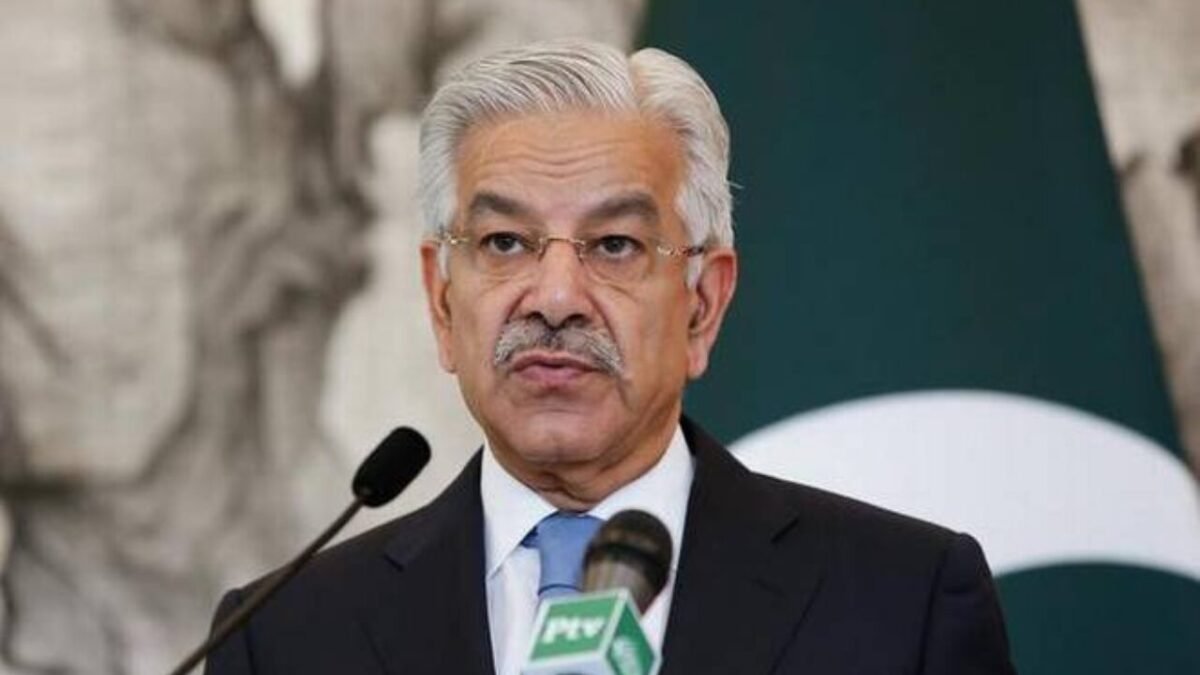
Pakistan’s Defence Minister Khawaja Muhammad Asif declared “open war” with the Afghan Taliban government on February 27, 2026, after a dramatic escalation of cross-border violence along the disputed Durand Line.
The sharpest rupture in Pakistan-Afghanistan relations since the Taliban’s return to power in 2021 came in a single 24-hour period of retaliatory strikes and fiery rhetoric. On Thursday, February 26, Afghan Taliban forces launched what they called “large-scale offensive operations” against Pakistani military posts along the 2,600-kilometre Durand Line. Taliban spokesperson Zabihullah Mujahid claimed their fighters killed 55 Pakistani soldiers, captured several others, destroyed 19 army posts and two bases, and seized territory in a four-hour battle near the Torkham crossing.
Pakistan reported far lower losses — two soldiers killed and three wounded — while accusing the Taliban of “unprovoked firing” on multiple locations in Khyber Pakhtunkhwa province. Mortar shells and a missile also struck a refugee camp near Torkham, wounding at least seven civilians, including women and children.
In the early hours of Friday, Pakistan responded with a major airstrike campaign codenamed Operation Ghazab lil-Haq. Pakistani jets hit what Islamabad described as “Afghan Taliban defence targets” in three key areas: the capital Kabul, Kandahar, and Paktia province. Information Minister Attaullah Tarar said the strikes destroyed two brigade headquarters and one corps headquarters in Kabul, a corps headquarters, brigade headquarters, ammunition depot and logistics base in Kandahar, and another corps headquarters in Paktia. Pakistan claimed 36 to 133 Taliban fighters killed (figures varied across statements) and insisted only military targets were hit.
Explosions rocked Kabul shortly after 1:50 am local time. Afghan forces fired anti-aircraft guns in response. Former Afghan President Hamid Karzai urged national unity to defend the homeland.
Hours after the bombs fell, Defence Minister Khawaja Asif took to X (formerly Twitter) with a blunt declaration that instantly made global headlines:
“Our patience has reached its limit. Now it is open war between us and you… Pakistan’s army did not come from across the seas. We are your neighbours; we know your ins and outs.”
He added the Punjabi Sufi phrase “Now it will be Dama Dam Mast Qalandar” — a cultural expression implying unrelenting, devotional pressure — and accused the Taliban of turning Afghanistan into “a colony of India,” gathering terrorists from around the world, exporting terrorism into Pakistan, and stripping Afghan women of basic Islamic rights. Asif reminded the Taliban that Pakistan had hosted millions of Afghan refugees for decades.
The roots of the crisis lie in Islamabad’s long-standing charge that the Taliban government harbours Tehrik-i-Taliban Pakistan (TTP) militants who have carried out deadly attacks inside Pakistan. Pakistan says it exhausted diplomatic channels, including talks brokered by friendly countries, before resorting to force. Earlier Pakistani strikes in Nangarhar and Paktika provinces this month had already killed civilians according to Kabul, setting the stage for Thursday’s Taliban retaliation.
Neither side has formally declared war through parliament or announced ground operations. Pakistan’s vastly superior conventional military makes full-scale invasion unlikely in the short term, but the rhetoric and cross-border strikes mark a dangerous new phase. The United Nations has urged both countries to protect civilians and return to dialogue.
As of Friday evening, sporadic exchanges of fire continued along the border while international capitals — from Beijing to Washington — watched nervously. China, a close ally of Pakistan and major investor in Afghanistan, is expected to press for de-escalation. For now, the two neighbours that once called each other “brothers” are locked in open military confrontation, with the Durand Line once again the world’s most volatile frontier.