
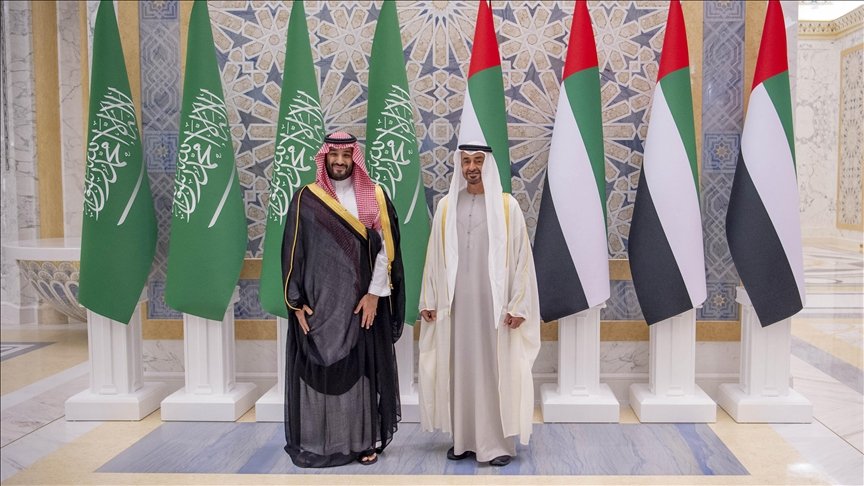
In the pre-dawn hours of December 30, 2025, the fragile veneer of unity within the Saudi-led coalition in Yemen shattered with the thunder of airstrikes. Saudi warplanes targeted the port city of Mukalla in Yemen’s eastern Hadramawt province, destroying what Riyadh claimed was an unauthorized shipment of weapons and military vehicles from the United Arab Emirates (UAE) destined for the Southern Transitional Council (STC), a separatist group backed by Abu Dhabi. This “limited” strike, as described by Saudi state media, was no mere tactical operation; it was a deliberate escalation that exposed the deepening fissures between two Gulf powerhouses once hailed as unbreakable allies. What began as a joint intervention against Iran-backed Houthi rebels in 2015 has devolved into a proxy struggle for influence, resources, and regional dominance. This incident is not just a footnote in Yemen’s endless civil war—it marks the point of no return in Saudi-UAE relations, potentially reshaping the Middle East’s geopolitical landscape and exacerbating one of the world’s worst humanitarian crises.
The Roots of the Rift: From Coalition Partners to Regional Rivals
To understand the gravity of this airstrike, one must rewind to the coalition’s formation. In March 2015, Saudi Arabia, under the ambitious leadership of Crown Prince Mohammed bin Salman (MBS), launched Operation Decisive Storm to restore Yemen’s internationally recognized government after the Houthis seized Sana’a. The UAE, led by Crown Prince Mohammed bin Zayed (MBZ), joined as a key partner, providing ground troops and air support. Together, they framed the intervention as a bulwark against Iranian expansionism, with the UAE’s elite forces playing a pivotal role in southern Yemen.
However, beneath the surface, their objectives diverged early on. Saudi Arabia, sharing a 1,800-kilometer border with Yemen, prioritized a unified state to secure its southern flank and counter Houthi threats to its cities and oil infrastructure. Riyadh has invested heavily in pro-government forces like the Presidential Leadership Council (PLC) and tribal alliances in Hadramawt, viewing southern separatism as a direct threat to Yemen’s territorial integrity. In contrast, the UAE has pursued a more fragmented vision, bolstering the STC—a group advocating for the independence of southern Yemen, reminiscent of the pre-1990 division. Abu Dhabi’s support for the STC includes military training, funding, and even control over strategic assets like Socotra Island in the Gulf of Aden, which serves UAE’s broader maritime ambitions in the Red Sea and Indian Ocean.
This divergence isn’t isolated to Yemen. The Saudi-UAE rivalry has spilled into other theaters, such as Sudan, where Riyadh backs the Sudanese Armed Forces while Abu Dhabi supports the Rapid Support Forces (RSF) in a brutal civil war. In OPEC+, tensions flared in 2021 over production quotas, nearly derailing the cartel. And in Syria and Libya, the two have backed opposing factions, underscoring a fundamental clash: Saudi Arabia’s focus on stability and centralized control versus the UAE’s preference for decentralized, proxy-driven influence that often aligns with Israeli interests in countering Iran. As one analyst on X noted, “The Saudi-UAE alliance appears to be fracturing… MBS realizes how much negative PR the UAE is getting over the Sudan stuff and decided now is the time to get the long knives.”
By late 2025, these strains had reached a boiling point in Yemen. The STC’s offensive in early December, which captured key cities in Hadramawt like Seiyun, displaced Saudi-aligned forces and threatened Riyadh’s border security. Saudi warnings went unheeded, leading to preliminary strikes on December 26 and culminating in the Mukalla bombardment.
The Mukalla Strike: A Calculated Act of Defiance
The details of the incident paint a picture of calculated brinkmanship. According to Saudi claims, two vessels from the UAE’s Fujairah port arrived in Mukalla on December 27-28, disabling their tracking devices to offload arms without coalition approval. The cargo, allegedly including weapons and vehicles, was intended to fuel the STC’s push into oil-rich Hadramawt, which holds 80% of Yemen’s reserves. Saudi forces struck the unloaded equipment, reporting no casualties but emphasizing the action as a defense of Yemen’s “stability.”
The UAE’s response was swift and indignant. Abu Dhabi denied arming the STC, insisting the shipment contained only vehicles for its counterterrorism units and was pre-coordinated. In a statement from the UAE Ministry of Defense, it announced a “voluntary” withdrawal of its remaining forces, framing it as a commitment to regional stability while rejecting Saudi accusations. Yet, the STC, under leader Aidarus al-Zubaidi, defiantly rejected withdrawal demands, calling the strike an “attack on Hadramout itself.”
Yemen’s PLC, backed by Saudi Arabia, amplified the pressure: declaring a 90-day state of emergency, canceling a defense pact with the UAE, imposing a 72-hour blockade on ports and borders (except Saudi-approved ones), and ordering Emirati forces out within 24 hours. This ultimatum, echoed by Riyadh, marked the first time Saudi Arabia publicly labeled UAE actions as “extremely dangerous” and a “red line” for its national security.
Public sentiment on platforms like X reflects the shock. One user described it as “allies turned adversaries,” highlighting the proxy struggle over the Gulf of Aden. Another warned, “This development is unlikely to remain confined to Yemen alone… Sudan may soon witness game-changing developments.” These reactions underscore the incident’s broader resonance.
Why Now? Power Plays and Strategic Imperatives
The airstrike isn’t an aberration but the culmination of strategic misalignments. For Saudi Arabia, the STC’s advances in Hadramawt—facilitated by UAE support—threaten vital shipping lanes and border stability. Riyadh sees Abu Dhabi’s actions as empowering secessionists who could fragment Yemen, inviting Houthi exploitation and Iranian meddling. Moreover, with MBS pushing Vision 2030’s economic diversification, instability in Yemen risks derailing investments and exposing vulnerabilities to Houthi drone attacks.
The UAE, meanwhile, views Yemen through a lens of counterterrorism and maritime security. By backing the STC, Abu Dhabi secures footholds in the Bab al-Mandeb Strait, crucial for global trade and countering Houthi threats to shipping. Critics argue this is part of a “Axis of Secessionists” strategy, where the UAE supports breakaway groups in Yemen, Sudan, and beyond to project power without direct occupation. Yet, this approach alienates Riyadh, which fears a balkanized Yemen mirroring Somalia’s chaos.
Politically incorrect as it may be, the UAE’s alignment with Israel—evident in normalized ties and shared anti-Iran stances—further strains relations. Saudi Arabia, while warming to Israel, prioritizes Palestinian issues and broader Arab unity, viewing UAE’s aggressive proxy plays as reckless. As one X post bluntly stated, “Pure GREED! Hope they destroy each other.”
Broader Implications: A Fractured Coalition and Escalating Risks
This rift could fracture the anti-Houthi front, benefiting the Houthis and Iran. With the coalition divided, Houthis may intensify attacks on Saudi infrastructure or Red Sea shipping, prolonging Yemen’s war and its humanitarian toll—where 24 million people need aid and famine looms.
Regionally, it jeopardizes OPEC+ cohesion. Oil markets reacted with a 2% spike in Brent and WTI prices, adding a $2-4 per barrel risk premium amid fears of supply disruptions. Gulf stocks dipped, signaling investor unease. In Sudan, the rivalry could intensify, with MBS reportedly urging U.S. pressure on the UAE to cease RSF support.
Internationally, the U.S. and UN have called for de-escalation, but Washington’s waning influence—post-Afghanistan withdrawal—limits leverage. Oman, aligned with Saudi calls for a unified Yemen, may mediate, but success is uncertain.
A Necessary Reckoning or Path to Chaos?
In my view, this confrontation, while risky, is a necessary realignment. The Saudi-UAE alliance was always expedient, masking incompatible visions. By drawing red lines, Riyadh asserts its primacy, potentially forcing a more sustainable Yemen settlement. However, without dialogue, it risks a “hotter” proxy war, as one expert warned. The UAE’s withdrawal may de-escalate temporarily, but the STC’s defiance suggests ongoing volatility.
Ultimately, Yemen’s people—trapped in this Gulf chess game—deserve better. As the coalition crumbles, the international community must prioritize peace talks over proxy patronage. If not, 2026 could see Yemen’s division formalized, with ripple effects from the Red Sea to the Horn of Africa. The Mukalla strike isn’t just a bomb—it’s a harbinger of a reordered Middle East.