
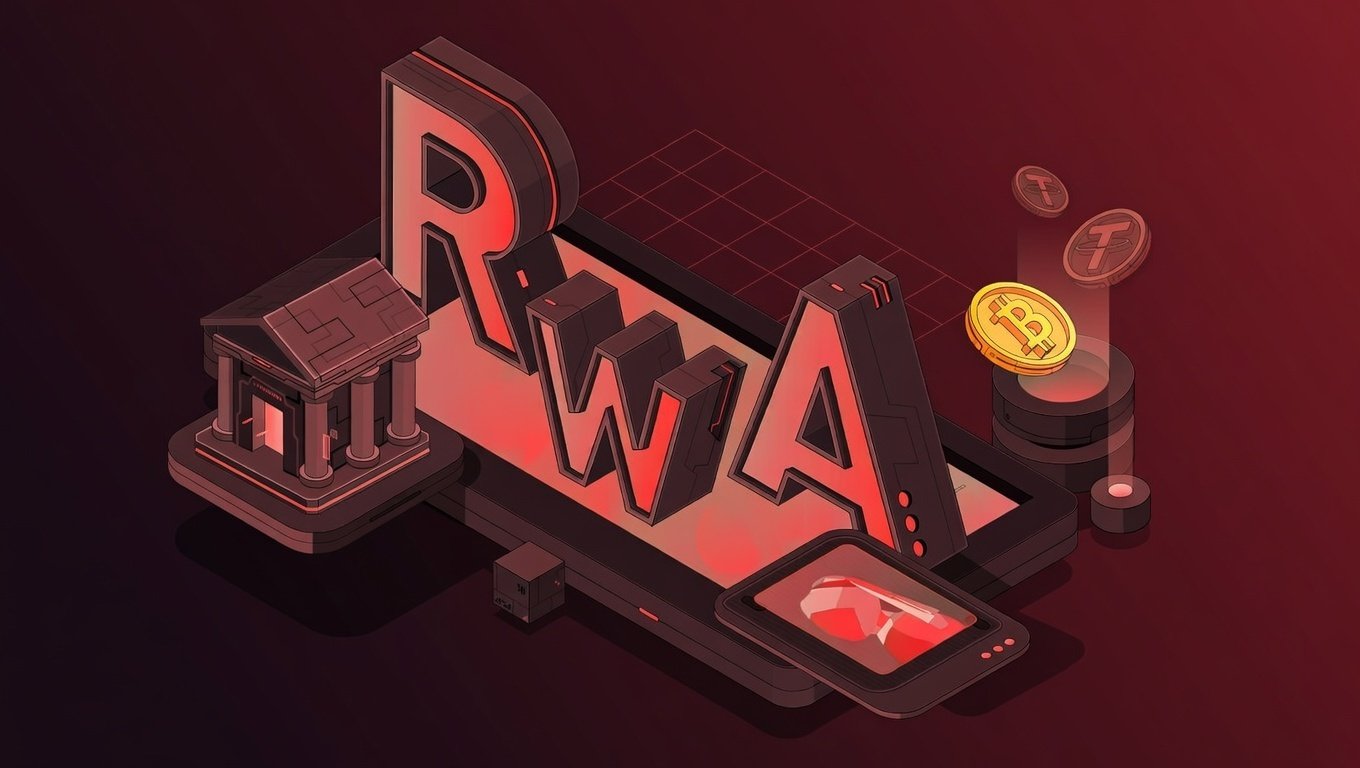
In the fast-evolving world of finance, few voices carry as much weight as Larry Fink, CEO of BlackRock, the world’s largest asset manager with over $10 trillion under management. For years, Fink has championed asset tokenization—the process of converting traditional assets like stocks, bonds, and real estate into digital tokens on blockchain networks—as the “next generation for markets.” As of early 2026, his vision is materializing rapidly, with tokenized real-world assets (RWAs) surpassing $25 billion and tokenized U.S. Treasuries alone exceeding $10 billion.
Tokenization represents a fundamental upgrade to financial infrastructure. By recording assets on distributed ledgers, it enables instant settlement, fractional ownership, 24/7 trading, and reduced intermediaries. Traditional markets rely on slow, costly processes involving custodians, clearinghouses, and manual reconciliations. Blockchain-based tokenization eliminates much of this friction, promising greater efficiency and accessibility. Fink has repeatedly emphasized these benefits, stating in late 2025 that tokenization could democratize private markets and extend trading hours for equities and fixed income. In his 2025 Chairman’s Letter and a co-authored Economist piece, he described it as a transformative technology potentially larger than previous market revolutions.
At the forefront of this shift is BlackRock’s own tokenized fund, BUIDL (BlackRock USD Institutional Digital Liquidity Fund). Launched in 2024 in partnership with Securitize, BUIDL is a blockchain-based money market fund backed by U.S. Treasuries, cash, and repo agreements. It offers institutional investors instant subscriptions and redemptions, with dividends paid directly on-chain. The fund has expanded across multiple blockchains, including Ethereum, Solana, Aptos, Arbitrum, Avalanche, Optimism, and Polygon, enhancing interoperability.
BUIDL’s growth has been remarkable. It peaked near $2.9 billion in assets under management in late 2025, showcasing strong institutional demand. As of February 2026, it stands at approximately $1.8 billion, reflecting some market adjustments but remaining one of the largest single tokenized products. Competitors like Ondo Finance have surged ahead in the tokenized Treasuries subcategory with around $2 billion in TVL, but BUIDL’s multi-chain presence and BlackRock branding make it a benchmark for institutional adoption.
The broader tokenized asset market tells an even more compelling story. Tokenized U.S. Treasuries have crossed $10 billion in value, driven by products from BlackRock, Franklin Templeton, Ondo, and others. This segment alone grew over 125% in 2025, attracting investors seeking yield in a programmable, on-chain format. Including private credit, funds, equities, and real estate, the total on-chain RWA market reached about $25 billion by early February 2026—a significant leap from under $5 billion just two years prior.
This growth isn’t happening in isolation. Major institutions are piling in: JPMorgan has tokenized collateral on its permissioned blockchain, Amundi launched euro-denominated tokenized funds, and platforms like Avalanche saw RWA TVL explode nearly 950% year-over-year to over $1.3 billion. Tokenized equities are approaching $1 billion, hinting at future potential for stocks and real estate.
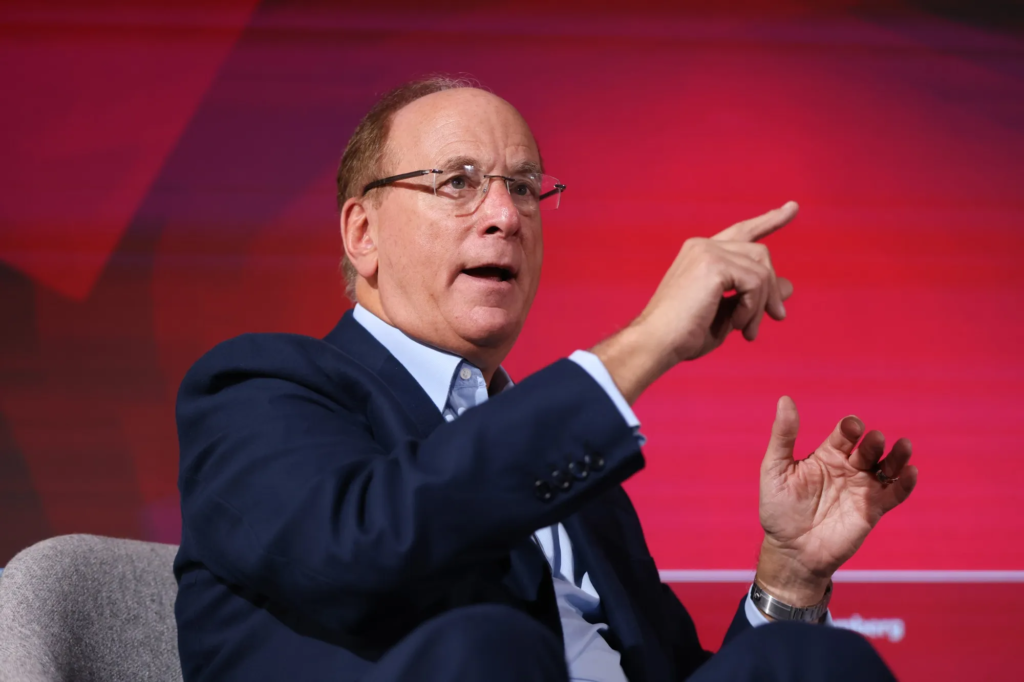
Fink and industry analysts frame tokenization as a path to trillion-dollar scale. Forecasts vary, but many project the market could reach hundreds of billions by 2030, with optimistic estimates hitting $10–16 trillion if regulatory clarity and interoperability improve. A unified global ledger, as Fink has suggested, could enable seamless cross-border settlement and programmable finance—turning static assets into dynamic, composable building blocks.
Yet challenges persist. Regulatory fragmentation across jurisdictions slows widespread adoption. Blockchain interoperability remains imperfect, with assets often siloed on specific chains. Security concerns and market volatility have led to occasional outflows, as seen in BUIDL’s recent dip from its peak. Scaling secondary market liquidity—beyond initial minting—will be crucial for sustained growth in 2026 and beyond.
Despite these hurdles, momentum is undeniable. Tokenization bridges traditional finance (TradFi) and decentralized finance (DeFi), offering institutions blockchain benefits without full crypto exposure. For retail investors, it promises fractional access to high-value assets like real estate or private equity.
Larry Fink’s persistent advocacy has helped legitimize this technology, drawing in trillions in potential capital. As he noted in recent interviews, we’re only at the beginning. If tokenization delivers on its promises, it could redefine global markets, creating a more efficient, inclusive financial system worth trillions.