
In a swift and decisive response to a deadly ambush that claimed the lives of three Americans, the United States military unleashed a large-scale airstrike campaign across central Syria on Friday, targeting dozens of suspected Islamic State (ISIS) sites. Dubbed “Operation Hawkeye Strike” by the Pentagon—a nod to the “Hawkeye State” of Iowa, home to the two fallen U.S. Army soldiers—the operation marks a significant escalation in America’s ongoing counterterrorism efforts in the region. President Donald Trump, who had vowed “very serious retaliation” immediately after the attack, praised the strikes as fulfilling his promise to hold ISIS accountable.
The retaliatory action comes amid a backdrop of rapidly improving U.S.-Syrian relations following the 2024 ouster of longtime dictator Bashar al-Assad. Syria’s interim government, led by President Ahmed al-Sharaa, has partnered closely with Washington in combating ISIS remnants, even formally joining the U.S.-led Global Coalition to Defeat ISIS last month. However, the recent violence underscores the persistent threat posed by the terrorist group, which continues to exploit security gaps in the war-torn country.
The Deadly Ambush: A Shock to Joint Operations
The incident that precipitated the strikes occurred on December 13, 2025, near the ancient city of Palmyra in central Syria’s Homs Governorate. A joint U.S.-Syrian patrol, engaged in routine counter-ISIS operations and a “key leader engagement,” was ambushed by a lone gunman. The attacker opened fire on the convoy, killing two U.S. Army soldiers from the Iowa National Guard—Sgt. Edgar Brian Torres Tovar, 25, of Des Moines, and Sgt. William Nathaniel Howard, 29, of Marshalltown—as well as a civilian U.S. interpreter. Three additional American service members and at least two Syrian security personnel were wounded.
U.S. Central Command (CENTCOM) described the assault as the work of a “lone ISIS gunman,” who was subsequently “engaged and killed” by partner forces. Syrian officials later revealed that the perpetrator was a member of their own security forces who had been flagged for extremist views and was slated for dismissal. He had served in the forces for over 10 months and was under review as recently as December 10. This revelation raised concerns about potential infiltration of Syria’s nascent security institutions, rebuilt hastily after Assad’s fall.
President Trump reacted swiftly on Truth Social, labeling it “an ISIS attack against the U.S., and Syria, in a very dangerous part of Syria.” He expressed outrage on behalf of both nations, noting that al-Sharaa was “extremely angry and disturbed” by the incident. Trump mourned the fallen as “three Great American Patriots” and assured the public that the wounded were recovering well. In the days following, Syrian authorities arrested five suspects in connection with the ambush, signaling a commitment to internal accountability.
This marked the first U.S. fatalities in Syria since Assad’s regime collapsed, highlighting the risks of joint operations in areas not fully under Damascus’s control. Palmyra, with its UNESCO-listed ruins infamously desecrated by ISIS during its 2015 occupation, remains a hotspot for insurgent activity.
Operation Hawkeye Strike: A Thunderous Response
By December 19, the U.S. military had translated intelligence gathered from post-attack operations into action. Following the ambush, U.S. and partner forces conducted at least 10 ground assaults on ISIS targets in Syria and Iraq, detaining or killing around 23 suspects and recovering vital intelligence. This paved the way for Friday’s airstrikes, which hit dozens of sites, including weapons caches, infrastructure, and operational hubs across the Syrian desert.
Pentagon officials described the operation as a “sharp military escalation,” building on nearly 80 counterterrorism missions since July that have detained 119 insurgents and killed 14. While U.S. troop levels in Syria have dwindled to about 1,000—half the number at the year’s start—the strikes involved fighter jets, drones, and possibly other assets, signaling America’s enduring commitment to preventing ISIS resurgence.
No civilian casualties or strikes on Syrian government or Iranian proxy targets were reported, with the focus squarely on ISIS. The operation aligns with broader U.S. intelligence warnings: ISIS, though territorially defeated in 2019, retains 5,000–7,000 fighters across Syria and Iraq and has inspired at least 11 plots against U.S. targets this year alone. Top officials have cautioned that the group could exploit Syria’s post-Assad transition to free thousands of detained fighters and their families.
The Evolving U.S.-Syria Partnership: From Adversaries to Allies
The strikes occur against the dramatic thaw in U.S.-Syrian ties. After decades of hostility under Assad—including severed diplomatic relations since 2012—the fall of his regime in late 2024 opened a new chapter. Ahmed al-Sharaa, a former jihadist leader who rebranded his group Hayat Tahrir al-Sham into a nationalist force, assumed power and quickly pursued normalization.
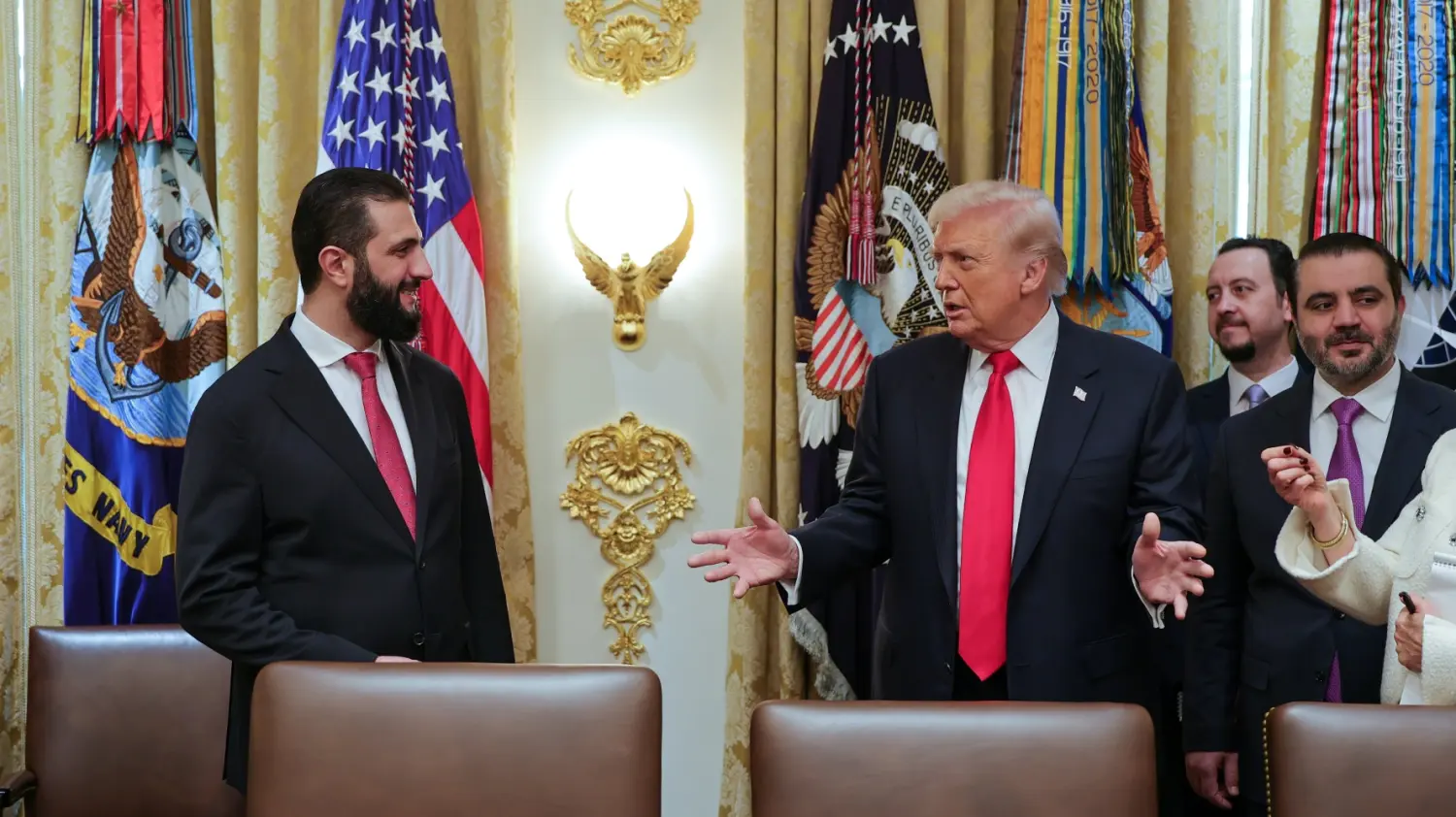
Key milestones include al-Sharaa’s historic White House visit in November 2025—the first by a Syrian head of state—where he met Trump multiple times. Syria joined the anti-ISIS coalition as its 90th member, committed to counterterrorism cooperation, and received partial sanctions relief. Trump has publicly praised al-Sharaa as a “tough guy from a tough place” and a strong partner against extremism.
This alliance has yielded results: joint operations have degraded ISIS cells, and Syria has conducted preemptive arrests. Yet challenges persist. Al-Sharaa’s rapid reconstitution of security forces has left vulnerabilities to infiltration, as evidenced by the Palmyra attacker. Analysts note that ISIS aims to disrupt this U.S.-Damascus rapprochement, viewing it as a threat to its survival.
Broader Implications: ISIS Resurgence and Regional Stability
The events raise critical questions about ISIS’s enduring threat. Militarily vanquished in 2019, the group operates as an insurgency, carrying out sporadic attacks amid Syria’s fractured landscape. U.S. officials warn of potential exploitation of detention camps holding 9,000–10,000 fighters and 26,000 family members.
For Trump, the strikes reinforce his “America First” approach to counterterrorism—targeted, forceful responses without large-scale ground commitments. They also test his investment in al-Sharaa: while the Syrian leader has condemned the attack and pledged support, sustained cooperation will require addressing internal radicalization.
Regionally, the operation underscores Syria’s pivot toward the West, potentially easing tensions with neighbors like Israel and bolstering stability. However, risks remain, including Iranian proxies and Kurdish forces in the northeast.
As Operation Hawkeye Strike continues—with potential for further actions—the U.S. sends a clear message: attacks on American personnel will meet overwhelming force. In honoring the fallen from Iowa and ensuring ISIS pays a steep price, Washington reaffirms its role in a post-Assad Middle East, where old enemies can become unlikely allies against a common foe.