
In the early hours of Tuesday, December 9, 2025, US stock futures exhibited a subdued yet mildly positive tone in premarket trading, reflecting a market poised on the edge of anticipation. Investors are collectively holding their breath as the Federal Reserve kicks off its two-day Federal Open Market Committee (FOMC) policy meeting, a pivotal event that could shape monetary policy for the coming year. This cautious stance follows a day of modest pullbacks on Wall Street, underscoring the uncertainty surrounding interest rates, economic projections, and broader global influences.
A Snapshot of Premarket Movements
As of premarket hours, major indices showed minimal volatility, with futures contracts indicating a flat to slightly upward bias:
- Dow Jones Industrial Average (DJIA) futures: Hovering around flat to a modest gain of 0.05% to 0.1%. The DJIA, often seen as a barometer for blue-chip industrial and consumer stocks, is signaling stability amid broader economic concerns.
- S&P 500 futures: Similarly restrained, with movements ranging from flat to a 0.1% to 0.2% increase. This broad-market index, encompassing 500 of the largest US companies, captures a diverse cross-section of the economy, from technology to healthcare.
- Nasdaq 100 futures: Showing a touch more optimism at flat to 0.12% to 0.2% higher, buoyed by strength in technology and growth-oriented sectors.
These figures come on the heels of Monday’s trading session, where the major benchmarks experienced slight declines. The Dow Jones fell by 0.45%, the S&P 500 dipped 0.35%, and the Nasdaq Composite edged down 0.14%. Analysts attribute this to profit-taking after recent gains and a general “wait-and-see” approach as the Fed’s deliberations loom large. Trading volumes were lighter than average, with many participants opting to sideline capital until clearer signals emerge from Washington.
The Fed’s Shadow: Expectations for a Rate Cut and Beyond
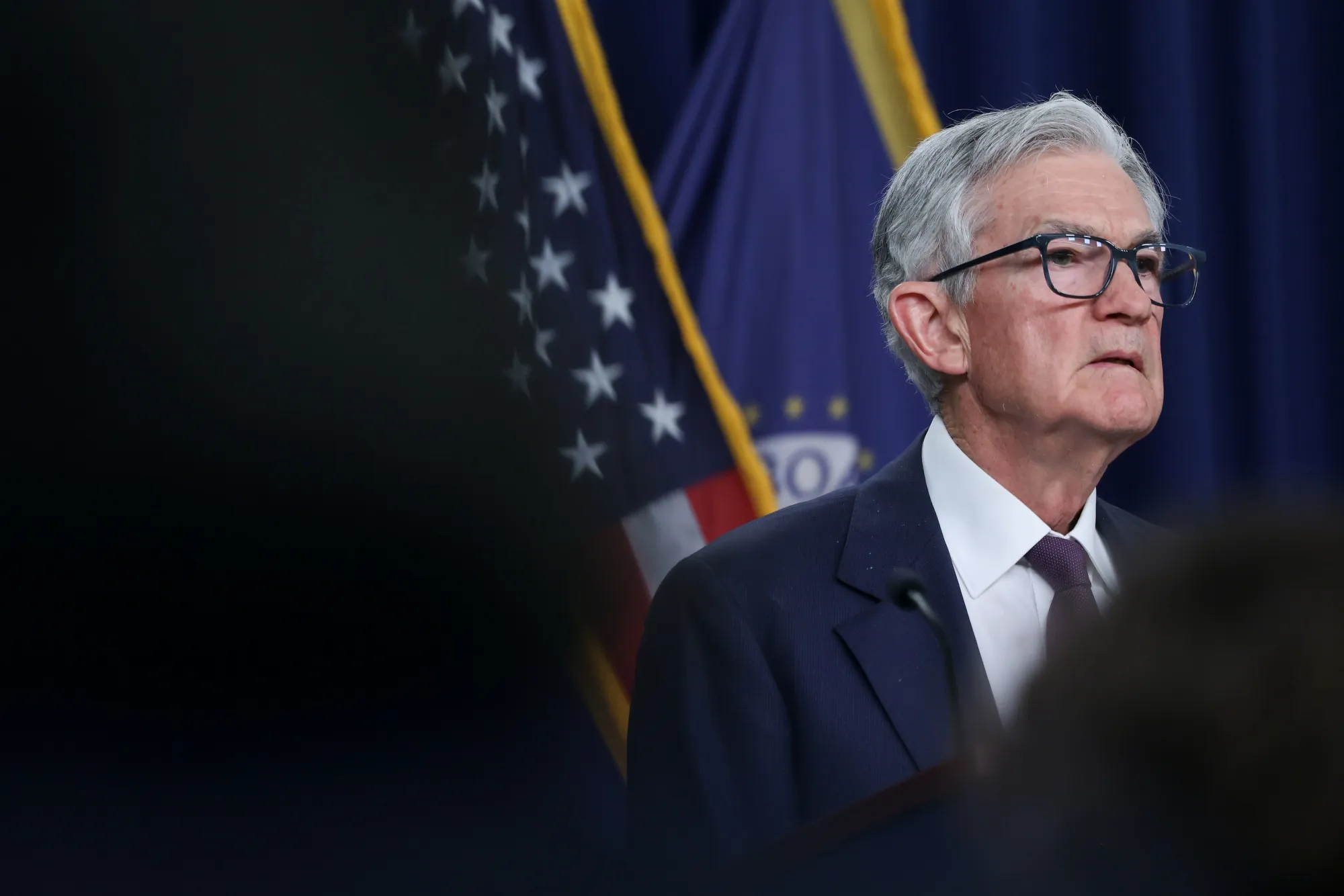
At the heart of today’s market dynamics is the FOMC meeting, which begins today and concludes with a policy announcement on Wednesday, followed by a press conference from Fed Chair Jerome Powell. Market participants are pricing in an overwhelming probability—around 89% to 90%, according to the CME FedWatch Tool—of a 25 basis point (0.25%) cut to the federal funds rate. If realized, this would mark the third consecutive rate reduction, lowering the benchmark rate from its current range amid efforts to support economic growth.
The rationale for this expected cut stems from recent economic data painting a picture of a cooling yet resilient US economy. Labor market indicators, such as nonfarm payrolls and unemployment rates, have shown signs of softening, with job growth moderating from the post-pandemic boom. Inflation, while still above the Fed’s 2% target, has been easing steadily—headline CPI figures have trended downward, influenced by stabilizing energy prices and supply chain recoveries. However, persistent wage pressures and shelter costs continue to fuel debates among policymakers about the pace of normalization.
Beyond the immediate rate decision, investors are laser-focused on the Fed’s updated Summary of Economic Projections (SEP), commonly known as the “dot plot.” This graphical representation plots individual FOMC members’ expectations for future interest rates, providing a window into the committee’s collective thinking. The September dot plot suggested a median projection of four rate cuts in 2025, but revisions could signal a more hawkish or dovish tilt for 2026. Disagreements among officials—some advocating for quicker easing to avert recession risks, others cautioning against premature cuts that could reignite inflation—add layers of intrigue.
Chair Powell’s post-meeting remarks will be dissected for any hints on the trajectory ahead. Will he emphasize data-dependency, or provide forward guidance on pausing cuts? Historical precedents, such as the 2019 rate-cutting cycle, remind us that Powell’s tone can sway markets more than the decision itself. A dovish surprise could ignite a rally, while hawkish undertones might trigger sell-offs.
Key Drivers Shaping Market Sentiment
Several sector-specific and corporate developments are injecting pockets of optimism into an otherwise tentative landscape:
- Tech and AI Sector Resilience: Amid broader caution, technology stocks are leading the charge. Nvidia, a powerhouse in graphics processing units (GPUs) and artificial intelligence hardware, saw gains following reports of conditional approvals for chip sales to China. These approvals, likely tied to US export controls aimed at curbing technology transfers amid geopolitical tensions, represent a potential revenue boost for the company. Nvidia’s stock has been a market darling in recent years, fueled by the AI boom, and this news underscores the ongoing interplay between innovation and international trade policies. Similarly, Broadcom, a key player in semiconductors and networking solutions, posted advances. The company’s exposure to data centers and wireless communications positions it well in an era of expanding digital infrastructure, with analysts pointing to strong quarterly earnings expectations as a catalyst.
- Corporate Realignments and Index Shifts: Market movements were also influenced by changes to major indices. Notably, Ares Management, a leading alternative asset manager specializing in credit, private equity, and real estate, benefited from its inclusion in the S&P 500 index. Such additions often trigger inflows from index-tracking funds, providing a mechanical lift to share prices. This move highlights the growing prominence of alternative investments in diversified portfolios, as traditional assets face headwinds from higher rates.
Other factors at play include global economic cues, such as European Central Bank policies and Asian market performances, which have been mixed. Oil prices remain stable, offering some relief to inflation watchers, while bond yields—particularly the 10-year Treasury—are inching lower in anticipation of the Fed’s actions.
Broader Economic Context and Investor Psychology
This FOMC meeting arrives at a crossroads for the US economy. Post-pandemic recovery has been uneven, with robust consumer spending clashing against manufacturing slowdowns and regional banking stresses. The Fed’s dual mandate—maximum employment and price stability—requires a delicate balance, especially as fiscal policies, including potential tax changes under the current administration, add variables.
Investor sentiment, as gauged by surveys like the AAII Investor Sentiment Survey, leans toward cautious optimism. While fears of a hard landing have receded, geopolitical risks—from Middle East tensions to US-China relations—linger. Options trading data shows elevated implied volatility, with the VIX (often called the “fear index”) ticking up slightly, indicating hedging activity.
For retail and institutional investors alike, the message is clear: diversification remains key. Sectors like technology and healthcare may offer growth potential, while defensives such as utilities and consumer staples provide ballast.
Looking Ahead: Wednesday’s Verdict and 2026 Implications
As the FOMC convenes, markets are in a holding pattern, with potential for volatility post-announcement. A confirmed 25 bp cut could propel indices higher, validating the soft-landing narrative. However, any upward revision in the dot plot—suggesting fewer cuts in 2026—might dampen enthusiasm, leading to rotations out of risk assets.
In the longer term, the Fed’s signals will influence everything from mortgage rates to corporate borrowing costs, rippling through the economy. Investors should monitor subsequent data releases, such as upcoming CPI reports and employment figures, for confirmation of trends.
In summary, Tuesday’s premarket flatness belies the undercurrents of expectation and strategy. With the Fed at the helm, the coming days could define the market’s path into the new year, blending hope with measured realism in an ever-evolving financial landscape.