
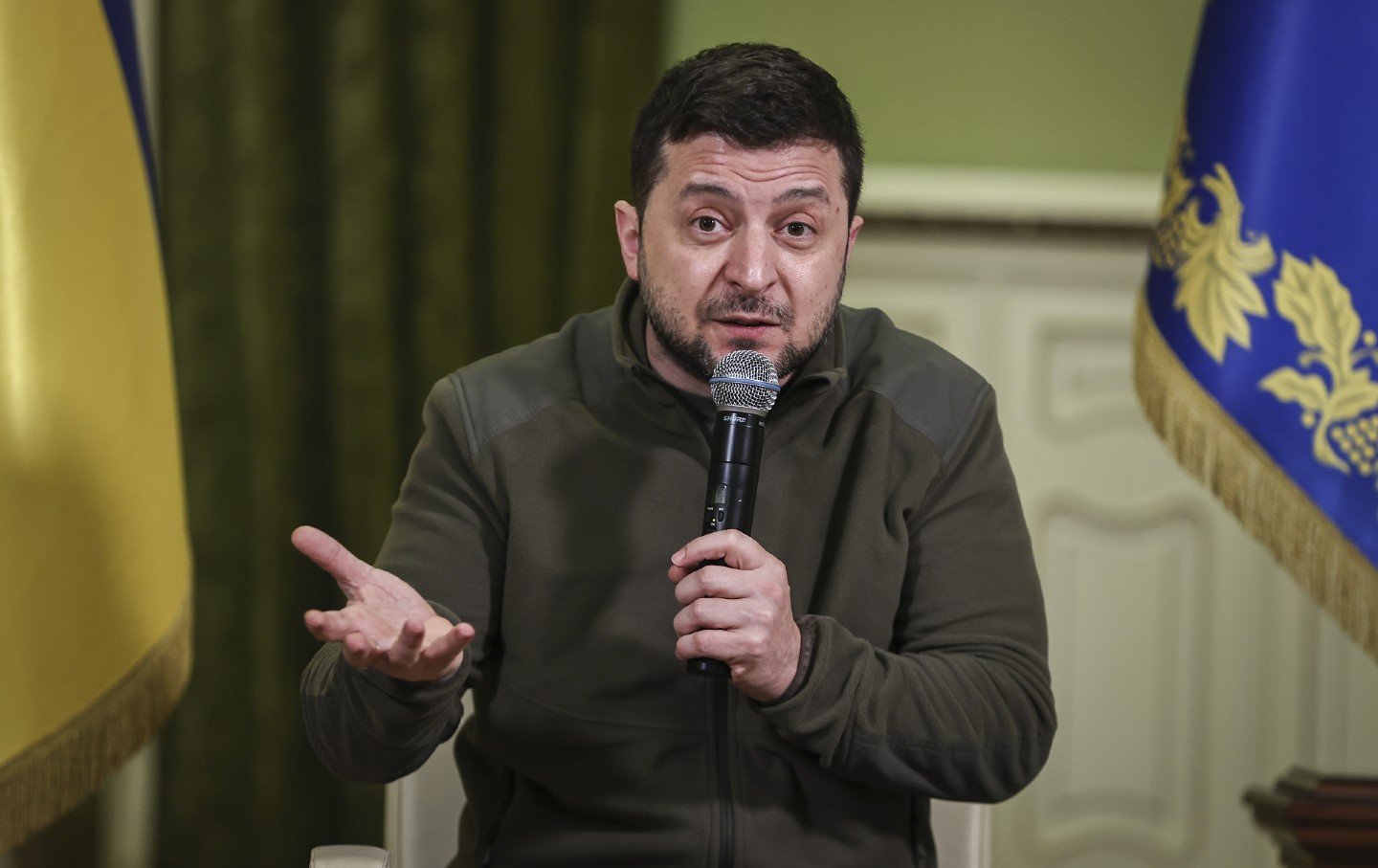
On December 14, 2025, Ukrainian President Volodymyr Zelenskyy announced his willingness to abandon Ukraine’s long-standing bid for NATO membership in exchange for alternative Western security guarantees. Speaking to reporters via a WhatsApp chat ahead of high-stakes peace talks in Berlin with U.S. envoys Steve Witkoff and Jared Kushner, Zelenskyy described this as a “compromise” from Kyiv’s side. He emphasized seeking “Article 5-like” bilateral guarantees from the United States, Europe, Canada, Japan, and others—legally binding promises mimicking NATO’s mutual defense clause.
While Zelenskyy framed this as pragmatic flexibility amid stalled allied support for immediate NATO accession, the decision is profoundly unwise and ultimately meaningless. It concedes one of Russia’s core war aims upfront, without securing reciprocal commitments, while betting Ukraine’s future security on historically unreliable assurances. This move not only undermines Ukraine’s sovereignty but risks prolonging vulnerability to Russian aggression, rewarding Vladimir Putin’s invasion strategy, and eroding domestic and international confidence in Kyiv’s leadership.
Handing Putin a Propaganda and Strategic Victory Without Reciprocity
Russia’s full-scale invasion in 2022 was explicitly justified by Putin as a response to NATO’s eastward expansion and Ukraine’s aspirations to join the alliance. Demanding Ukrainian neutrality has been a non-negotiable red line for Moscow from the outset. By publicly offering to drop this bid before substantive talks even fully begin, Zelenskyy grants Russia a major triumph on a silver platter—one of its primary objectives—without extracting meaningful concessions in return, such as full territorial withdrawal, reparations, or demilitarization on Russia’s side.
This unilateral gesture weakens Ukraine’s bargaining position. Negotiations involve a U.S.-drafted 20-point peace plan, reportedly refined by European allies, but Russian officials have already dismissed European and Ukrainian input as “unlikely to be constructive.” Moscow continues to insist on territorial control, particularly in Donetsk, and has shown no signs of compromising. Zelenskyy rightly rejected U.S. suggestions for ceding parts of Donetsk or creating demilitarized zones there, calling them unfair. Yet yielding on NATO first signals desperation, potentially inviting Russia to pocket this win and escalate demands further. History shows aggressors rarely stop when handed free victories—think Munich 1938, where concessions to Hitler only emboldened more aggression.
Alternative Guarantees: Paper Promises That History Proves Worthless
Zelenskyy’s pivot relies on “robust, legally binding” bilateral security guarantees equivalent to NATO’s Article 5. But this is a fantasy built on wishful thinking. NATO’s collective defense is unique because it involves 32 nations, nuclear deterrents, integrated command structures, and a track record of credibility that has prevented major wars in Europe for decades. Bilateral deals, even if ratified by the U.S. Congress (as Zelenskyy insists), lack this enforcement mechanism and are vulnerable to political whims.
The most infamous precedent is the 1994 Budapest Memorandum, where Ukraine denuclearized—the third-largest arsenal in the world at the time—in exchange for security assurances from Russia, the U.S., and the UK. Russia violated it twice (Crimea 2014, full invasion 2022), and the West’s response was sanctions and aid, not direct intervention. Post-2022 bilateral agreements with individual countries (e.g., UK, France, Germany) have provided weapons but no ironclad defense commitments. Why would new ones fare better, especially under a U.S. administration pushing for a quick deal and potentially reducing involvement?
These guarantees would likely be vague, conditional on future appropriations, or abandoned if domestic politics shift—imagine a future isolationist U.S. president or war-weary European parliaments. Without NATO’s automatic trigger, Russia could test boundaries with hybrid attacks, incursions, or another invasion, knowing the response might be delayed debates rather than unified action. Zelenskyy’s gamble leaves Ukraine in perpetual limbo: neutralized but not truly secure.
Undermining Ukraine’s Sovereignty and National Identity
NATO membership isn’t just a policy—it’s enshrined in Ukraine’s constitution since 2019, reflecting overwhelming public support as the ultimate safeguard against Russian imperialism. Polls consistently show majorities favoring Western integration, born from centuries of subjugation and the sacrifices of nearly four years of war. Dropping this aspiration now, while Russia occupies about 20% of Ukrainian territory and continues daily attacks on civilians and infrastructure, feels like a betrayal of those who fought and died for a free, European future.
This decision risks deep domestic backlash. Hardliners, veterans, nationalists, and much of the public may view it as capitulation under pressure from a Trump administration reportedly threatening worse terms if Ukraine doesn’t bend. Zelenskyy’s presidential term has technically expired (extended under martial law), and concessions like this could fuel opposition, protests, or even challenges to his authority in a post-war environment. It also complicates EU integration, as a formally neutral Ukraine might face ongoing Russian interference in its affairs, turning it into a vulnerable buffer state rather than a sovereign European nation.
Appearing Weak in Negotiations and Eroding Allied Support
The timing couldn’t be worse. Zelenskyy made this offer publicly before the Berlin talks concluded, projecting eagerness to compromise amid reports of U.S. pressure. This contrasts sharply with his firm stance on territory but undermines overall leverage. Russia, sensing weakness, has no incentive to negotiate in good faith—Putin can simply wait, continue grinding advances, and demand more.
Moreover, it alienates potential supporters. European leaders like Germany’s Friedrich Merz and France’s Emmanuel Macron have coordinated with Zelenskyy, but conceding on NATO too early might make them question Kyiv’s resolve, potentially reducing future aid. The move plays into narratives pushed by skeptics in the West that Ukraine is prolonging the war unrealistically, even as Zelenskyy accuses Russia of dragging it out through infrastructure attacks leaving hundreds of thousands without power.
A Meaningless Gesture in the Face of Unrealistic Expectations
Ultimately, this concession is meaningless because NATO membership was never imminent during active conflict—key allies, including the U.S., have resisted fast-tracking it to avoid direct escalation. Holding the aspiration as leverage cost Ukraine nothing tangible in the short term, while providing moral and diplomatic high ground. Dropping it now achieves little beyond symbolic appeasement, unlikely to sway Putin, who has dismissed similar past proposals.
If the goal is a “dignified peace,” as Zelenskyy claims, true dignity comes from strength, not preemptive surrender. Robust alternatives don’t exist outside NATO’s framework. This decision risks a fragile truce that collapses like the Budapest Memorandum or Minsk agreements, inviting future aggression and leaving Ukraine to rebuild alone.
In conclusion, Zelenskyy’s willingness to abandon NATO aspirations is not wise realism—it’s a dangerous capitulation that rewards invasion, trades proven deterrence for illusions, and jeopardizes Ukraine’s hard-won independence. For a nation that has defied odds against a larger foe, this feels like a tragic misstep at a pivotal moment. The West must deliver far more than promises if this gamble is to have any chance of success; otherwise, history will judge it harshly as the point where Ukraine’s future security was bargained away for nothing.