
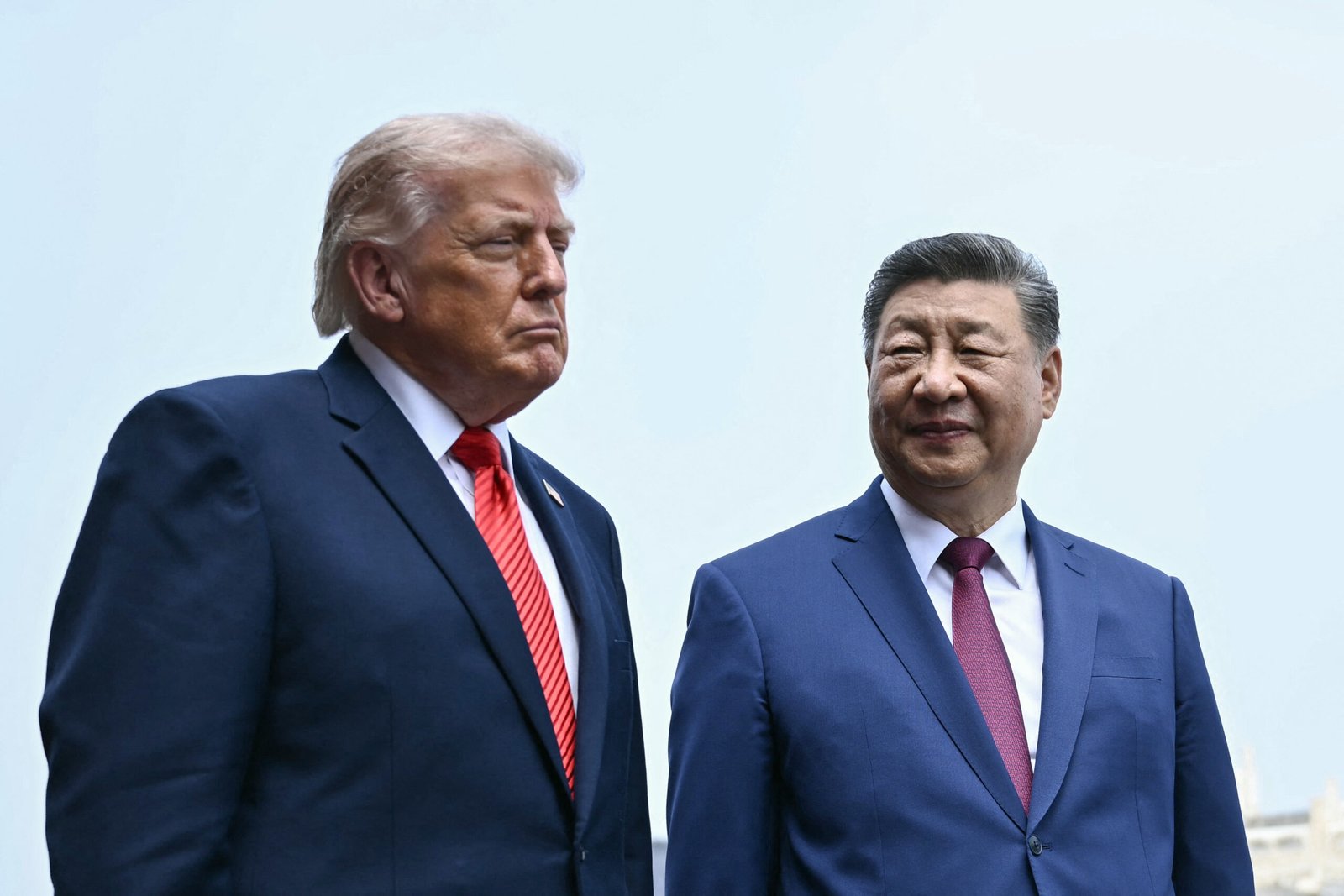
In recent dramatic development amid escalating tensions in the Middle East, U.S. President Donald Trump announced that Chinese President Xi Jinping pledged not to provide military equipment to Iran during their recent bilateral meeting. Trump described the commitment as a “big statement,” noting that Xi said it strongly. This assurance comes against the backdrop of ongoing conflict involving Iran, Israel, and the United States, raising critical questions about the resilience of China-Iran military ties and Beijing’s ability to influence outcomes through indirect support.
While the pledge focuses on “military equipment,” experts highlight a significant gray area: dual-use technologies, components, and limited finished systems that China has historically supplied. These items can be delivered relatively quickly via commercial routes, shadow fleets, or air cargo, potentially bolstering Iran’s asymmetric warfare capabilities in a prolonged conflict. This article examines the types of support China is positioned to provide rapidly, the logistics involved, strategic implications, and the constraints imposed by sanctions, diplomacy, and self-interest.
China’s relationship with Iran is complex, rooted in economic interdependence—particularly oil imports—and strategic balancing against U.S. influence. Despite public commitments, reports indicate ongoing flows of critical components for drones and missiles, even as direct arms transfers carry higher risks.
The Trump-Xi Pledge
During talks in Beijing, Trump highlighted Xi’s willingness to avoid arming Iran while continuing to purchase Iranian oil and offering help to reopen the Strait of Hormuz. This reflects China’s priority: maintaining energy security and trade routes without direct entanglement in a major war.
The pledge aligns with China’s long-standing caution. Beijing has avoided overt large-scale weapons shipments to Iran due to UN sanctions history, U.S. secondary sanctions, and the risk of escalation that could disrupt global commerce. However, “military equipment” is open to interpretation. Dual-use goods—items with civilian and military applications—have continued flowing, as documented by customs data and intelligence reports.
U.S. sanctions have targeted numerous Chinese entities, yet supply chains persist through intermediaries in Hong Kong, third countries, and mislabeling. This “Axis of Evasion” allows plausible deniability while sustaining Iran’s production lines.
Drone Technology and Components: The Fastest Lane for Support
Drones represent the most immediate and scalable form of assistance China can offer Iran. Iran has mastered reverse-engineering and local production of Shahed-series kamikaze and loitering munitions, heavily reliant on Chinese parts.
Key components include:
- Engines: Chinese firms supply or produce derivatives of models like the Limbach L550 (used in Shahed-136), Wankel rotary engines, and piston variants. Obscure companies market these openly, with hundreds of containers shipped.
- Electronics and Sensors: Fiber-optic cables, gyroscopes, computer chips, voltage converters, batteries, and navigation systems (potentially including BeiDou elements) enhance accuracy and range.
- Finished Systems: Reports from early 2026 indicate deliveries of attack drones and loitering munitions, which can be airlifted or shipped quickly for swarming tactics against naval assets, bases, or air defenses.
These items enable Iran to sustain high-volume production even after strikes on its facilities. In a conflict, thousands of low-cost drones could overwhelm defenses through attrition, targeting shipping in the Gulf or Israeli infrastructure. Delivery timelines: days to weeks via commercial air/sea routes.
China dominates ~80% of global drone component supply, giving it unique leverage to ramp up support without overt state-to-state transfers.
Missile Production Inputs and Anti-Ship Capabilities
Iran’s ballistic and cruise missile arsenal is a cornerstone of its deterrence. China aids replenishment through precursor chemicals and components.
- Rocket Fuel Chemicals: Sodium perchlorate and ammonium perchlorate shipments have been documented, with Iranian vessels loading thousands of tons in Chinese ports. These enable rapid solid-fuel missile production.
- Anti-Ship Cruise Missiles: Iran produces derivatives of Chinese C-802 designs (Noor/Ghader). Discussions for advanced CM-302 (export version of YJ-12 supersonic “carrier killer”) have surfaced, though full systems face longer integration times. Components could arrive faster.
- Guidance and Materials: Gyroscopes, accelerometers, composites, and machine tools support precision upgrades.
These inputs allow Iran to maintain barrages that complicate U.S. and Israeli operations, particularly in maritime chokepoints. Fast delivery favors chemicals and parts over complete long-range missiles.
Air Defense Systems: Protecting Iranian Assets
Rebuilding air defenses after attrition is a priority. Portable and mobile systems can be deployed quickest.
- MANPADS (Man-Portable Air Defense Systems): Shoulder-fired missiles like FN-6 equivalents or similar Chinese models are ideal for rapid shipment. U.S. intelligence has flagged potential deliveries via third countries, effective against helicopters, low-flying aircraft, and drones.
- Short-to-Medium Range SAMs: HQ-7, HQ-16, HQ-17AE, and HQ-9 variants provide layered protection. Some batteries or components reportedly transferred earlier in 2026.
- Radars: Systems like YLC-8B (UHF-band for stealth detection) enhance early warning.
These systems integrate with existing Iranian networks, offering point defense for nuclear sites, oil facilities, or Tehran. Logistics: MANPADS in days/weeks; larger SAMs in weeks/months if airlifted in parts.
Logistics and Delivery Speed: What Makes It “Fast Enough”?
In a high-intensity war, speed matters. Components and small systems excel here:
- Air Cargo and Commercial Shipping: Drones, MANPADS, electronics fit in containers or planes, evading some scrutiny.
- Shadow Fleet and Intermediaries: Oil tankers and third-country routes (e.g., via Pakistan, Turkmenistan) for heavier loads.
- Pre-Positioned Networks: Decades of cooperation mean Iran can quickly incorporate Chinese tech.
Constraints include detection risks, sanctions enforcement, and China’s reluctance for game-changing transfers like advanced fighters or submarines, which require extensive training.
Strategic Calculus for China
Beijing benefits from a distracted U.S., testing of its technologies in real conflicts, and stable oil supplies. However, full alliance risks economic retaliation, Taiwan complications, or disrupted trade. The pledge to Trump likely targets overt finished weapons while tolerating dual-use flows—business as usual for China’s “no limits” partnership rhetoric with limits in practice.
Impact on a Potential War with Israel and the US
Such support would not flip conventional superiority but prolong Iran’s resistance:
- Sustained drone/missile campaigns for attrition.
- Maritime threats to U.S. naval forces via anti-ship systems.
- Better survivability of key assets through air defenses.
This favors a war of endurance, pressuring economies and alliances. Israel and the U.S. would face higher costs in munitions and risk.
Challenges and Countermeasures
U.S. sanctions, export controls, and intelligence operations disrupt networks, as seen in recent designations of Chinese firms. Allied naval interdiction in the Gulf could intercept shipments. Diplomatic pressure on China remains key.
Iran’s domestic production mitigates some risks, but quality and quantity depend on external inputs.
Expert Perspectives and Future Outlook
Analysts from the Atlantic Council, USCC, and others note China’s role in an “integrated system” of evasion. Post-conflict, reconstruction aid or technology transfers could deepen ties if Iran survives intact.
The Trump-Xi dynamic introduces uncertainty. Enforcement of the pledge will test U.S.-China relations, especially alongside trade and Taiwan issues.
Conclusion
While Xi’s pledge to Trump signals restraint on direct military equipment, China retains capacity for rapid, impactful support through dual-use components, drones, missile precursors, MANPADS, and select air defense systems. These enable Iran to sustain asymmetric operations in a conflict with Israel and the US, delivered fast enough to matter in weeks.
This dynamic underscores the limits of great-power diplomacy in interconnected supply chains. As the situation evolves, monitoring shipments, sanctions efficacy, and diplomatic follow-through will be critical. For regional stability and global energy security, the true test lies in whether pledges translate into verifiable action or remain strategic ambiguity.