
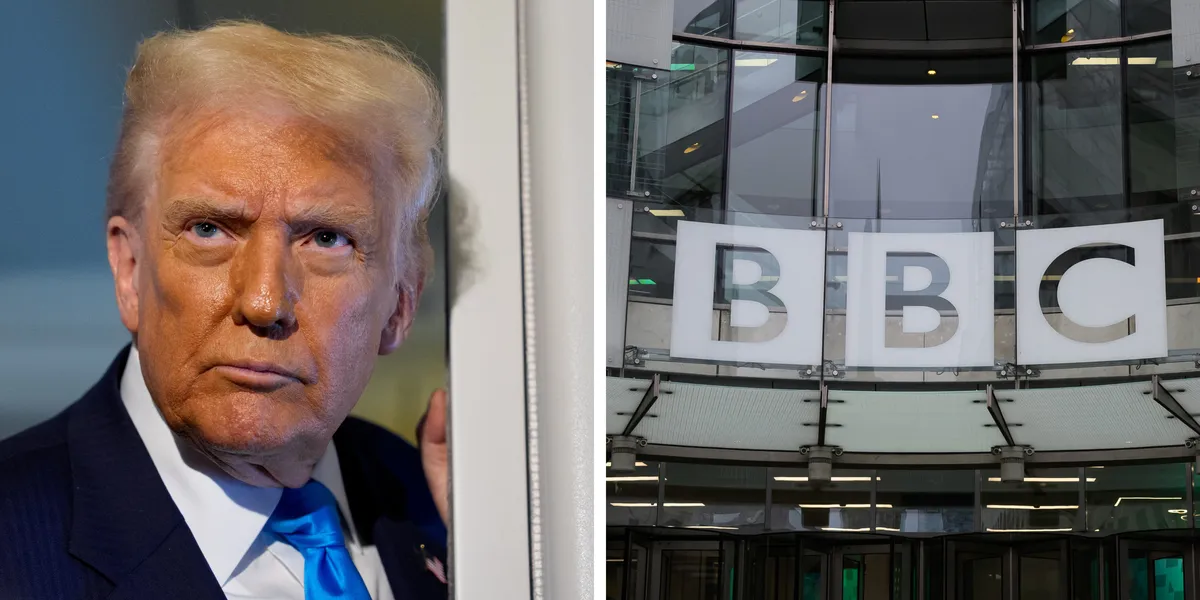
On December 15, 2025, President Donald Trump filed a high-stakes defamation lawsuit against the British Broadcasting Corporation (BBC) in the U.S. District Court for the Southern District of Florida, seeking at least $10 billion in damages. The suit centers on allegations that the BBC intentionally misrepresented Trump’s January 6, 2021, speech in a 2024 documentary titled Trump: A Second Chance?, which aired as part of the BBC’s flagship investigative program, Panorama. Trump claims the editing was a deliberate attempt to defame him and interfere in the 2024 U.S. presidential election, portraying him as inciting violence during the infamous U.S. Capitol riot.
This lawsuit is the latest chapter in Trump’s ongoing battle with media outlets, reflecting his long-standing grievances against what he terms “fake news.” To fully understand the case, it’s essential to explore the specifics of the allegations, the historical context of the January 6 events, relevant statistics from the riot and its aftermath, and Trump’s broader history of legal actions against the press. Below, we break it down in detail.
The Lawsuit: Key Allegations and Details
The complaint, filed in federal court in Miami, accuses the BBC of “maliciously” splicing together two separate comments from Trump’s January 6 speech, which were delivered more than 54 minutes apart. The edited version, as broadcast in the documentary, made it appear as though Trump said: “We’re going to walk down to the Capitol… and I’ll be there with you. And we fight. We fight like hell.” This omitted critical context, including Trump’s explicit call for supporters to march “peacefully and patriotically” to the Capitol to make their voices heard.
Trump’s legal team argues that this edit created a “false impression” of a direct incitement to violence, damaging his reputation at a pivotal moment during his 2024 campaign against Kamala Harris. The suit includes two counts: one for defamation, seeking $5 billion, and another for violation of Florida’s Deceptive and Unfair Trade Practices Act (FDUTPA), also seeking $5 billion. The choice of Florida as the venue is strategic—avoiding the UK’s stricter one-year statute of limitations for defamation claims and leveraging U.S. laws more favorable to plaintiffs in such cases.
The documentary, which did not air in the U.S., was produced amid heightened scrutiny of Trump’s political resurgence. Trump alleges the BBC’s actions were part of a broader effort to influence the election, labeling it “election interference.” His attorneys point to a leaked internal BBC memo from November 2025 that criticized the edit, which prompted the broadcaster to issue an apology, withdraw the program, and accept the resignations of key executives, including Director-General Tim Davie and Head of News Deborah Turness.
In response, the BBC has acknowledged that the edit “created a mistaken impression” but maintains there is no legal basis for defamation. A spokesperson stated the organization will “vigorously defend” against the claims, emphasizing that the documentary was not intended for U.S. audiences. Public reactions on platforms like X (formerly Twitter) have been polarized, with supporters hailing it as a necessary stand against media bias, while critics view it as an overreach.
Historical Background: The January 6 Capitol Riot
To grasp the significance of the edited speech, one must revisit the events of January 6, 2021. That day marked the certification of the 2020 presidential election results by Congress, confirming Joe Biden’s victory over Trump. Trump, who had repeatedly claimed without evidence that the election was stolen, addressed a crowd of thousands at the Ellipse near the White House. In his speech, he urged supporters to “fight like hell” to “stop the steal,” while also instructing them to proceed “peacefully and patriotically” to the Capitol.
What followed was one of the most chaotic episodes in modern U.S. history. A mob breached the Capitol building, clashing with law enforcement, vandalizing offices, and disrupting the certification process for hours. The riot led to Trump’s second impeachment by the House of Representatives on charges of incitement of insurrection, though he was acquitted by the Senate in February 2021.
The January 6 events have remained a flashpoint in American politics. A bipartisan congressional committee investigated the riot, concluding in its 2022 report that Trump was centrally responsible for the violence. Trump has consistently denied wrongdoing, portraying the day as a peaceful protest hijacked by agitators. In a significant move upon returning to office on January 20, 2025, Trump issued pardons to nearly all convicted rioters, excluding 14 individuals affiliated with far-right groups like the Proud Boys and Oath Keepers, who faced charges such as seditious conspiracy.
Statistics from the January 6 Aftermath
The riot’s scale and consequences are underscored by extensive data from investigations and prosecutions:
- Arrests and Charges: Over 1,560 individuals have been charged in connection with the events, making it the largest criminal investigation in U.S. history. Charges range from misdemeanors like trespassing to felonies such as assault on officers and seditious conspiracy.
- Convictions and Sentences: As of early 2025, 1,270 people have been convicted, with 1,009 pleading guilty (79% of convictions). Another 221 were found guilty at trial. Sentences have been issued to 1,126 individuals, with most receiving less than one year in prison or probation. The longest sentences—up to 22 years—went to leaders of extremist groups for seditious conspiracy.
- Pardons: Trump’s January 20, 2025, executive action pardoned approximately 1,256 convicts, focusing on those with non-violent offenses. The 14 withheld pardons involved serious charges, including 10 for seditious conspiracy.
- Casualties and Damage: Five deaths were directly associated with the riot: Ashli Babbitt (shot by Capitol Police), three protesters from medical emergencies, and Officer Brian Sicknick (who died of natural causes the next day). Over 140 police officers were injured, some severely. The Capitol sustained about $2.7 million in damages.
- Broader Impact: A CBS News analysis found that at least 10 convicted rioters had prior domestic violence convictions, highlighting patterns among participants. The events also led to enhanced security measures at the Capitol and ongoing debates about election integrity.
These figures illustrate the riot’s profound legal and societal repercussions, which continue to fuel political divisions.
Trump’s History of Lawsuits Against Media Outlets
This BBC suit fits into a pattern of aggressive legal actions by Trump against perceived media adversaries. Over decades, Trump has filed or threatened numerous lawsuits, often using them as tools to counter negative coverage.
- Recent Cases: In October 2024, Trump sued CBS for $20 billion over alleged deceptive editing in a Kamala Harris interview. He also sued ABC, resulting in a $16 million settlement, and Paramount for undisclosed millions. Pending suits include those against The New York Times, The Wall Street Journal, and Rupert Murdoch’s News Corp.
- Historical Pattern: From 1984 to 2014, Trump was sporadically involved in media/defamation suits, but his activity surged during his political career. Notable examples include a 2018 threat against The Washington Post and a 2023 suit against his own Truth Social’s parent company against The Washington Post for $3.78 billion. Overall, Trump has been involved in at least 14 media or defamation cases, with mixed outcomes—some settlements, others dismissals.
Trump’s win rate in court has been low—around 7% in administrative challenges during his first term—but these suits often achieve publicity and deterrence.
Broader Implications
This lawsuit raises questions about media ethics, editing practices, and the balance between free speech and accountability. Media editing controversies are not new—CBS’s 60 Minutes has faced similar scrutiny—but in an era of deep polarization, they erode public trust. For Trump, a $10 billion award is unlikely, but a settlement could set precedents for foreign media operating in global contexts.
As the case unfolds, it will test U.S. jurisdiction over international broadcasters and highlight ongoing tensions between power and the press. With Trump back in the White House, expect more such battles in his quest to reshape media narratives.