
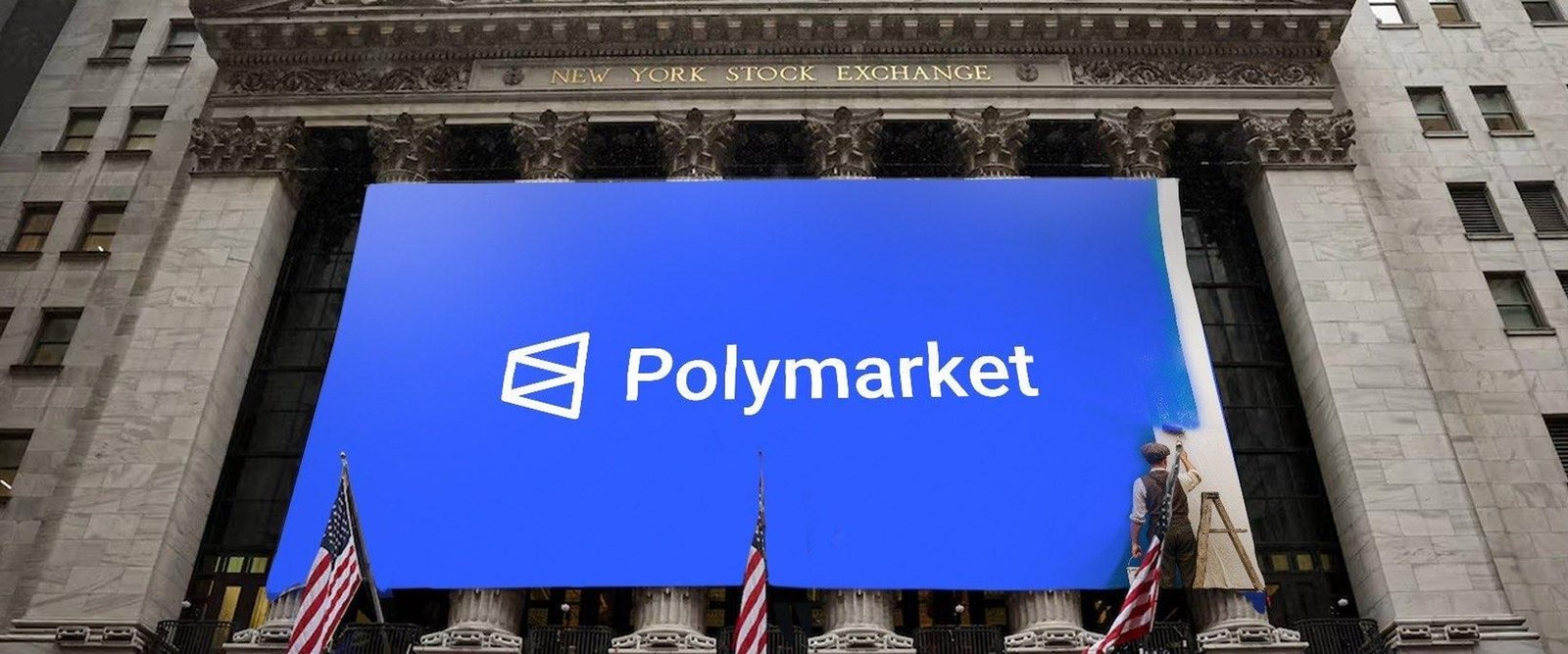
In an era of uncertainty—elections, economic shifts, global events—people have always sought ways to forecast the future. Traditional tools like polls and expert opinions often fall short, biased or slow to adapt. Enter prediction markets, platforms like Polymarket and Kalshi where users trade contracts on real-world outcomes, with prices reflecting collective probabilities. By late 2025, these markets have exploded in popularity, handling billions in volume and influencing media narratives. Yet a persistent debate rages: Are they sophisticated forecasting tools or just gambling in disguise?
This article delves deeply into why prediction markets transcend traditional gambling. While they involve risking money on uncertain outcomes—a superficial similarity—their mechanics, incentives, and societal value set them apart. They aggregate dispersed information efficiently, reward skill and research, operate without a house edge, and function as regulated financial derivatives. Critics rightly point to behavioral risks and regulatory gray areas, but evidence from economics, real-world performance, and legal frameworks supports viewing them as closer to stock markets than casinos.
The Core Mechanism: Trading Probabilities, Not Betting Against the House
At their heart, prediction markets allow users to buy “Yes” or “No” shares in binary outcomes: Will a candidate win? Will inflation exceed 3%? Shares trade between $0 and $1, with the price representing the market’s implied probability (e.g., $0.65 means 65% chance of “Yes”).
Unlike casinos or sportsbooks, where the house sets odds and profits from a built-in edge (vig), prediction markets are peer-to-peer. Platforms like Polymarket match buyers and sellers, earning only small transaction fees. Winners are paid by losers—it’s zero-sum among participants, not skewed against them.
This structure mirrors financial markets: Traders can enter/exit positions anytime, hedge risks, and profit from information asymmetries. In traditional gambling, bets are locked in with fixed odds favoring the house.
Information Aggregation: The “Wisdom of Crowds” on Steroids
The strongest argument against labeling prediction markets as gambling is their ability to aggregate information. As economist Friedrich Hayek noted in 1945, prices in free markets efficiently incorporate dispersed knowledge. Prediction markets embody this: Traders with unique insights (insiders, analysts, enthusiasts) bid prices toward truth, profiting when correct.
Academic studies confirm this efficiency. Research on platforms like the Iowa Electronic Markets shows they outperform polls in election forecasting, often by margins of 10-20%. During the 2024 U.S. election, Polymarket’s probabilities tracked outcomes more accurately than many media polls, adjusting rapidly to news.
This isn’t luck—it’s incentivized truth-seeking. Informed traders correct mispricings, creating public value: Better probabilities for journalists, policymakers, and businesses. Gambling produces no such informational output; roulette or slots aggregate nothing beyond entertainment.
Skill Over Chance: Analysis, Not Luck
Gambling thrives on chance (e.g., dice, cards). Prediction markets reward skill: Research, data analysis, and timing. Successful traders treat it like investing—diversifying, hedging, exiting on new info.
Studies distinguish this: In markets with informed participants, prices converge to true probabilities faster when information is complementary. While retail users may treat it recreationally, the edge goes to skilled actors, akin to stock trading where professionals outperform amateurs.
Critics note behavioral risks—impulsive trading mimicking addiction—but platforms increasingly add tools like limits, absent in unregulated gambling.
Regulatory Framing: Derivatives, Not Gaming
In the U.S., the Commodity Futures Trading Commission (CFTC) regulates platforms like Kalshi as Designated Contract Markets for “event contracts”—financial derivatives, not gambling (state-regulated).
Kalshi pioneered this in 2020, winning court battles to offer election and sports contracts federally. By December 2025, Polymarket—after a 2022 ban and $1.4M fine—secured CFTC approval for regulated U.S. return via intermediated trading, aligning with brokerages.
This federal oversight treats them like futures on commodities, available nationwide (even in non-gambling states). States challenge sports markets as encroaching on their turf, but federally, they’re not “gaming.”
Criticisms and the Blurry Line
No defense is complete without addressing criticisms. Behaviorally, trading feels like betting—high-frequency, adrenaline-fueled. Platforms lack some responsible gaming tools of sportsbooks, raising addiction concerns. Sports contracts (90% of some volumes) blur lines further, prompting NFL pushback.
Globally, jurisdictions like Singapore and France block Polymarket as unlicensed gambling. Even proponents admit: It’s “gambling, but better”—risky money on outcomes, potentially exploitable.
Yet these risks don’t negate distinctions. Stock trading can be addictive too, but we don’t ban markets. Prediction markets’ public benefits—accurate forecasting, hedging real risks (e.g., businesses betting on policy)—elevate them.
Conclusion: A Superior Alternative in an Uncertain World
Prediction markets like Polymarket aren’t pure altruism; they’re profit-driven. But their design produces societal goods absent in gambling: Superior information aggregation, skill-based rewards, no house edge, and regulatory treatment as finance.
As of December 2025, with Polymarket’s U.S. relaunch and volumes soaring, they’re reshaping forecasting. They’re not gambling—they’re gambling evolved: A tool for navigating uncertainty with crowd intelligence. In a world craving reliable probabilities, that’s invaluable. Whether for insight or profit, prediction markets represent progress, not regression to the casino.