
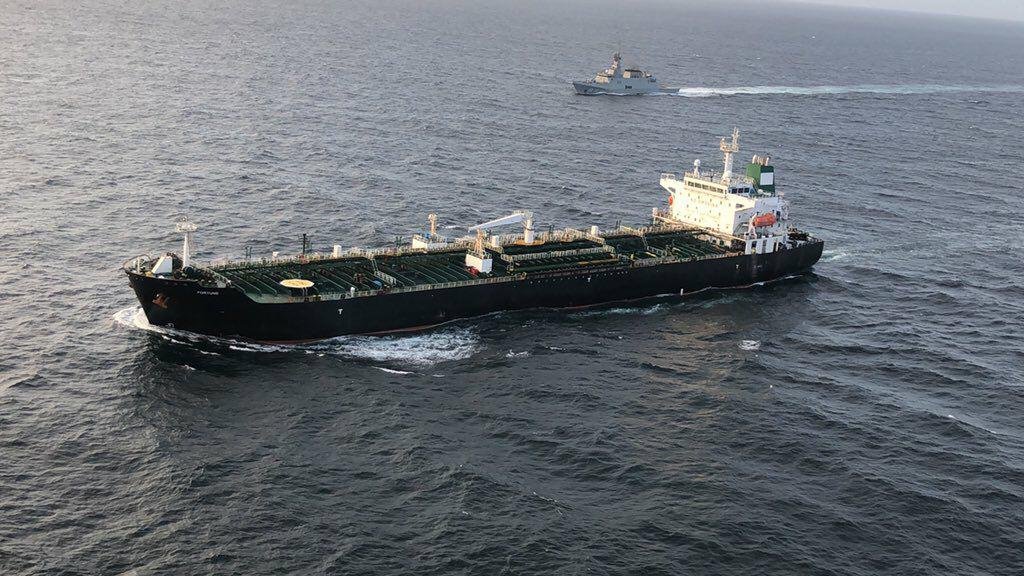
In mid-December 2025, President Donald Trump escalated U.S. pressure on Venezuela’s Nicolás Maduro regime by announcing a “total and complete blockade” of all sanctioned oil tankers entering or leaving Venezuelan waters. This directive, issued on December 16 via Truth Social, followed the dramatic seizure of the tanker Skipper on December 10 and subsequent interdictions, including a second vessel on December 20. While primarily aimed at crippling Venezuela’s oil-dependent economy—its primary revenue source—the operation has profound ripple effects on Iran. Many vessels in Venezuela’s illicit trade belong to the interconnected “shadow fleet” that also transports Iran’s sanctioned crude, creating vulnerabilities that could significantly disrupt Tehran’s oil exports and revenue.
This article explores the mechanics of the blockade, its direct impact on Venezuela, and why it poses a “damning” threat to Iran. It draws on historical context, including Trump’s first-term “maximum pressure” campaigns against both nations, and the evolution of the global shadow fleet used by sanctioned oil producers like Iran, Venezuela, and Russia.
Historical Context: U.S. Sanctions and the Rise of the Shadow Fleet
U.S. sanctions on Venezuela’s oil sector began intensifying during Trump’s first administration. In 2017, the Treasury Department targeted individuals and entities tied to corruption. By January 2019, following Maduro’s disputed reelection, the U.S. imposed sweeping sanctions on Petróleos de Venezuela, S.A. (PDVSA), Venezuela’s state oil company, effectively barring U.S. entities from dealing with it. These measures aimed to starve the Maduro regime of funds amid a humanitarian crisis and allegations of narcoterrorism—culminating in a 2020 U.S. indictment of Maduro himself.
Iran faced similar “maximum pressure” from Trump after he withdrew from the 2015 nuclear deal (JCPOA) in 2018. Reimposed sanctions targeted Iran’s oil exports, reducing them from over 2.5 million barrels per day (bpd) in 2018 to under 500,000 bpd by 2020. The goal: deprive Tehran of revenue for its nuclear program, ballistic missiles, and regional proxies like Hezbollah and the Islamic Revolutionary Guard Corps (IRGC).
Both countries turned to evasion tactics. Venezuela, once producing over 3 million bpd in the late 1990s, saw output plummet to under 1 million bpd by 2025 due to mismanagement and sanctions. Iran maintained exports around 1.8 million bpd in the first 11 months of 2025, largely to China. Key to this survival: the “shadow” or “dark” fleet—a network of aging, often uninsured tankers that obscure ownership, falsify locations via AIS spoofing, and use ship-to-ship transfers to blend sanctioned oil into legitimate markets.
This fleet predates recent crises but exploded post-2022 Russian invasion of Ukraine, when Western price caps and embargoes forced Moscow to build its own shadow armada (estimated at 600-1,400 vessels by late 2025). Iran and Venezuela contributed vessels interchangeably: a tanker might load Iranian crude at Kharg Island one month and Venezuelan Merey heavy crude the next, destined for Asian refiners. Analysts like those at TankerTrackers.com and Windward note that 20-50% of shadow vessels serve multiple sanctioned producers, with opaque ownership via shell companies in places like the Marshall Islands or UAE.
Trump’s first-term seizures of Iranian-linked tankers (e.g., in 2019-2020) set precedents, but enforcement waned under Biden. In 2025, Trump’s return revived aggressive tactics, designating Venezuela a “foreign terrorist organization” and linking oil revenues to drug trafficking.
The 2025 Blockade: Enforcement and Immediate Effects on Venezuela
The blockade stemmed from a U.S. military buildup in the Caribbean—the largest since the 1962 Cuban Missile Crisis—amid operations against alleged narcotrafficking boats. On December 10, U.S. forces (FBI, Coast Guard, Homeland Security, with military support) seized the Skipper, a Guyana-flagged VLCC previously sanctioned in 2022 (as Adisa) for IRGC-linked smuggling. It had loaded ~1.8 million barrels of Venezuelan crude but earlier carried Iranian oil.
Trump’s December 16 order targeted “sanctioned” vessels, but actions broadened: a second interdiction on December 20 involved an un-sanctioned tanker carrying Venezuelan oil to China. By December 21, reports emerged of pursuits of additional ships, like the Bella 1 (sanctioned for prior Iranian loads).
Effects were swift. Venezuelan exports, averaging ~900,000 bpd in 2025, dropped sharply as loaded tankers lingered in ports fearing seizure. Over 70 shadow vessels were in Venezuelan waters mid-December, with ~38 sanctioned. Oil prices rose modestly (~1-3%), reflecting disrupted supply.
Maduro denounced the actions as “piracy,” vowing continued trade and UN complaints. Iran condemned the Skipper seizure as a violation of international law.
The Damning Impact on Iran: Shared Fleet Vulnerabilities
The blockade’s spillover to Iran is profound because the shadow fleet is not siloed. Key examples:
- The Skipper loaded at Iran’s Kharg Island in 2025 before Venezuelan service.
- Many vessels alternate routes: Iranian crude one voyage, Venezuelan or Russian the next, often to China (Venezuela’s top buyer, ~600,000 bpd in late 2025).
- Sanctions often cite cross-links; e.g., vessels hit for Iranian ties are used in Venezuela.
By seizing or deterring these in the Caribbean—where U.S. naval dominance facilitates enforcement—the U.S. shrinks the global pool. Tanker owners demand higher premiums, reroute riskily, or retire vessels. Analysts note this creates shortages for Iran’s ~1.82 million bpd exports (2025 average), funding its budget and military.
Precedent is key: The Venezuela operations provide a “blueprint” for Persian Gulf action, where U.S. Fifth Fleet operates. Past seizures (e.g., 2020-2021 Iranian tankers) were rarer; now, with demonstrated willingness for helicopter boardings and warrants based on prior Iranian links, escalation looms.
Broader effects: The fleet also serves Russia (~55% of shadow exports to India in 2025). Disrupting one node exposes the network, raising insurance costs and scaring operators. Experts warn of “exploding” fleet growth but predict 2025 crackdowns could reverse it.
Iran’s response: Closer ties with Venezuela (e.g., joint condemnation) and Russia, but limited options. Discounts deepen (~$14-15/barrel for Venezuelan crude), squeezing margins.
Conclusion: A Revived Maximum Pressure with Global Ramifications
Trump’s Venezuela blockade revives his dual “maximum pressure” strategy, hitting two adversaries with one tactic. For Venezuela, it threatens economic collapse. For Iran, it indirectly—but damningly—constrains oil revenues vital to regime survival amid nuclear tensions and proxy wars.
As of December 22, 2025, the standoff continues: U.S. forces patrol, tankers hesitate, and markets watch. If extended to Iranian waters, it could slash Tehran’s exports further, echoing 2018-2020 drops. Yet risks abound—legal debates over “blockades” in peacetime, potential confrontations, and environmental perils from aging shadow vessels.
In an interconnected illicit trade, targeting Venezuela’s tankers may prove the most effective way to choke Iran’s oil lifeline without direct Gulf confrontation. The shadow fleet’s days of unchallenged operation appear numbered.