
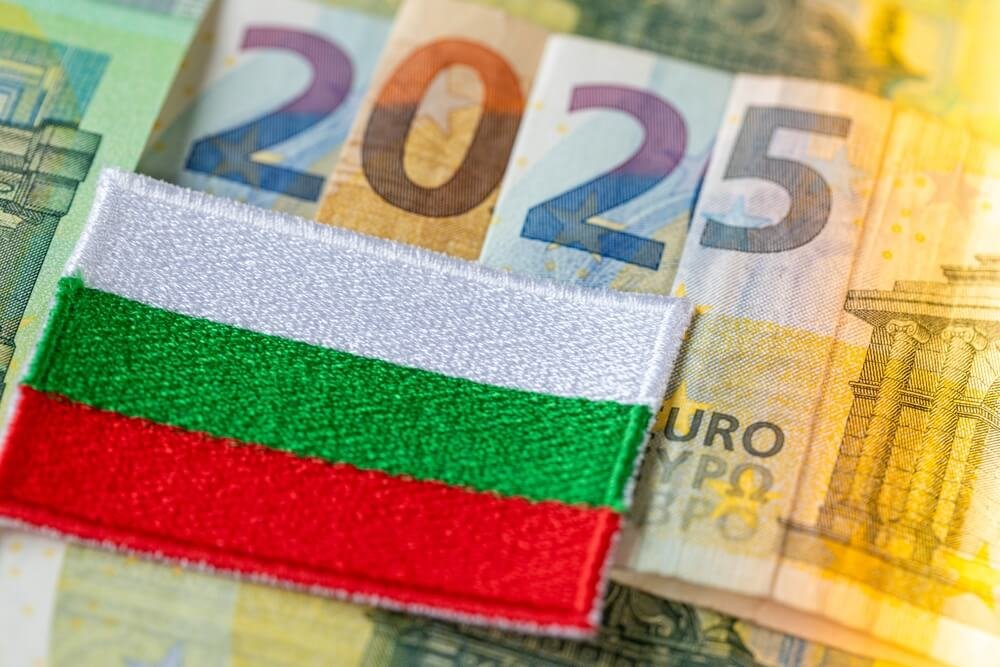
Today, Bulgaria officially becomes the 21st member of the eurozone, replacing its national currency, the Bulgarian lev (BGN), with the euro (€). This marks the end of a decades-long journey toward deeper European integration and the beginning of a new economic chapter for the Balkan nation of 6.5 million people.
The transition, which has been meticulously prepared, occurs at a fixed conversion rate of 1 euro = 1.95583 lev – the same peg that has anchored the lev to Europe’s single currency since 1999. Bank accounts converted automatically overnight, ATMs began dispensing euros this morning, and shops are accepting both currencies during a one-month dual circulation period ending January 31, 2026.
The Long Road to the Euro
Bulgaria’s path to the euro began in the aftermath of a severe economic crisis in the late 1990s. To stabilize its economy and combat hyperinflation, the country introduced a currency board arrangement in 1997, pegging the lev first to the Deutsche Mark and then to the euro in 1999. This system effectively surrendered independent monetary policy but delivered remarkable stability, keeping inflation low and the exchange rate fixed for over two decades.
Bulgaria joined the European Union on January 1, 2007, alongside Romania, committing to eventual euro adoption as part of its accession treaty. However, the process faced repeated delays due to political instability, corruption concerns, and failure to meet the Maastricht convergence criteria – the economic benchmarks required for eurozone entry.
Key criteria include:
- Price stability (inflation not exceeding 1.5 percentage points above the average of the three best-performing EU states)
- Sound public finances (budget deficit below 3% of GDP, public debt below 60% of GDP)
- Exchange rate stability (at least two years in ERM II without devaluation)
- Long-term interest rate convergence
Bulgaria entered ERM II, the “euro waiting room,” in July 2020. Initial targets for adoption in 2024 and 2025 were missed primarily due to elevated inflation in the post-COVID era. By early 2025, however, inflation had cooled sufficiently, and off-cycle convergence reports from the European Commission and ECB in June 2025 confirmed Bulgaria’s compliance.
The final approvals came swiftly:
- June 2025: Eurogroup and European Commission endorse
- July 2025: European Parliament votes in favor (531-69), Council adopts legal acts setting the January 1, 2026 date
Practical Aspects of the Transition
The changeover has been designed for minimal disruption:
- Dual pricing: Mandatory in shops since summer 2025, continuing until August 2026 to ensure transparency and prevent unjustified price hikes.
- Dual circulation: Lev and euro accepted until January 31, 2026; change given in euros.
- Cash exchange: Free at banks and post offices until mid-2026, indefinitely at the Bulgarian National Bank.
- Banking: Accounts auto-converted; no fees for standard transactions.
The Bulgarian National Bank and government launched extensive public information campaigns, including websites, hotlines, and educational materials, to prepare citizens and businesses.
Economic Benefits and Challenges
As the EU’s poorest member state (with GDP per capita around 60% of the EU average), Bulgaria stands to gain significantly from euro adoption:
- Lower transaction costs and eliminated exchange rate risk for trade (over 70% with eurozone countries)
- Increased foreign investment and improved credit ratings (no more “foreign currency debt” penalty)
- Greater economic resilience and a voice in ECB decision-making
- Boost to tourism and cross-border business
Experts, including IMF Managing Director Kristalina Georgieva (a Bulgarian national), highlight parallels with Croatia’s 2023 adoption, which saw modest inflation but stronger growth and investor confidence.
However, challenges remain:
- Persistent structural issues like wage-productivity gaps and high food inflation
- Potential short-term price rounding effects
- Ongoing need for reforms to converge with wealthier EU states
Public Sentiment and Controversy
While European leaders celebrated the milestone as strengthening unity, public opinion in Bulgaria has been divided. Surveys in 2025 showed roughly equal support and opposition, with many fearing price increases or loss of national sovereignty.
Protests, led by far-right parties like Revival (Vazrazhdane), peaked in late 2025, with accusations of Russian-backed disinformation amplifying concerns. Some worried about a “Greek-style crisis,” though economists dismiss this given Bulgaria’s low debt (around 24% of GDP) and disciplined fiscal policy.
Despite political turbulence – including a government resignation in December 2025 – the adoption proceeded smoothly, as EU decisions were irrevocable.
A New Chapter for Bulgaria and Europe
Bulgaria’s euro adoption extends the single currency to the Black Sea region for the first time, bringing the number of euro users to over 356 million. ECB President Christine Lagarde described it as Bulgaria “reaffirming that it is proud, sovereign, and European.”
As Bulgarians wake up to euros in their wallets today, the focus shifts to realizing the long-term benefits: prosperity, security, and full integration into the heart of Europe.
This historic step, built on decades of stability under the currency board, positions Bulgaria for sustained growth in an increasingly interconnected continent.