
In a move that underscores the escalating financial arms race in artificial intelligence, SoftBank Group is reportedly in talks to pour up to an additional $30 billion into OpenAI. This potential commitment comes as the San Francisco-based AI pioneer seeks to raise as much as $100 billion in new capital, according to a Wall Street Journal report published in late January 2026. If realized, the fundraising would represent one of the largest private capital raises in tech history and could propel OpenAI’s valuation to an astonishing $830 billion.
The discussions highlight the extraordinary capital intensity required to maintainleadership in frontier AI development. Training and deploying next-generation models demand vast investments in computing infrastructure, energy resources, and top talent. OpenAI, the creator of ChatGPT and the GPT series of large language models, has emerged as the focal point of this global scramble for AI supremacy.
Details of the Potential Deal
Sources familiar with the matter told the Wall Street Journal that SoftBank’s proposed investment could reach $30 billion, adding to the Japanese conglomerate’s already substantial stake in OpenAI. The company, led by visionary founder Masayoshi Son, completed a $22.5 billion investment in December 2025, securing an 11% ownership position as part of a larger multi-tranche commitment.
This latest round forms part of OpenAI’s broader ambition to secure up to $100 billion in fresh funding. While terms remain fluid and no final agreements have been signed, the sheer scale reflects the accelerating pace of AI advancement. OpenAI is also engaging with other deep-pocketed investors, including Middle Eastern sovereign wealth funds and prominent venture firms such as Thrive Capital and Khosla Ventures.
Sam Altman, OpenAI’s CEO, has long emphasized the need for massive computational resources to achieve artificial general intelligence (AGI)—systems capable of outperforming humans across most economically valuable work. The company’s transition from a nonprofit research lab to a “capped-profit” entity in 2019, and subsequent partnerships with Microsoft, laid the groundwork for this capital-intensive phase.
Masayoshi Son’s “All-In” Strategy on AI
For Masayoshi Son, the potential $30 billion commitment is more than just another investment—it’s the culmination of a decades-long obsession with transformative technologies. The SoftBank founder has repeatedly described AI as the most profound technological shift in human history, often comparing it to the industrial revolution or the advent of electricity.
Son’s Vision Fund has endured high-profile setbacks in the past, including massive losses on WeWork and other bets during the 2020s. Yet he has pivoted aggressively toward AI, divesting significant holdings—including SoftBank’s stake in Nvidia—to fund his OpenAI ambitions. This “all-in” approach reflects Son’s belief that OpenAI sits at the epicenter of the coming intelligence explosion.
SoftBank’s growing stake positions it as OpenAI’s largest external investor outside of Microsoft, which has committed tens of billions since 2019. The Japanese firm’s involvement also brings strategic advantages, including potential synergies with its portfolio companies in robotics (Boston Dynamics) and chip design (Arm Holdings).
The Enormous Capital Requirements Driving the Raise
The numbers involved—$100 billion in new funding, potentially valuing OpenAI at $830 billion—are staggering by any historical measure. To put this in perspective, Apple’s market capitalization hovered around $3 trillion in early 2026, while the entire U.S. venture capital industry invested roughly $170 billion across all sectors in a peak year.
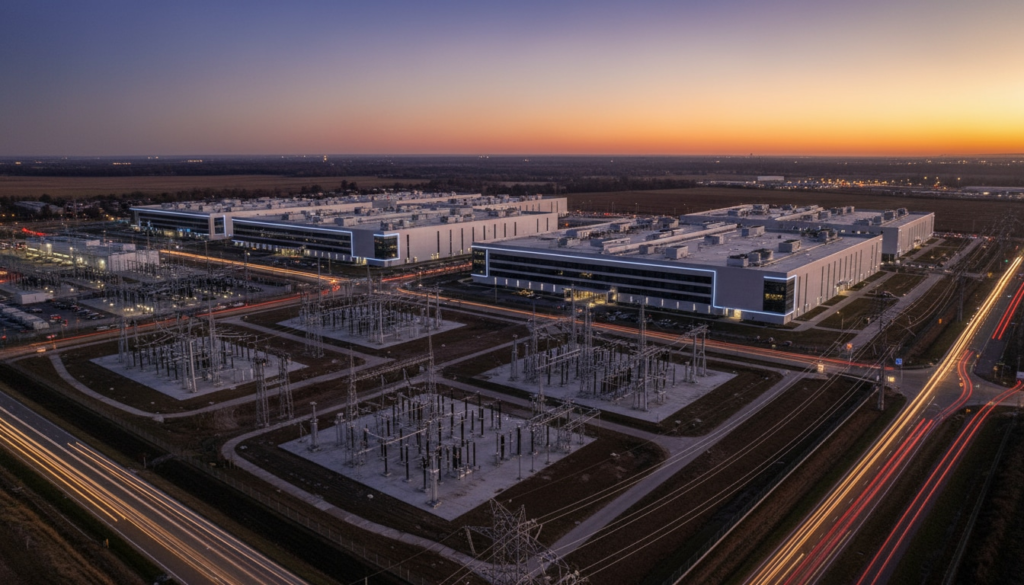
Why does OpenAI need such astronomical sums? The answer lies in the exponential growth of computational demands for training cutting-edge AI models. Each new generation requires orders of magnitude more processing power. Industry estimates suggest that training a model comparable to GPT-5 or beyond could cost tens of billions in compute alone, requiring hundreds of thousands of specialized chips like Nvidia’s H100 or next-generation equivalents.
Beyond hardware, OpenAI faces escalating costs in energy consumption—data centers running at full capacity can consume power equivalent to small cities—and talent acquisition. Top AI researchers now command compensation packages exceeding $10 million annually, driving up operational expenses.
The company must also invest heavily in safety research, inference infrastructure (serving models to users), and new modalities like video generation and advanced reasoning systems. Competitors including Anthropic, Google DeepMind, xAI, and Meta are pursuing similar paths, creating a global race that demands ever-larger war chests.
Broader Implications for the AI Landscape
This fundraising round, if successful, would cement OpenAI’s position as the best-capitalized player in the field. A valuation approaching $830 billion would surpass most public tech giants and reflect investor confidence in AI’s transformative potential across industries—from healthcare and scientific discovery to software development and creative work.
Yet the concentration of resources in a handful of companies raises important questions. Critics argue that such massive capital requirements create barriers to entry, potentially limiting innovation to a few well-funded entities. Regulatory scrutiny is also increasing, with governments worldwide examining AI’s implications for competition, national security, and employment.
The involvement of sovereign wealth funds points to AI’s growing geopolitical significance. Nations view leadership in artificial intelligence as critical to future economic and military power, much as they once viewed semiconductors or energy resources.
Market reactions to the WSJ report have been muted thus far, as investors digest the implications of this capital deluge. Some analysts express concern about sustainability—whether the enormous investments will generate commensurate returns before the next technological paradigm arrives.
The Dawn of a New Era
The potential SoftBank-OpenAI deal encapsulates the extraordinary moment we find ourselves in: artificial intelligence has become the defining technology of the 21st century, attracting capital at scales previously unimaginable.
As Masayoshi Son and Sam Altman push forward with their respective visions, the rest of the world watches with a mixture of excitement and apprehension. The hundreds of billions flowing into AI development will shape not just corporate balance sheets, but the future trajectory of human progress.
Whether this leads to the breakthrough in artificial general intelligence that both leaders anticipate, or to a more measured evolution of the technology, one thing is clear: the AI revolution is only accelerating.