
In early February 2026, Ethereum co-founder Vitalik Buterin sparked widespread discussion in the crypto community with a detailed proposal for rethinking “creator coins” — tokenized assets tied to content creators. Shared directly on X (formerly Twitter), his idea addresses longstanding issues in crypto-based content incentivization, shifting the focus from rewarding mere popularity to surfacing genuine quality in an era flooded by AI-generated material.
Creator tokens, also known as content coins or social tokens, have been experimented with for over a decade. Platforms like Steemit, BitClout (later DeSo), friend.tech, and Zora have tried various models, allowing fans to buy tokens representing a stake in a creator’s future success, access perks, or speculate on their rising fame. Yet, as Buterin points out, these efforts have largely failed to create sustainable, high-quality ecosystems.
The Core Problem: Quantity Over Quality
Buterin argues that the landscape has fundamentally changed since the early days of online content creation. In the 2000s, the main challenge was scarcity — there simply wasn’t enough content. Today, the opposite is true: there’s an overwhelming abundance, amplified by AI tools that can generate vast amounts of text, images, videos, and more at negligible cost.
The real bottleneck now is curation — identifying and elevating truly valuable content amid the noise. Existing creator token models, Buterin observes, tend to reward pre-existing celebrity status rather than original, high-quality contributions. Top leaderboards on platforms like Zora or BitClout often feature already-famous individuals whose prominence stems from fields outside content creation itself.

This creates a feedback loop of speculation driven by attention rather than merit, exacerbating issues like pump-and-dump schemes and AI spam.
Lessons from Substack: A Successful Centralized Model
To illustrate what effective creator incentivization looks like, Buterin highlights Substack, the newsletter platform that has become a beacon for independent writers.
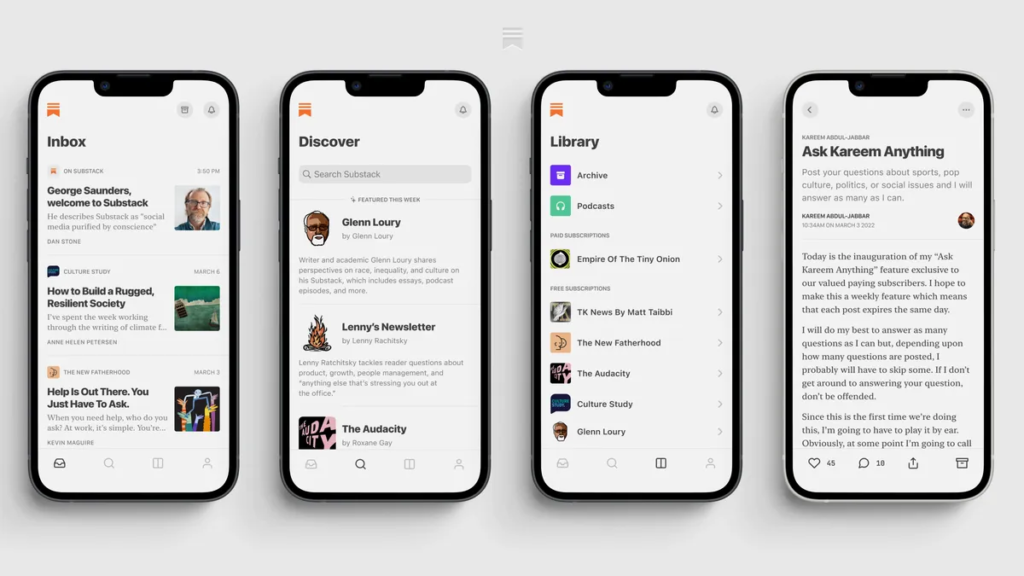
Substack’s success isn’t just in its simple subscription mechanic — users pay a monthly fee for access to premium content. It’s in the platform’s deliberate curation. Founders hand-picked early creators, offered revenue guarantees, and fostered a specific intellectual environment emphasizing depth, pluralism, and quality discourse.
The result? A top 10 list featuring thoughtful voices who contribute meaningfully to public conversation, many of whom might not have gained such visibility without Substack’s intervention. As Buterin notes, these creators are “high quality” and promote healthy pluralism, even if readers disagree with their views.
The Proposal: Non-Tokenized DAOs Meet Prediction Markets
Buterin’s alternative draws inspiration from successful non-crypto models like Substack while leveraging blockchain strengths: transparency, permissionlessness, and incentive alignment.
At the heart is a curated, non-tokenized DAO (Decentralized Autonomous Organization).
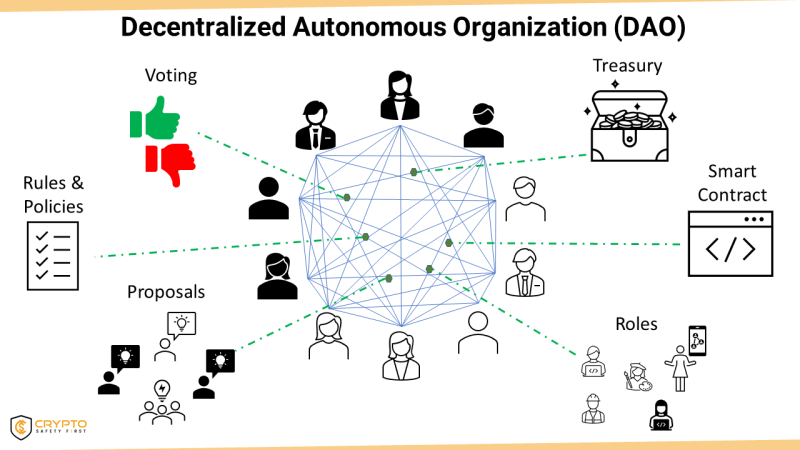
Key Features of the DAO:
- Non-tokenized governance: Unlike typical DAOs where tokens confer voting power (leading to plutocracy and capture risks), membership is managed like Protocol Guild — Ethereum’s contributor funding mechanism. A limited number of members (ideally under 200 to keep governance tractable) anonymously vote to admit or remove others.
- Opinionated and niche: DAOs shouldn’t aim to be universal. Each should embrace a specific style — long-form writing, music, short videos, a particular political lens, regional focus, or crypto subculture. Initial members are hand-selected to align with this vision.
- Collective benefits: The DAO builds a shared brand, negotiates revenue opportunities (subscriptions, sponsorships, events), and distributes proceeds among members.
This structure allows a group larger than one individual to gain leverage while remaining small enough for coherent decision-making.
Integrating Creator Tokens as Prediction Markets
Here’s the innovative twist: creator tokens exist separately and serve as a prediction market on DAO admission.
- Any aspiring creator can launch their own token.
- If the curated DAO admits them as a member, a portion of the DAO’s revenue is used to buy back and burn that creator’s tokens.
- This reduces supply, creating scarcity and increasing value for remaining holders.
Token holders are essentially betting on which creators the DAO will deem worthy. Successful speculators — those who identify high-quality talent early — profit when burns occur. Unsuccessful ones lose.
This transforms speculation from empty attention-chasing into a useful signal: speculators become “quality filters,” surfacing promising creators for the DAO to evaluate.
The ultimate gatekeepers remain the DAO members — established creators assumed to be good judges of quality. This aligns incentives toward long-term value rather than short-term hype.
In a follow-up post, Buterin generalized the pattern: a maximally open prediction market layer (financial, accountable via profit/loss) feeding into a capture-resistant preference-setting layer (the non-financialized DAO). He argues this two-layer approach could underpin many future onchain mechanisms.
Advantages of the Model
- Quality Focus: By tying token value to curated admission, the system rewards merit over virality.
- AI Resistance: Human-led curation is harder for AI spam to game than pure market mechanisms.
- Pluralism: Multiple opinionated DAOs prevent monoculture, allowing diverse voices to thrive in their niches.
- Useful Speculation: Traders provide discovery value rather than pure extraction.
- Governance Improvements: Avoiding token voting sidesteps known DAO pitfalls like whale dominance.
Potential Challenges and Criticisms
The proposal isn’t without hurdles. Curated DAOs risk insularity or bias if initial seeding goes wrong. Anonymity in voting helps against retaliation but could enable collusion. Scaling multiple DAOs while maintaining quality curation is non-trivial.
Some community members, including Dogecoin co-founder Billy Markus, have critiqued the complexity, arguing simpler models might suffice. Others worry about regulatory scrutiny if token burns resemble securities.
Yet Buterin acknowledges ideas like this are speculative, inviting iteration.
Implications for the Creator Economy
Buterin’s model represents a mature evolution in crypto thinking: moving beyond naive tokenization toward hybrid systems blending human judgment with market signals.
If implemented successfully, it could foster decentralized alternatives to platforms like Substack, Patreon, or YouTube — ones resistant to central control yet capable of elevating quality.
In an AI-saturated future, mechanisms that reliably surface human excellence will be invaluable. By repurposing creator tokens as prediction tools for human-curated quality, Buterin offers a compelling path forward.
As the crypto space experiments with these ideas, we may finally see blockchain fulfill its promise in the creator economy: not just financializing attention, but genuinely amplifying valuable voices.