
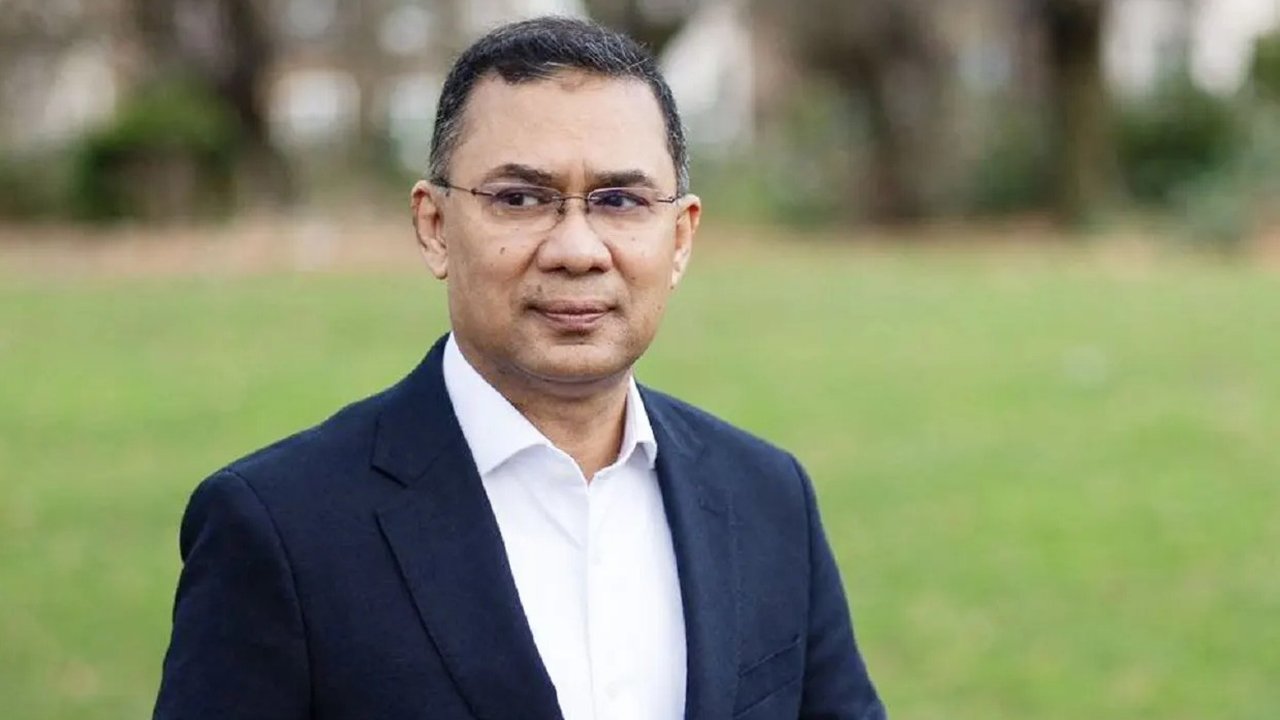
On February 12, 2026, Bangladesh held its first general election since the dramatic 2024 student-led uprising that toppled longtime Prime Minister Sheikh Hasina. The Bangladesh Nationalist Party (BNP), led by acting chairman Tarique Rahman, delivered a resounding landslide, securing approximately 212 seats in the 300-seat parliament.
Tarique Rahman, the 60-year-old son of former President Ziaur Rahman and ex-Prime Minister Khaleda Zia, is now poised to become the country’s next prime minister after 17 years in exile.
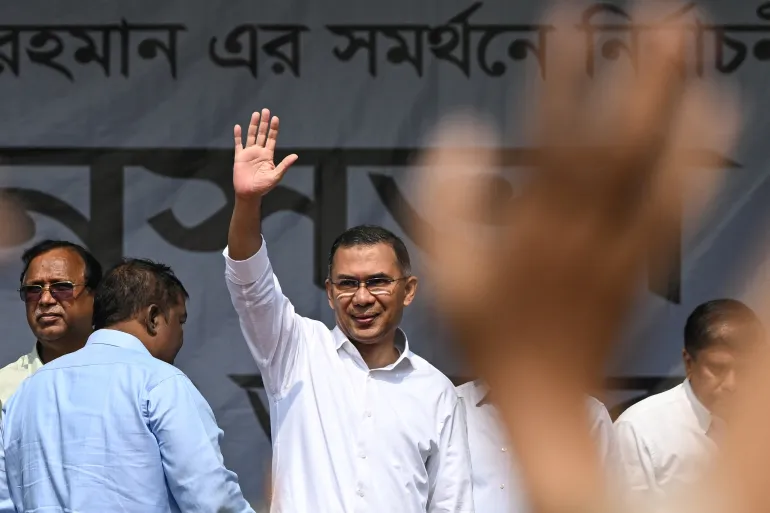
Tarique Rahman addresses supporters during the 2026 campaign, marking his return from exile.
The election, widely viewed as a referendum on restoring democracy after years of political turmoil, saw the BNP dominate while Bangladesh’s largest Islamist party, Jamaat-e-Islami, failed to meet high expectations, conceding defeat and pledging to act as a constructive opposition.
Historical Roots of Bangladesh’s Political Dynasties
Bangladesh’s politics has long been defined by two powerful families and their parties: the BNP, founded by Ziaur Rahman, and the Awami League, led for decades by Sheikh Hasina, daughter of the nation’s founding leader Sheikh Mujibur Rahman.
Independence hero Sheikh Mujibur Rahman was assassinated in a 1975 military coup. Ziaur Rahman, an army major who declared independence in 1971, emerged as a key figure, becoming president in 1977 and founding the BNP in 1978. He promoted nationalism, economic liberalization, and a multi-party system, shifting away from Mujib’s secular socialism.
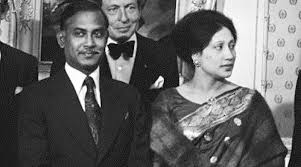
Ziaur Rahman and Khaleda Zia in an early photo, representing the foundations of the BNP dynasty.
Ziaur Rahman’s assassination in 1981 thrust his widow, Khaleda Zia, into politics. She led the BNP to victory in 1991, becoming Bangladesh’s first female prime minister, and served again from 2001 to 2006. Her governments focused on infrastructure, garment industry growth, and anti-corruption drives, though often marred by rivalry with Hasina.
The Awami League-BNP feud has dominated since the restoration of democracy in 1990, with power alternating until Hasina’s Awami League secured controversial wins in 2014, 2018, and 2024 amid boycott and rigging allegations.
Rise and Fall of Sheikh Hasina’s Rule
Sheikh Hasina’s tenure from 2009 onward brought rapid economic growth—Bangladesh graduated from least developed country status—with massive infrastructure projects and poverty reduction. However, critics accused her government of authoritarianism: opposition crackdowns, enforced disappearances, and erosion of democratic institutions.
By 2024, discontent boiled over. A student-led protest against job quotas escalated into a nationwide uprising against perceived dictatorship, resulting in hundreds of deaths and Hasina’s flight to India in August 2024.
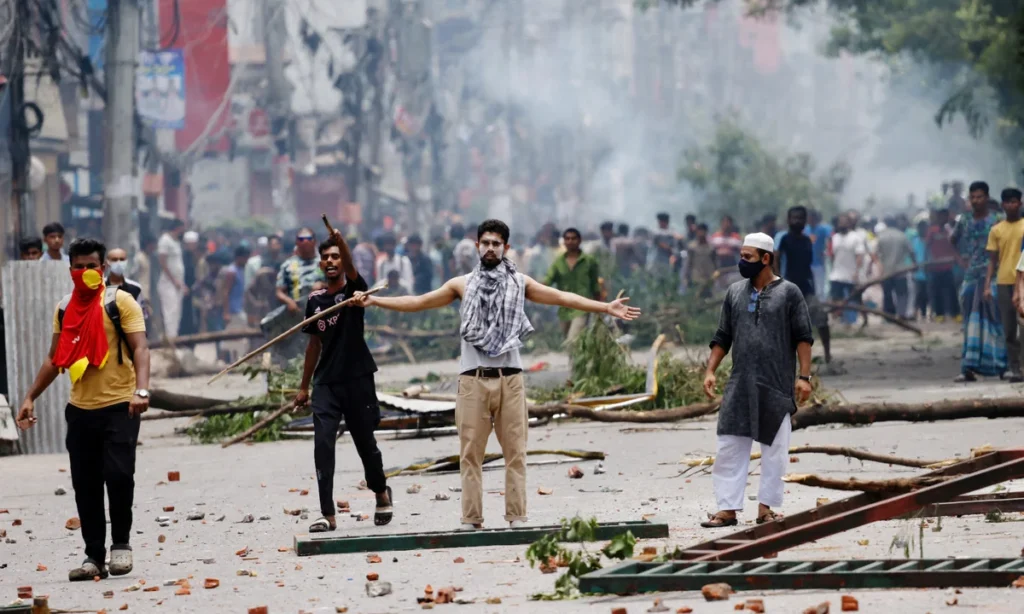
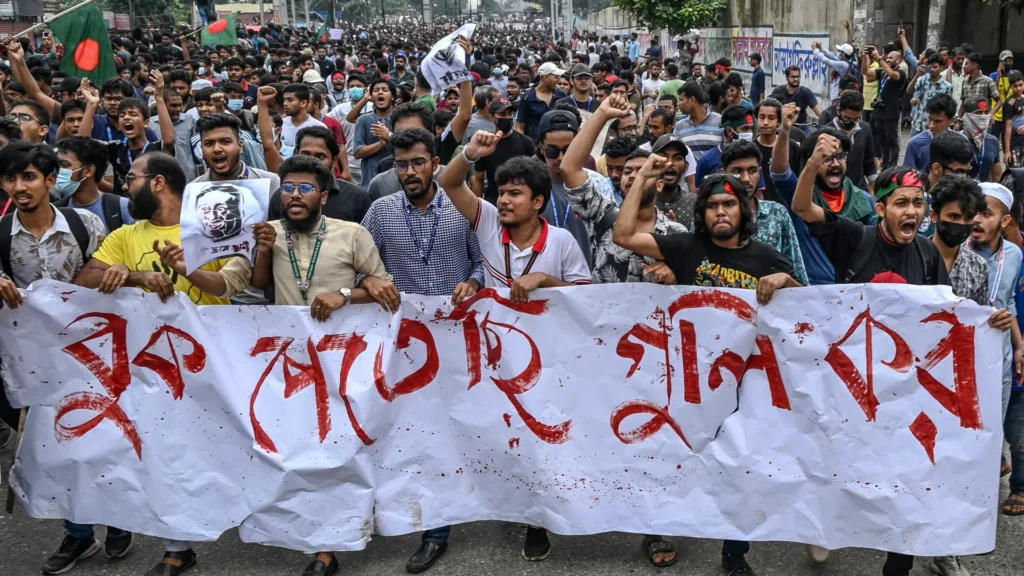
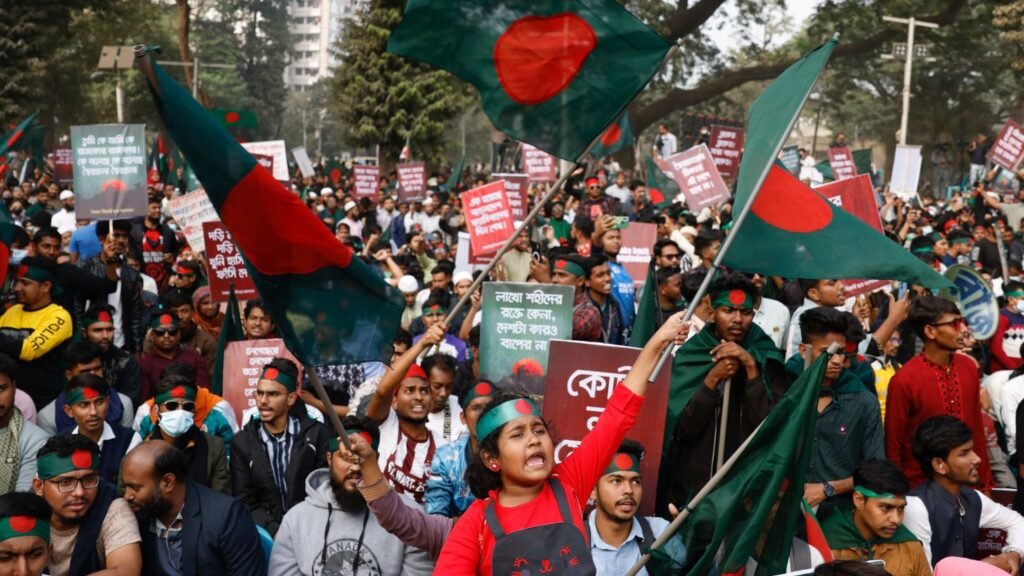
Scenes from the 2024 student protests that forced Sheikh Hasina from power.
Nobel laureate Muhammad Yunus headed an interim government, implementing reforms to electoral systems, judiciary, and police to ensure fair polls.
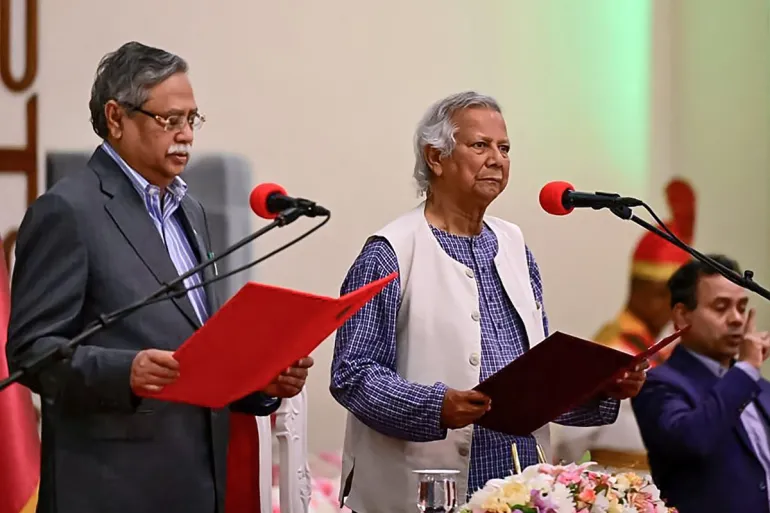
Muhammad Yunus during his tenure as interim leader.
Tarique Rahman’s Long Road Back
Tarique Rahman, often called the heir to the BNP dynasty, rose prominently during his mother’s 2001-2006 government. Accusations of corruption and money laundering—widely seen as politically motivated—led to his 2008 arrest. Released on bail, he left for the UK for medical treatment and remained in exile as convictions piled up under Hasina’s administration.
From London, Rahman remotely steered the BNP through boycotts and protests. The 2024 uprising cleared his path: the interim government dropped many charges, allowing his return in late 2025.
His homecoming energized supporters, framing him as a symbol of democratic restoration.
The 2026 Campaign and Election
The campaign was largely peaceful, with high turnout. Rahman promised clean governance, economic revival, judicial independence, and reconciliation.
The BNP capitalized on anti-Awami League sentiment and desires for change after Hasina’s ouster.
Jamaat-e-Islami, rehabilitated after bans under Hasina, contested independently but fell short of pre-election hype, hampered by historical war crimes associations from 1971.
Results and Celebrations
As results poured in on February 13-14, 2026, jubilant scenes erupted in Dhaka and beyond.
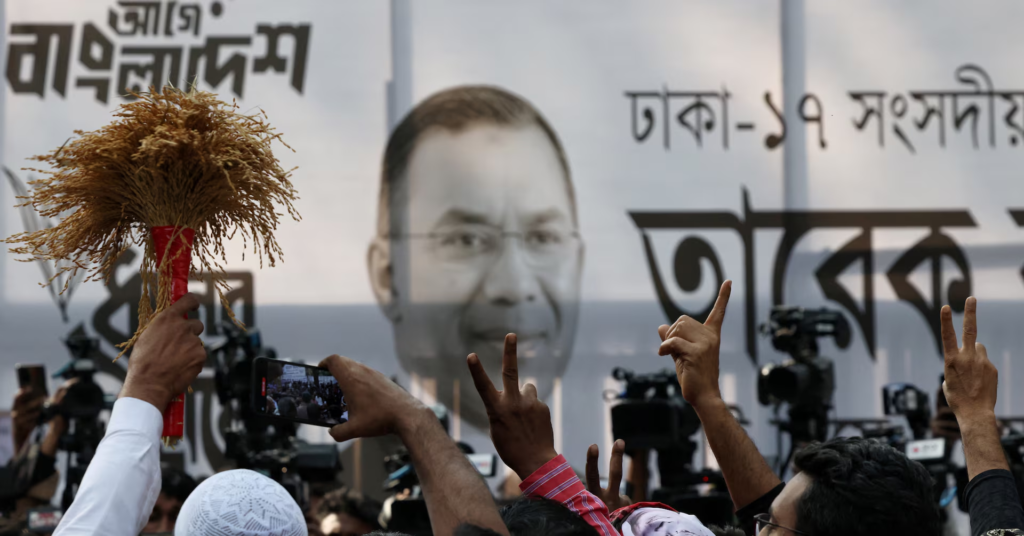
BNP supporters celebrate the party’s sweeping victory in Dhaka.
Interim leader Yunus congratulated Rahman, as did international figures including India’s Prime Minister Narendra Modi.
Challenges and Outlook
Rahman’s government faces daunting tasks: rebuilding institutions, addressing youth unemployment that fueled 2024 protests, managing relations with India (strained under Hasina but with new opportunities), and ensuring minority rights amid Islamist influences.
Analysts see potential geopolitical shifts, with Bangladesh possibly balancing ties between India, China, and the West.
Tarique Rahman’s ascent from exile to power marks a pivotal chapter in Bangladesh’s turbulent democracy, offering hope for renewal while testing the resilience of its institutions.