
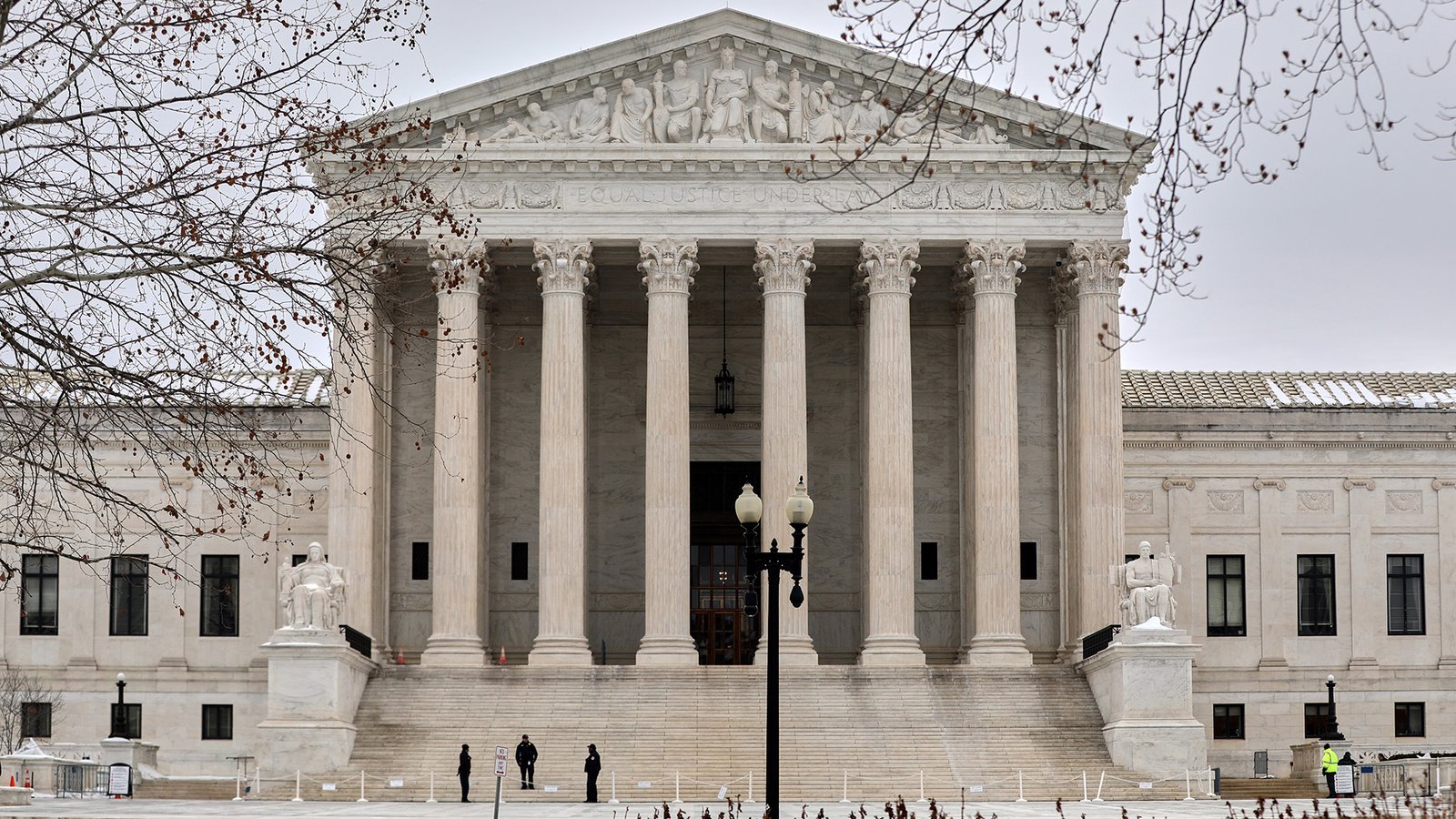
The U.S. Supreme Court struck down President Donald Trump’s sweeping global tariffs in a 6-3 ruling, significantly curtailing the executive branch’s ability to unilaterally impose import duties using emergency powers. The case, Learning Resources, Inc. v. Trump, centered on the administration’s use of the 1977 International Emergency Economic Powers Act (IEEPA) to justify broad “Liberation Day” tariffs, including a 10% baseline on most imports and higher rates targeting China, Mexico, Canada, and the EU.
Chief Justice John Roberts authored the majority opinion, joined by Justices Kagan, Sotomayor, Jackson, Barrett, and Gorsuch. The Court held that while IEEPA permits the president to “regulate” importation during declared national emergencies, it does not authorize the imposition of tariffs, which are constitutionally taxes reserved for Congress under Article I. “The president cannot use two words in the statute to claim unchecked power to tax imports,” Roberts wrote. Justices Thomas, Alito, and Kavanaugh dissented, arguing for broader executive flexibility in foreign economic threats.
This ruling invalidates hundreds of billions in tariffs collected since early 2025 but leaves intact those imposed under other laws like Section 232 (national security) and Section 301 (unfair trade practices).
How the Ruling Reshapes US Foreign Policy
The decision marks a pivotal shift in how the United States conducts economic statecraft, a cornerstone of modern foreign policy. For decades, presidents from both parties have increasingly relied on executive authority to deploy tariffs as tools of diplomacy—pressuring allies and adversaries alike to address trade imbalances, intellectual property theft, border security, and fentanyl flows. Trump’s second-term tariffs exemplified this aggressive approach, framed as essential to “America First” priorities and national emergency responses.
By reasserting congressional primacy over tariffs, the Court limits the president’s capacity for rapid, unilateral economic coercion. This could compel future administrations to engage more deeply with Congress for trade legislation, fostering bipartisanship but potentially slowing responses to geopolitical crises. Allies like Canada, Mexico, and European nations, hit hard by retaliatory spirals in 2025, may now find breathing room, easing tensions in key partnerships such as USMCA and NATO. Reduced tariff barriers could stabilize supply chains and rebuild trust strained by sudden policy shifts.
Against strategic competitors like China, the impact is nuanced. While broad emergency tariffs are off the table, targeted measures under existing statutes remain viable. However, the ruling may hinder ambitious decoupling efforts or using tariffs as leverage in South China Sea or Taiwan-related negotiations. It signals to Beijing and others that U.S. trade policy operates within legal guardrails, potentially enhancing America’s soft power as a rules-based actor while constraining hard-power economic tools.
Broader implications extend to the balance of foreign policy powers. Tariffs have blurred lines between economic and security policy. The decision reinforces separation of powers, possibly inviting congressional pushback or new laws explicitly granting (or restricting) presidential tariff authority. Trump’s administration has vowed to explore alternatives and lobby Congress, suggesting ongoing battles that could define executive-legislative dynamics for years.
Critics of expansive executive power hail the ruling as a victory for constitutional order. Supporters of robust presidential action warn it ties America’s hands in an era of great-power competition, where swift economic responses to threats like supply chain vulnerabilities or currency manipulation are vital.
In the short term, markets cheered the decision for reducing uncertainty, while importers eye refunds. Long-term, US foreign policy may pivot toward negotiated trade deals, multilateral institutions like the WTO, and diplomacy over tariff wars. As globalization faces headwinds, this ruling underscores that economic tools of statecraft are not solely the president’s domain.
The full opinion is available on the Supreme Court website. This development will likely dominate trade and foreign policy discussions heading into midterm cycles.