
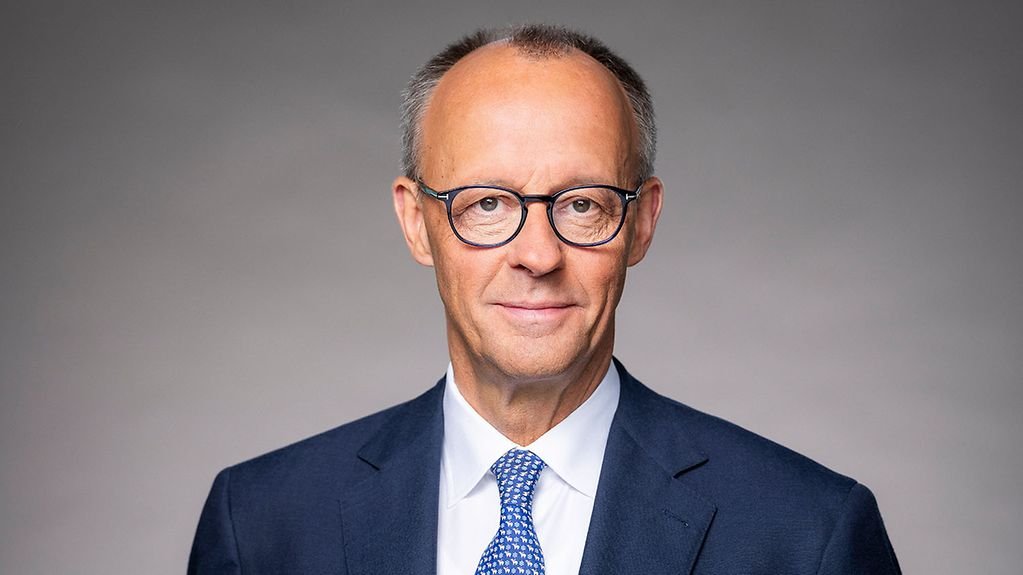
German Chancellor Friedrich Merz will make his first official trip to China next week, seeking what officials call “the right balance of cooperation” with Beijing. The high-stakes visit, scheduled for February 24-27, comes as Germany’s export-driven economy navigates intense Chinese competition, particularly in the auto sector.
Merz leaves Berlin on Tuesday and arrives in Beijing on Wednesday for talks with Premier Li Qiang, followed by a meeting and dinner with President Xi Jinping. The itinerary includes a symbolic tour of the Forbidden City and a stop at a Mercedes-Benz plant. He then travels to Hangzhou to visit Chinese robotics leader Unitree and Siemens Energy operations. A large business delegation accompanies him, including the CEOs of Volkswagen, BMW and Mercedes-Benz.
Government spokesperson Sebastian Hille described the trip’s core theme as “competition,” with the goal of finding “the right balance of cooperation” where interests align. Merz himself posted on X: “May the Year of the Horse bring strength and give new impetus to German-Chinese relations.” Speaking at a CDU party congress, he stressed: “We need economic relations with the entire world, and that of course includes a country like China. Foreign policy today is also foreign economic policy.”
China reclaimed its position as Germany’s top trading partner in 2025, with bilateral trade reaching €251.8-253 billion. German imports from China rose 8.8% to around €171 billion, while exports fell 9.7% to €81-82 billion, widening the deficit. Officials say the visit will address trade imbalances, market access, subsidies and overcapacity.
The timing is critical for German carmakers, who have lost substantial ground in their once-dominant Chinese market. Legacy brands face a brutal price war from heavily subsidized local EV makers such as BYD, Nio and others. German passenger-car exports to China have collapsed roughly two-thirds since the 2022 peak, with market share dropping sharply. Mercedes-Benz reported a 57% plunge in 2025 net profit, citing China competition, tariffs and currency headwinds. BMW and Volkswagen have also seen double-digit sales declines in China, while investing heavily to keep pace in EVs, software and autonomous tech.
BMW CEO Oliver Zipse, travelling with Merz, warned that ignoring China’s market and innovation potential would risk “future economic success.” He added: “Complex global challenges can only be solved by working together… Innovation and progress do not arise from isolation.”
Beyond economics, Merz — more outspoken on human rights, Taiwan and Beijing’s stance on Ukraine than his predecessor — plans to raise security, geopolitics and human rights. The trip occurs amid transatlantic strains, US tariffs and a broader European push to “derisk” without full decoupling.
Analysts see the visit as classic German pragmatism: protect strategic interests, push back on unfair competition, yet preserve vital ties that support hundreds of thousands of jobs. Whether Merz secures concrete progress on subsidies, IP protection and fair market access will shape Germany’s industrial future in a multipolar world.