
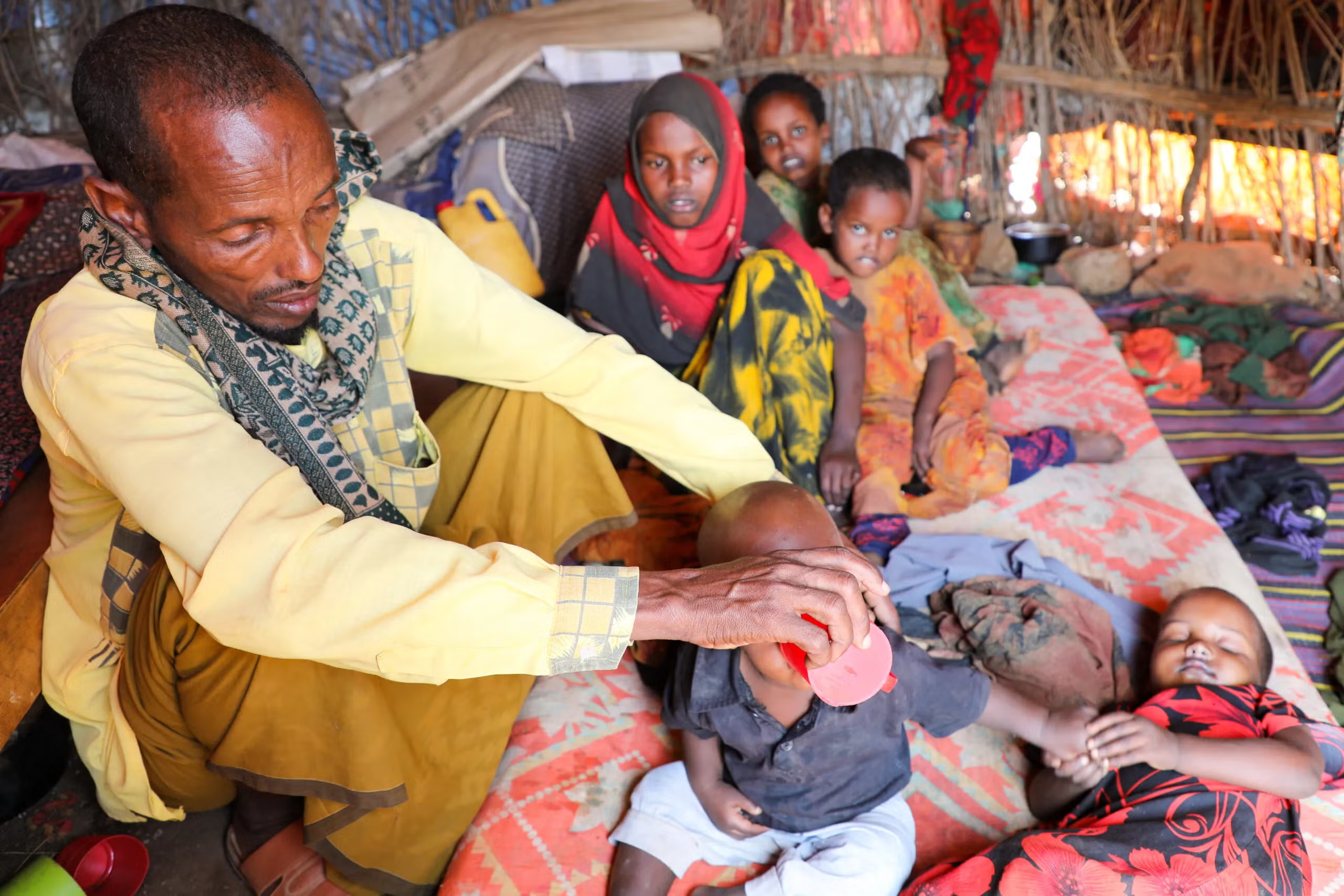
Somalia is once again on the brink of a major humanitarian disaster. According to the latest Integrated Food Security Phase Classification (IPC) report released on February 24, 2026, 6.5 million people — nearly one-third of the population — are facing acute food insecurity (IPC Phase 3 “Crisis” or worse) through March. This marks a dramatic increase of 1.7 million people since January and nearly double the number from early 2025.
The crisis is driven by four consecutive failed rainy seasons, pushing the Horn of Africa nation deeper into drought. Somalia declared a national drought emergency in November 2025 after years of erratic weather patterns linked to climate change. Livestock have died in large numbers, crops have failed, and water sources have dried up, triggering mass displacement and skyrocketing food prices. Conflict and insecurity in several regions continue to block aid delivery, while global humanitarian funding cuts have forced agencies to scale back operations at the worst possible time.
The numbers are stark. Over 2 million Somalis are already in IPC Phase 4 (Emergency), where households struggle with extreme food shortages. More than 1.8 million children under five are projected to suffer acute malnutrition in 2026, with almost 500,000 cases severe. These figures echo the devastating 2022 drought that brought Somalia to the edge of famine.
Just days before the IPC alert, the UN World Food Programme (WFP) issued a stark warning: without urgent new funding of around $95 million, emergency food assistance in Somalia could grind to a halt by April. WFP has already slashed its reach from 2.2 million people earlier this year to just over 600,000, leaving millions without the safety net they desperately need during the harsh Jilaal dry season.
The Somali government and UN agencies have jointly sounded the alarm, urging the international community to act immediately. “The drought has deepened alarmingly, with soaring water prices, limited food supplies, dying livestock, and very little humanitarian funding,” said George Conway, UN Humanitarian Coordinator for Somalia.
While meteorologists forecast possible relief with the April–June Gu rains, experts warn that any improvement will be modest and uneven. Even with better rains, 5.5 million people are still expected to face crisis levels of hunger through mid-2026. Long-term resilience programs — including drought-resistant farming, water infrastructure, and peace-building — are essential alongside emergency aid.
This crisis is preventable. With swift funding and coordinated action, lives can be saved and suffering reduced. As global attention shifts elsewhere, the people of Somalia cannot afford to be forgotten. The coming weeks will determine whether the country slides further into catastrophe or turns the corner with international support.