
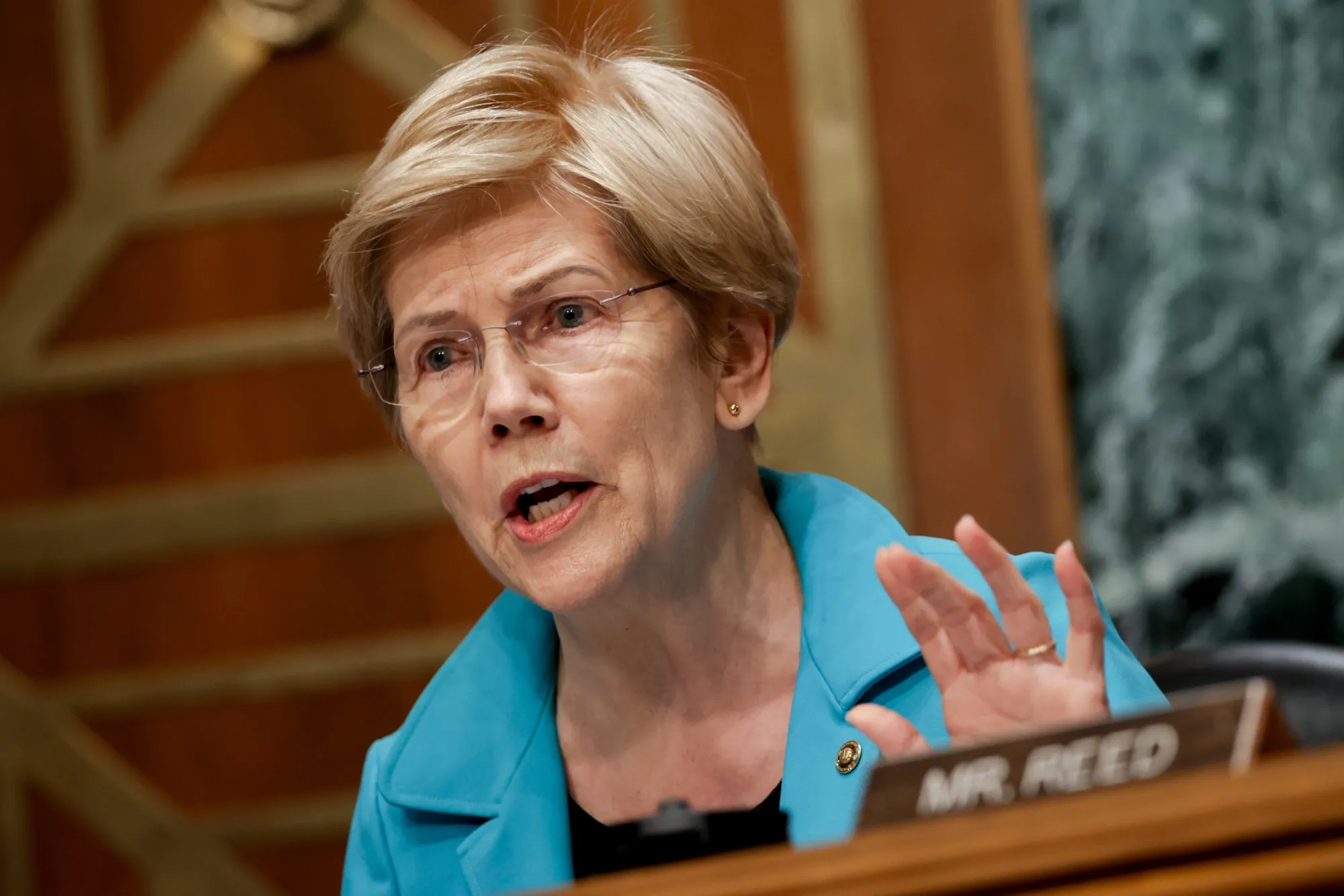
Senator Elizabeth Warren has emerged as one of the most vocal critics of Kevin Warsh, President Donald Trump’s nominee who was recently confirmed as the new Chair of the Federal Reserve. Her sharp attacks during confirmation hearings and public statements highlight deep concerns about the independence of the U.S. central bank, potential conflicts of interest, and Warsh’s suitability for the role.
Background on the Nomination
Kevin Warsh, a former Federal Reserve Governor who served from 2006 to 2011, was nominated by President Trump to replace Jerome Powell. His confirmation in May 2026 came after a contentious process, passing the Senate on a narrow, mostly party-line 54-45 vote. Republicans largely supported the pick, viewing Warsh as an experienced insider with strong ties to financial markets. Democrats, led by Warren, saw it differently—as a dangerous step toward politicizing the Fed.
Warren, the ranking Democrat on the Senate Banking Committee, made her opposition clear from the outset. In her opening remarks and floor speeches, she framed the nomination not as a routine personnel change but as part of a broader effort by Trump to exert control over monetary policy.
The “Sock Puppet” Critique
The most memorable phrase from Warren’s campaign against Warsh was calling him Trump’s “sock puppet.” She repeatedly argued that Trump selected Warsh specifically to lower interest rates for political gain, particularly to boost the economy ahead of future elections.
“Trump wants to control interest rates, and he nominated Kevin Warsh to be his sock puppet,” Warren stated. She warned that installing a compliant chair would represent “another step in Trump’s attempt to take over the Fed,” ultimately benefiting Wall Street at the expense of working families.
This criticism gained traction amid reports of Trump’s public comments suggesting lower rates “when my guy Kevin Warsh is in there.” Warren portrayed this as evidence of improper political interference in what should be an independent institution tasked with managing inflation, employment, and financial stability.
During hearings, Warren pressed Warsh directly on his independence. She asked him to name one aspect of Trump’s economic agenda with which he disagreed. His responses, in her view, failed to demonstrate sufficient backbone against potential White House pressure.
Financial Transparency and Conflicts of Interest
Beyond independence, Warren hammered Warsh on his personal finances. She highlighted more than $100 million in undisclosed assets, arguing that incomplete financial disclosures made it impossible to fully vet potential conflicts.
Warsh cited confidentiality agreements as the reason for gaps in his filings. Warren demanded clarity on whether these holdings involved Trump-affiliated companies, Chinese entities, or other problematic investments. She continued raising these issues even after the confirmation vote, urging full divestment details before Warsh could be sworn in.
Staff reports from the Banking Committee’s minority side detailed expansive wealth with limited transparency. Warren warned that Warsh could become the wealthiest Fed Chair in history while hiding entanglements that might influence his decision-making.
Epstein Files and Additional Red Flags
Warren also brought up Warsh’s name appearing in the Jeffrey Epstein files. She questioned him about any connections and expressed skepticism at his claim of having “zero knowledge” of related matters. This line of inquiry added another layer of controversy to the already heated confirmation process.
Warsh’s Pre-Crisis Record
Warren criticized Warsh’s tenure as a Fed Governor during the lead-up to the 2008 financial crisis. She described him as an “enthusiastic cheerleader” for risky Wall Street practices, including credit default swaps and complex securitizations that fueled the meltdown. In her view, this history made him “uniquely unqualified” to lead the Fed during a period of economic vulnerability, with inflation concerns and market volatility.
She argued that at this “unprecedented moment,” the Fed needed a steady, independent hand—not someone she believed would prioritize political signals over economic data.
Broader Implications for the Federal Reserve
Warren’s opposition fits into a larger narrative about threats to institutional independence. She and other Democrats expressed fears that a Trump-aligned Fed Chair could lead to decisions favoring short-term political wins over long-term stability—such as aggressive rate cuts that might reignite inflation or special treatment for certain sectors.
Critics of Warren’s stance counter that the Fed has faced political pressures from both parties historically, and Warsh has pledged to act independently based on data. Warsh himself rejected the “sock puppet” label, stating he would not take orders from the White House.
Nevertheless, Warren voted against confirmation and urged colleagues to do the same, calling the process a troubling precedent.
Why This Matters
The Federal Reserve wields enormous power over the U.S. economy through its control of interest rates and monetary tools. Any perception of politicization can erode public confidence, affect market reactions, and influence everything from mortgage rates to retirement savings.
Warren, a longtime advocate for stronger financial regulations and consumer protections, positions her fight as a defense of working Americans against potential Wall Street favoritism and executive overreach. Supporters of the nomination see it as bringing fresh leadership and a more market-oriented approach to the central bank.
As Kevin Warsh assumes the role, the spotlight will remain on whether he upholds the Fed’s traditional independence or validates Warren’s warnings. Early signals from his statements suggest an emphasis on regime change in communication and inflation control, but actions in the coming months will ultimately define his tenure.
The clash between Warren and Warsh underscores ongoing tensions in American economic governance: the balance between democratic accountability and institutional autonomy in a polarized political environment.