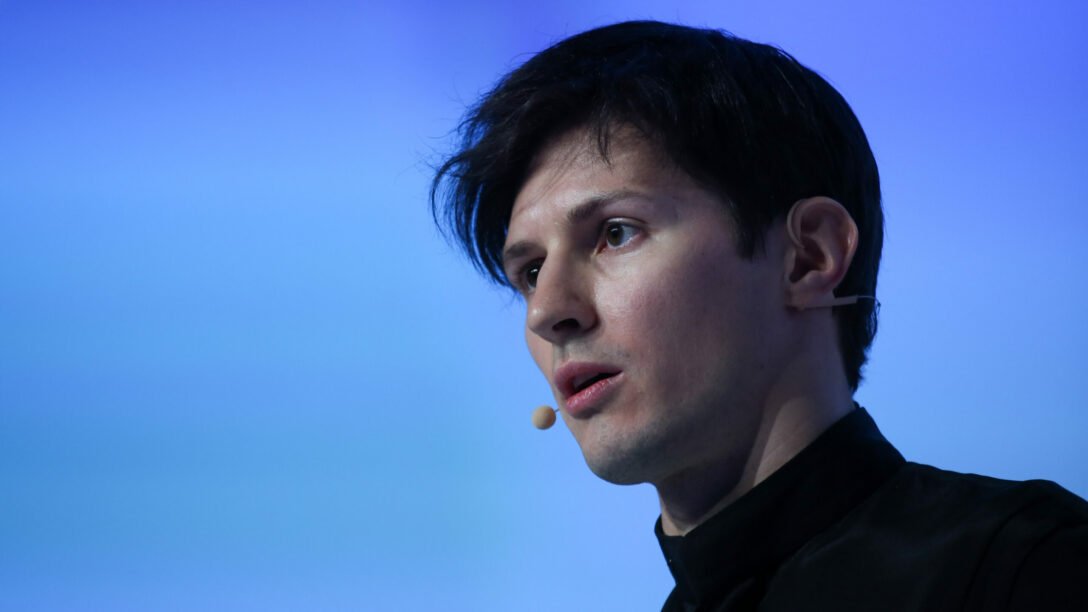
The web3 landscape was shaken on June 1, 2026, when Telegram’s iconic founder, Pavel Durov, took to his official channel to announce a massive shift for the fastest-growing consumer blockchain ecosystem. Over the next three weeks, the native cryptocurrency of The Open Network—long known as Toncoin (TON)—will officially rebrand to Gram (GRAM).
While the token undergoes this profound identity change, the underlying architecture will maintain its identity: TON remains the name of the blockchain.
To the casual observer, changing a ticker symbol and an asset name might look like standard corporate cosmetic surgery. However, in the context of TON’s tumultuous history, this rebrand is an extraordinarily bold, full-circle moment. It marks a defiant return to Telegram’s original crypto vision, an escalation of its “Make TON Great Again” (MTGA) initiative, and a strategic masterstroke ahead of mainstream consumer web3 adoption.
The Ghost of 2018: A Historical Homecoming
To understand why the shift to Gram matters, one must look back to 2018. At the time, Telegram launched one of the largest Initial Coin Offerings (ICOs) in history, raising a staggering $1.7 billion from private investors to build the “Telegram Open Network.” The native currency of this ambitious network was named Gram.
Just as the token was preparing to launch in late 2019, the U.S. Securities and Exchange Commission (SEC) intervened, obtaining an emergency injunction. The SEC argued that Grams were unregistered securities. After a bruising legal battle, Telegram officially pulled the plug in May 2020, agreeing to settle with the SEC, pay an $18.5 million penalty, and return remaining funds to investors.
Telegram open-sourced the code and walked away. Or so it seemed.
An independent community of developers—the TON Foundation—picked up the pieces, rebranding the network to “The Open Network” and renaming the native token to “Toncoin.” For years, Telegram maintained an arm’s-length relationship with the project to satisfy regulators. But by mid-2026, the gloves have completely come off.
“We are returning to our roots—and starting a new chapter,” Durov posted. By discarding “Toncoin” and resurrecting “Gram,” Telegram is rewriting history, reclaiming its stolen child, and fulfilling the original 2018 whitepaper’s architectural intent.
Step 4 of 7: The “Make TON Great Again” Roadmap
The rebirth of Gram does not happen in a vacuum. It is explicitly framed as Step 4 of 7 in Pavel Durov’s aggressive, highly publicized “Make TON Great Again” (MTGA) roadmap.
Since Durov and Telegram officially and overtly took over the reins of TON development from the Switzerland-based TON Foundation earlier this spring, the network has undergone a radical transformation. The milestones preceding the Gram rebrand have systematically laid the groundwork for this moment:
- Sub-Second Finality: Upgrades to the network’s consensus engine (Catchain 2.0) drastically slashed block production and validation times from 2.5 seconds to under half a second.
- 6x Fee Reductions: Transaction fees were aggressively slashed by roughly six times, turning TON into a near-feeless settlement layer designed to handle microtransactions at an unprecedented scale.
- Telegram as the Anchor Validator: In a move that startled decentralization purists but thrilled growth hackers, Telegram staked millions of tokens to officially become the network’s largest validator, effectively backing the chain with its corporate infrastructure.
The rebrand to Gram is the psychological and marketing pillar of this 7-step campaign. It unifies the technology with an elegant, nostalgic, and hyper-scalable brand name that fits seamlessly inside a messaging application.
Seamless Transition: Brand Overhaul, Not a Token Swap
For anxious investors and active users, the most critical element of Durov’s announcement is structural continuity. This is a pure rebrand, not a token swap.
Holders of the cryptocurrency face absolutely zero technical friction. There are no bridges to cross, no smart contracts to interact with, and no migration deadlines to meet.
- User Balances: If you hold 100 TON in your non-custodial wallet, it will seamlessly reflect as 100 GRAM once interfaces update.
- Smart Contracts & DeFi: Existing automated market maker pools, staking vaults, and jetton contracts will function perfectly, as the change occurs at the metadata and display layer.
- The Ticker Shift: Over a strict three-week transition window wrapping up mid-June, global exchanges, tracking platforms like CoinMarketCap, and custody providers will systematically migrate the trading pairs from TON/USDT to GRAM/USDT.
The underlying code of the blockchain has always subtly carried the legacy of its origin; the “Gram” nomenclature was never fully scrubbed from the deepest protocol levels. Now, the user interface simply matches the engine.
The Strategic Psychology of “Gram” for 1 Billion Users
Beyond nostalgia, the change to Gram solves a major consumer psychology problem. As Telegram rapidly approaches 1 billion active global users, its push into Mini Apps, Telegram Pay, and creator monetization requires a currency that feels like money, not a technical asset class.
“Toncoin” sounds like a speculative cryptocurrency—something you trade on an exchange. “Gram,” on the other hand, sounds like an organic unit of account. It is lightweight, memorable, and plays beautifully into Telegram’s naming conventions.
Whether users are sending a micro-tip to a channel creator, purchasing an in-game asset inside an ecosystem Mini App, or buying a fractional piece of digital real estate via fragment.com, holding “Grams” feels intuitive. It strips away the intimidating crypto jargon for the average consumer, positioning the asset to act as the true “gas and cash” of the Telegram digital economy.
Regulatory Defiance or Calculated Confidence?
Inevitably, the return of the Gram name raises pressing legal and regulatory questions. Six years ago, this exact name caused an existential crisis for Telegram. Why risk poking the bear now?
The consensus among Web3 legal analysts is that the landscape of 2026 is vastly different from that of 2020. The current network is fully operational, deeply distributed among thousands of global validators, and boasts millions of active daily wallets. The rebrand is a renaming of an existing, functional, highly decentralized utility asset—not a speculative capital-raising event or an advance presale of unissued tokens. By keeping the blockchain’s name as TON, Telegram neatly preserves the decentralized lineage of the network while asserting its role as the premier application layer layer built on top of it.
Markets React: The Gram Rally
The markets responded to Durov’s announcement with immediate euphoria. Within hours of the Telegram post, the native asset surged by nearly 19%, pushing past the $2.20 mark on massive spot trading volumes that doubled from the previous session.
The market’s reaction proves that investors see the rebrand not as a step backward, but as a massive vote of confidence. It signals that Telegram is fully committed to integrating this blockchain into the daily lives of its massive user base under a unified, iconic brand identity.
As Steps 5 through 7 of the MTGA roadmap loom on the horizon—with rumors swirling of upgraded developer suites, revamped infrastructure on ton.org, and advanced Bitcoin liquidity bridges—Gram is no longer a ghost of crypto past. It is officially the currency of Telegram’s future.