
Elon Musk, the visionary entrepreneur behind companies like Tesla, SpaceX, and xAI, has long been a proponent of advanced technologies that push the boundaries of human capability. From electric vehicles revolutionizing transportation to neural interfaces aiming to merge human minds with machines, Musk’s ambitions often seem like science fiction. Yet, his vision for robots stands out as one of his most transformative ideas, promising to redefine work, economy, and daily life. Central to this is Tesla’s Optimus humanoid robot, which Musk sees as a key to unlocking universal prosperity.
The Core of Musk’s Robotic Vision
Musk envisions a world where artificial intelligence (AI) and robots create unprecedented abundance, making work optional for humans within the next 10 to 20 years. He predicts that AI-driven robots will eliminate poverty by providing goods and services at scale, leading to a “universal high income” where people can pursue passions rather than necessities. In this future, robots will outnumber humans, with each person potentially owning personal assistants akin to Star Wars’ R2-D2 and C-3PO. Musk emphasizes that humanoid robots could become the “biggest product ever,” surpassing even cellphones in impact, as they integrate into every aspect of life—from homes to industries.
This optimism stems from Musk’s belief in AI’s potential to enhance human life, but he cautions that AI must prioritize “truth and beauty” to ensure a positive outcome. He warns against forcing AI to absorb unfiltered internet data, likening it to a path to madness. Instead, Musk advocates for aligned AI that augments humanity, such as through Neuralink, which could allow people to “inhabit” robot bodies for enhanced experiences or to overcome disabilities.
Tesla’s Optimus: From Concept to Reality
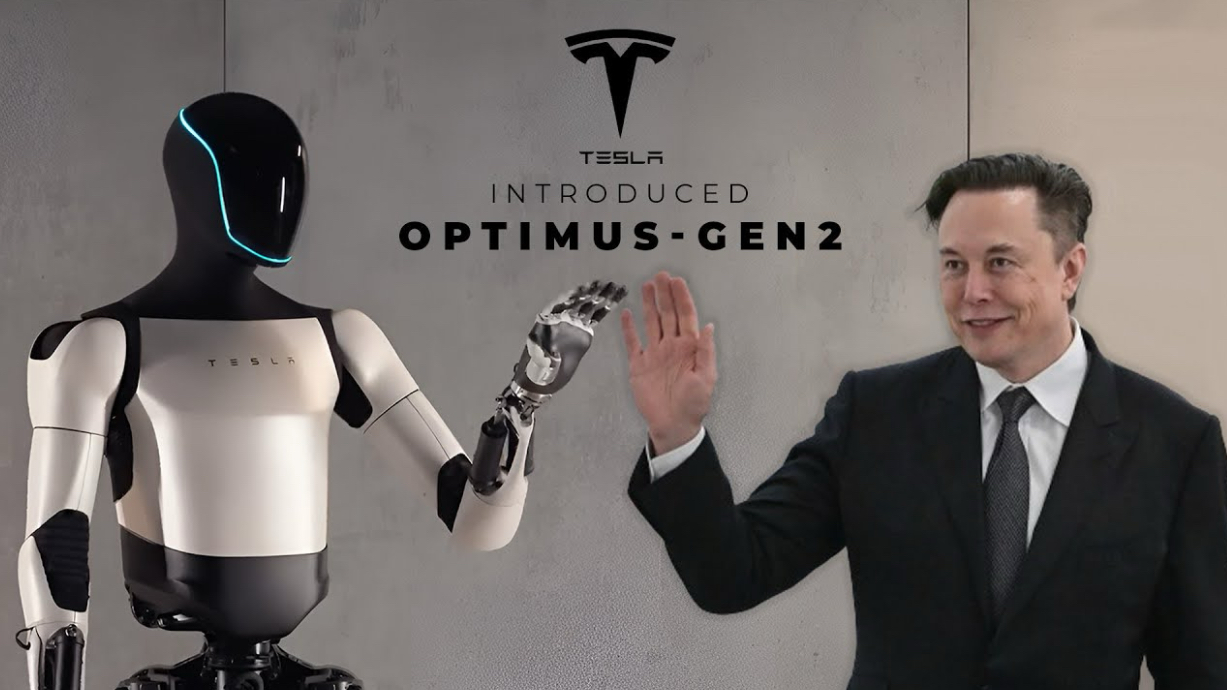
At the heart of Musk’s vision is Tesla’s Optimus, a general-purpose, bipedal humanoid robot designed for unsafe, repetitive, or boring tasks. Introduced in 2021, Optimus has evolved rapidly. The Generation 2 model features Tesla-designed actuators and sensors, enabling faster walking (30% improvement), more capable hands with 11 degrees of freedom each, and enhanced dexterity—such as picking up an egg without breaking it. It can walk, climb stairs, lift objects, and manipulate items autonomously, powered by advanced AI neural networks.
Musk has shared ambitious timelines: low production for internal Tesla use in 2025, scaling to high production for other companies by 2026. Recent demonstrations include Optimus learning Kung Fu, juggling Rubik’s Cubes, and even attending movie premieres like Tron: Ares. The upcoming Generation 3 and beyond promise even greater capabilities, with Musk describing the V3 hand as “exquisite engineering” and noting around 50 actuators per robot for precise movements.
Tesla’s in-house AI chips, like AI5 and AI6, are tailored for Optimus, optimizing power consumption (around 250 Watts) and enabling real-world AI performance superior to competitors. Musk envisions Optimus not just in factories but in homes, providing medical care better than human surgeons and transforming industries like healthcare and transportation.
Broader Implications: Opportunities and Challenges
Musk’s robot-centric future could disrupt labor markets, with humanoid robots potentially replacing jobs in physical services by 2030. He acknowledges this shift, predicting robots will “kill jobs and cash,” but counters that it will lead to wealth for all, far exceeding current billionaires’ fortunes. Countries like Japan, facing labor shortages, could benefit immensely from Optimus deployments.
However, Musk highlights national security concerns, urging U.S. companies to outpace competitors like China’s Unitree in robotics development. He also foresees military applications, where autonomous drones and robots could render traditional warfare obsolete.
Economically, Musk bets big on Optimus, projecting it to constitute 80% of Tesla’s value and trigger massive stock valuation shifts upon scaled production. Tesla’s data advantage—gathering 500 years of driving data daily—fuels this, extending to Optimus via shared neural networks.
Conclusion: A Robotic Renaissance
Elon Musk’s vision for robots isn’t just about machines; it’s about liberating humanity from drudgery and fostering a era of abundance. Through Optimus and beyond, he aims to make AI and robotics tools for good, ensuring they amplify human potential. As Tesla ramps up production and integrates advanced AI, this future inches closer. Whether it leads to utopia or requires careful navigation of ethical pitfalls, Musk’s bold pursuits continue to inspire and challenge our understanding of what’s possible.