
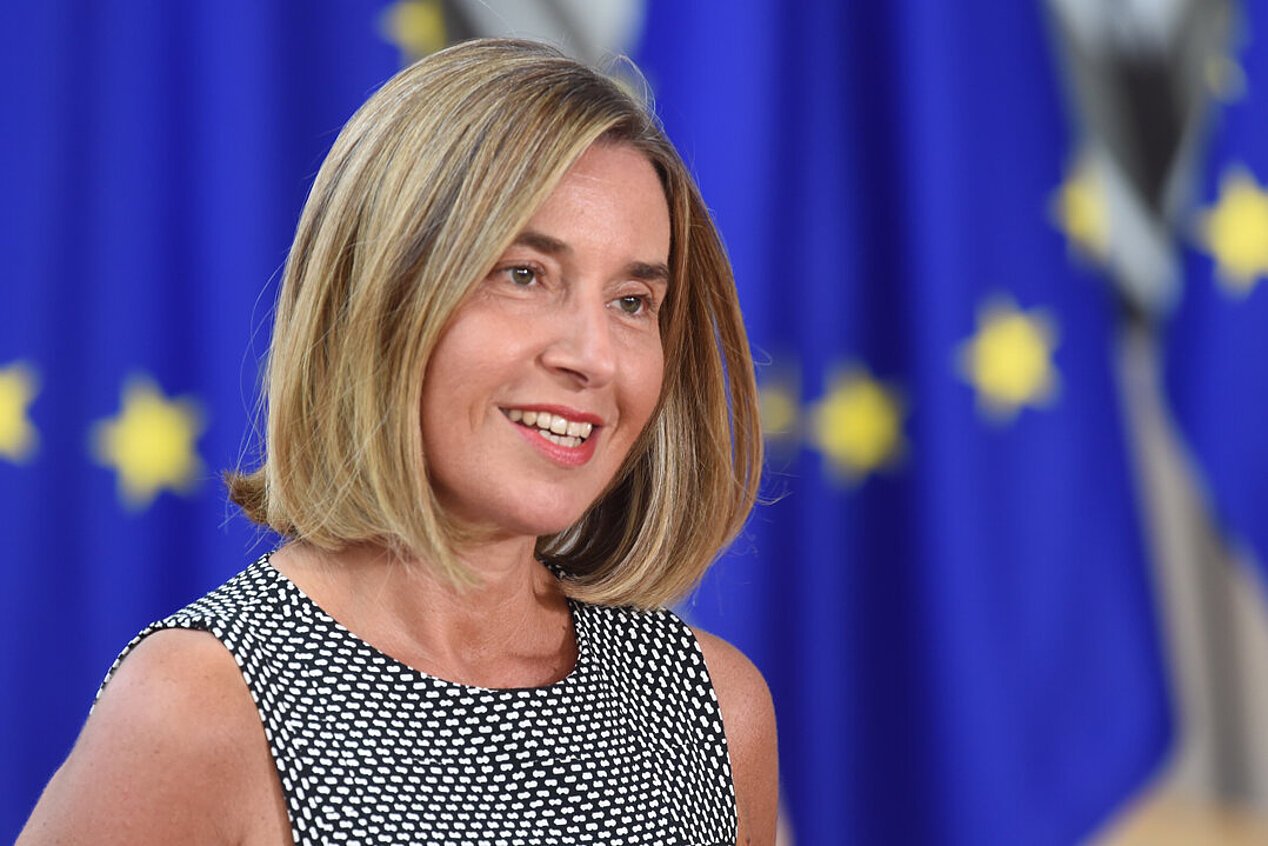
In a stunning development that has sent shockwaves through the corridors of European Union power, Belgian police have detained Federica Mogherini, the former High Representative for Foreign Affairs and Security Policy, alongside Stefano Sannino, a senior EU official, and a third individual as part of a sweeping anti-fraud investigation. The arrests, which took place early Tuesday morning, stem from allegations of procurement fraud, corruption, and breaches of tendering rules tied to an EU-funded diplomatic training program.
The operation, coordinated by the European Public Prosecutor’s Office (EPPO), involved coordinated raids on the headquarters of the European External Action Service (EEAS) in Brussels, the prestigious College of Europe in Bruges, and several private residences. Authorities moved in at dawn, executing search warrants that uncovered evidence of potential irregularities in the awarding of a lucrative contract for the EU Diplomatic Academy—a nine-month training initiative for aspiring young diplomats.
The Suspects and Their Prominent Roles
At the center of the probe is Federica Mogherini, the Italian politician who served as the EU’s top diplomat from 2014 to 2019, overseeing the bloc’s foreign policy during a turbulent era marked by the Iran nuclear deal, Brexit negotiations, and heightened tensions with Russia. Since leaving her EU post, Mogherini has taken the helm as rector of the College of Europe, one of the continent’s most influential institutions for training future European leaders. Her detention marks a dramatic fall from grace for a figure once hailed as a rising star in European politics.
Joining her in custody is Stefano Sannino, who previously served as the secretary-general of the EEAS—the EU’s diplomatic arm—and now holds the position of Director-General for the Middle East, North Africa, and the Gulf in the European Commission’s Directorate-General for Neighborhood and Enlargement Negotiations. The third detainee is reportedly a manager at the College of Europe, though their identity has not been officially disclosed.
Belgian media, including Le Soir and L’Echo, were the first to report Mogherini’s involvement, citing sources close to the investigation. The suspects are being held for questioning, with the EPPO emphasizing that the probe is ongoing to determine the full extent of any criminal activity.
Nature of the Allegations: A Breach in EU Tendering Integrity
The heart of the investigation revolves around the 2021-2022 tender process for the EU Diplomatic Academy project, which was ultimately awarded to the College of Europe. Valued at millions of euros in EU funding, the program aims to cultivate the next generation of diplomats amid growing geopolitical challenges. However, prosecutors allege that confidential procurement information was improperly shared with one of the bidding parties, violating EU rules on fair competition and potentially tilting the scales in favor of the College.
Specific charges under scrutiny include procurement fraud, corruption, conflicts of interest, and violations of professional secrecy. The irregularities are said to have occurred during the previous EEAS mandate, predating Mogherini’s direct involvement in her current role but overlapping with her extensive network in EU diplomatic circles. Lifting parliamentary immunity was a prerequisite for the arrests, underscoring the high-level nature of the case.
“This operation highlights our commitment to upholding the integrity of EU institutions,” the EPPO stated in a brief release. “There are strong suspicions of breaches in the tendering process, including the unauthorized disclosure of sensitive information. We will continue to investigate to clarify the facts and assess any criminal offenses.”
Official Responses and a Wall of Silence
Reactions from the institutions involved have been measured but telling. An EEAS spokesperson confirmed the presence of police at their Brussels headquarters, noting that the inquiry pertains to “activities from the previous mandate.” They refrained from commenting on the status of any detainees as EU officials, adding, “The EEAS fully cooperates with all relevant authorities.”
The College of Europe acknowledged the raids on its Bruges campus but stopped short of confirming Mogherini’s detention. “We are aware of the police activity and are cooperating fully,” a spokesperson said, urging respect for the ongoing process. Belgian police, meanwhile, declined to provide further details, citing the active nature of the investigation.
Mogherini herself has not issued a public statement, and her legal team could not be reached for comment as of press time. Sannino’s representatives similarly remained silent.
Broader Implications for EU Governance
This scandal erupts at a precarious moment for the EU, as it grapples with internal divisions over Ukraine aid, migration policies, and economic recovery. The EEAS, under current High Representative Kaja Kallas, plays a pivotal role in projecting a unified European voice on the global stage. Any taint on its procurement processes could erode public trust and invite scrutiny from euroskeptic factions in national parliaments.
Critics have long warned of opacity in EU contracting, with past probes uncovering waste and favoritism in everything from infrastructure projects to cultural grants. If substantiated, these allegations could lead to reforms in tender oversight and renewed calls for greater transparency. For Mogherini, a trailblazer as the EU’s youngest-ever foreign policy chief, the fallout could derail her post-EU career and stain her legacy.
As the investigation unfolds, all eyes will be on Bruges and Brussels. The EPPO has vowed a thorough examination, but questions linger: Was this an isolated lapse, or symptomatic of deeper systemic flaws? For now, the diplomatic world holds its breath.