
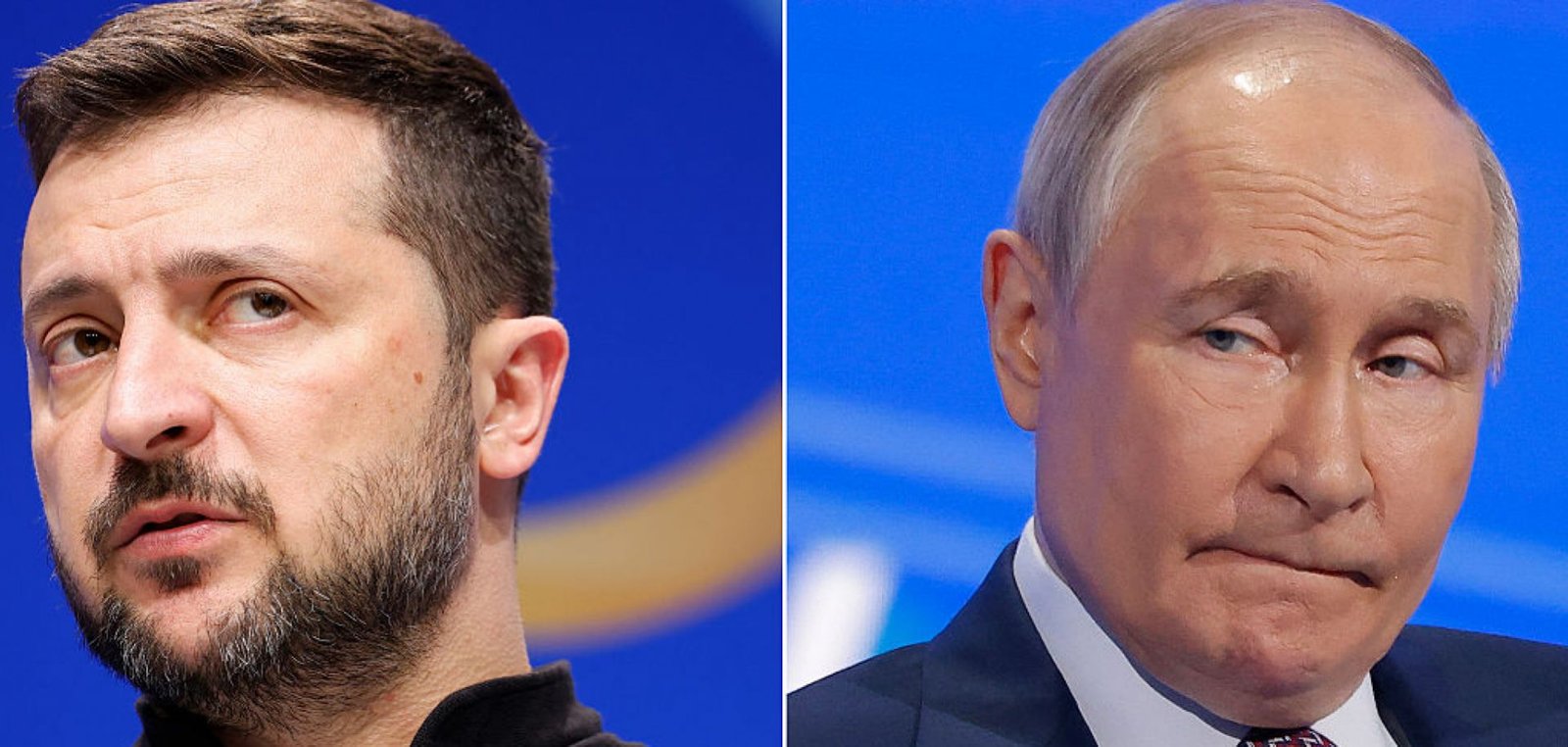
In a chilling escalation of rhetoric amid stalled diplomatic efforts, Russian President Vladimir Putin warned European leaders on Tuesday that Moscow stands “ready right now” for a potential conflict if provoked, even as U.S.-brokered peace talks over Ukraine wrapped up without any meaningful progress. Speaking at the VTB Russia Calling Investment Forum in Moscow, Putin accused European powers of sabotaging ongoing negotiations by imposing “absolutely unacceptable” demands, effectively positioning them “on the side of war.” The comments came just hours before a high-stakes meeting between Putin and U.S. envoys—special envoy Steve Witkoff and President Donald Trump’s son-in-law, Jared Kushner—aimed at reviving a faltering peace plan for the nearly four-year-old war in Ukraine.
Putin’s remarks underscore a deepening impasse in the conflict that has claimed over 1.2 million lives on both sides, according to U.S. estimates, and shows no signs of abating despite renewed U.S. involvement under the Trump administration. “We are not planning to go to war with Europe, but if Europe suddenly wants to go to war and starts one, we are ready right now,” Putin stated bluntly, adding that any such confrontation could end so decisively for Europe that “there won’t be anyone left to negotiate with.” The warning, delivered in the presence of international investors, appeared designed to rally domestic support while pressuring Western capitals to soften their stance on Ukraine.
Stalled Talks: A 28-Point Plan in tatters
The backdrop to Putin’s threats is a series of U.S.-facilitated peace proposals that have unraveled under the weight of irreconcilable demands. Initial talks in late November centered on a 28-point framework secretly devised by Washington and Moscow, which called for Ukraine to cede significant territory in the east—including the Donbas region—along with restrictions on its military and a permanent halt to NATO aspirations. Ukrainian President Volodymyr Zelenskyy, backed by European allies, swiftly rejected the plan as tantamount to capitulation, countering with a revised 20-point version that emphasized territorial integrity, robust security guarantees, and reparations for war damages.
Tuesday’s five-hour Kremlin session, which extended past midnight local time, focused on bridging these gaps but yielded “no compromise version” of the plan, according to Yuri Ushakov, Putin’s foreign policy aide. Key sticking points included territorial concessions and Ukraine’s future alignment with the West. “We are no closer to resolving the crisis in Ukraine, and there is much work to be done,” Ushakov told reporters, emphasizing that Russia views the original U.S. proposal as the only viable starting point—albeit one requiring “significant revisions.”
The failure to advance was foreshadowed by Putin’s pre-meeting broadsides. He lambasted Europe for “blocking the entire peace process” through amendments that he claimed were deliberately inflammatory, aimed at derailing Trump’s mediation efforts. Pro-Kremlin outlets like Komsomolskaya Pravda echoed this narrative, portraying the talks as a “dead end” caused by Kyiv’s refusal to yield, and hinting that Russia’s battlefield gains—such as recent advances in key Ukrainian cities—strengthen Moscow’s hand for tougher terms ahead.
Zelenskyy’s Defiance and Calls for Pressure
From Kyiv, Zelenskyy struck a measured but resolute tone, dismissing Putin’s saber-rattling as a ploy to avoid ending the war on equitable terms. “It’s difficult to comment on his words, but [Putin] probably doesn’t want to end the war as he has failed to meet his goals in Ukraine,” Zelenskyy said during a visit to Dublin, where he met Irish leaders to shore up European support. He stressed that Russia is now “thinking how to find new reasons not to [end] this war,” while expressing optimism about U.S. pressure to push negotiations forward. “Now more than ever, there is a chance to end this war,” Zelenskyy added, though he acknowledged that “some things still need to be worked out” in the draft plan.
Zelenskyy’s Ireland trip highlighted growing concerns among European allies about U.S. diplomacy potentially sidelining them. Irish Prime Minister Leo Varadkar and others reiterated commitments to Ukraine’s sovereignty, with Varadkar warning that allowing Putin to “succeed” could invite broader threats to NATO’s eastern flank. Ukrainian soldiers on the front lines, like one interviewed by the BBC who dismissed peace talks as “just chatter,” reflected a pervasive skepticism that diplomacy alone can halt Russian advances without sustained Western arms supplies.
NATO’s Response: Unity Amid Escalation Fears
As Putin’s words reverberated, NATO foreign ministers convened in Brussels on Wednesday to address the deteriorating security landscape. Dutch Prime Minister Mark Rutte, speaking for the alliance, downplayed the Russian leader’s threats as bluster but urged continued military aid to Ukraine to maintain leverage at the negotiating table. “The way to reach a peace deal would be to keep up the pressure on Russia,” Rutte said, echoing Baltic states’ calls for battlefield gains to force Moscow’s hand.
Estonian Foreign Minister Margus Tsahkna went further, declaring that “there is no strategic breakthrough” in Russia’s position and that Putin “has not changed his goals.” Latvian counterpart Baiba Braze added that meaningful results in talks are unlikely “if they aren’t achieved on the battlefield.” The UK, too, condemned Putin’s “sabre-rattling” as unacceptable, with Foreign Secretary David Lammy vowing to bolster defenses against any spillover risks.
Broader Implications: A Continent on Edge
Putin’s Europe-focused warnings revive long-standing fears that a Russian victory in Ukraine could embolden aggression against NATO members, a scenario both Moscow and the West have repeatedly invoked. With Russian incursions into European airspace on the rise and hybrid threats like cyberattacks intensifying, the continent faces a precarious moment. Trump’s envoy Witkoff, departing Moscow early Wednesday, offered a cautiously optimistic note: “Not further [from a deal], that’s for sure,” but provided no timeline for next steps.
As the war grinds into its fourth winter, the absence of a breakthrough leaves Ukraine vulnerable to further Russian offensives and Europe bracing for potential escalation. Zelenskyy’s plea for a “just peace” without fading hatred rings truer than ever, but with Putin doubling down on defiance, the path to resolution remains as fraught as the front lines themselves.