
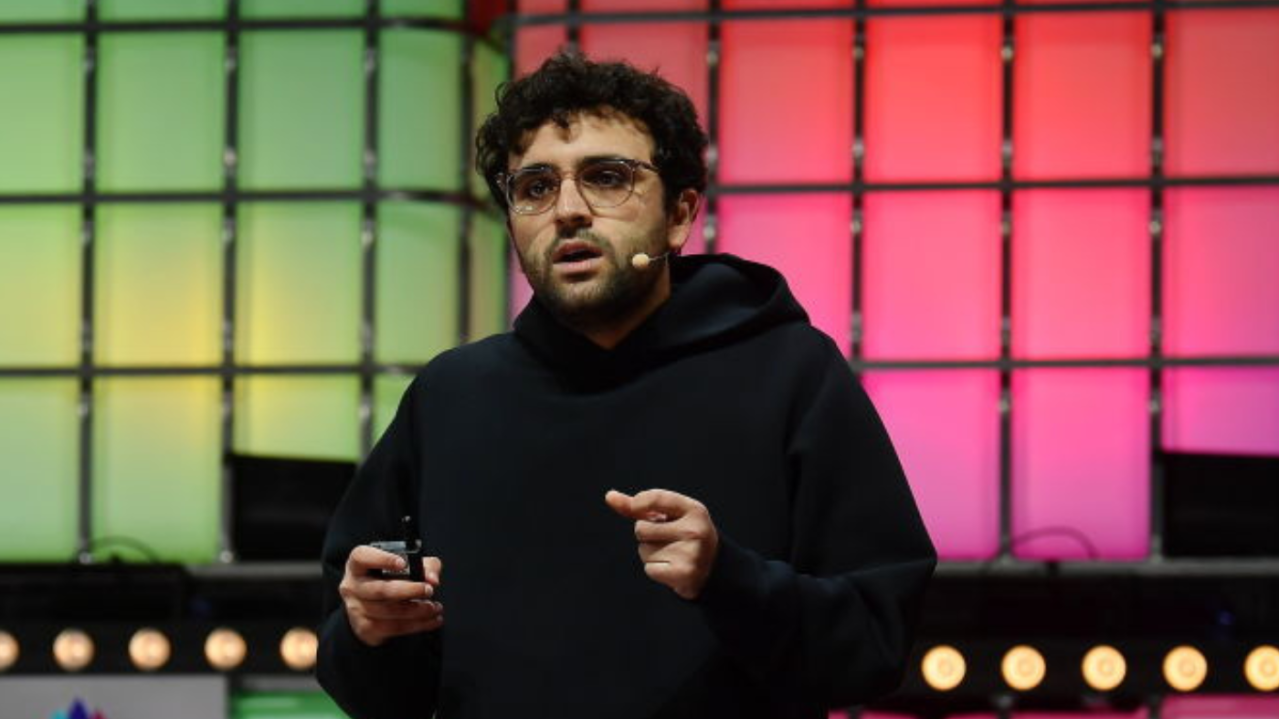
Tarek Mansour, co-founder and CEO of Kalshi, the first federally regulated prediction-market exchange in the United States, has a strikingly simple yet radical long-term vision for his industry: to make literally any difference of opinion tradable as an asset.
In interviews and public appearances since Kalshi’s launch in 2021, Mansour has repeatedly framed prediction markets not merely as a betting platform or an alternative to polling, but as the natural endpoint of financialization itself. “If two people disagree on something and both are willing to put money behind their view,” he has said, “that disagreement should be structured into a liquid, transferable contract. Full stop.”
From Sports Betting to “Everything Markets”
Kalshi began with relatively tame event contracts: election outcomes, inflation numbers, Oscar winners, Federal Reserve decisions, and even whether Kanye West would change his name to Ye. But the CFTC-approved market catalog has expanded aggressively into macroeconomic indicators, climate metrics, and public-health outcomes. What started as a regulated alternative to offshore sites like PredictIt or Polymarket is quietly becoming something broader.
Mansour’s core insight is that prediction markets are not a niche product; they are a universal financial primitive. Just as options and futures turned volatility and time into tradable commodities, prediction markets turn belief and uncertainty into tradable commodities. The logical conclusion, in his view, is that any resolvable question with at least two sincerely held opinions should eventually have its own liquid market.
“Imagine a world,” Mansour said at a 2024 blockchain conference in New York, “where you can hedge your career risk by shorting the probability that AI automates your job in the next five years. Or where a small business owner in Florida can buy inexpensive insurance against ‘Category 5 hurricane makes landfall in Miami this season’ at fair odds instead of paying State Farm’s loaded premium. That’s not gambling; that’s efficient risk transfer.”
The “Difference-of-Opinion Layer” of the Economy
Mansour often describes prediction markets as adding an entirely new “difference-of-opinion layer” on top of the real economy. Traditional financial markets let you express views on companies, currencies, and commodities. Prediction markets let you express views on unresolved future states of the world itself.
In this future:
- A climate scientist who believes global temperature rise will stay below 1.8 °C can put her reputation (and capital) on the line in a transparent way.
- A tech founder who thinks a competitor’s product will flop can short its success probability without waiting for the earnings report.
- Voters who are convinced a certain candidate will win (or lose) an election can lock in profits early instead of just arguing on social media.
Each contract becomes a synthetic asset whose price is nothing more than the crowd’s evolving probability estimate. The more liquid the market, the closer the price gets to the “true” probability, creating what Mansour calls “the most honest polling mechanism ever built.”
Regulatory Hurdles and the Path to “Anything Markets”
The biggest obstacle, unsurprisingly, is regulation. The CFTC has been cautious, limiting Kalshi to “economically significant” events and banning outright sports betting and most political contracts in certain contexts (though Kalshi famously won a landmark court case in 2024 allowing congressional-control markets). Mansour is blunt: “Regulators are scared of anything that smells like gambling, but prediction markets are the opposite of gambling when they’re large and liquid; they’re discovery mechanisms.”
He believes that as volumes grow and academic evidence piles up showing superior forecasting accuracy over polls or expert consensus, regulators will gradually expand the scope. “We went from zero event contracts in the U.S. to hundreds in four years,” he points out. “Give it a decade and the default answer to ‘Can I trade a market on X?’ will be yes unless there’s a compelling reason to say no.”
The Ultimate Endpoint: A Market on Every Question
In Mansour’s longest-term vision, prediction markets merge with decentralized finance and artificial intelligence to create an always-on, permissionless layer where anyone can propose a question, anyone can trade it, and oracles or court-like arbitration systems settle the outcome.
That world would feature:
- Micro-markets on individual bills passing Congress
- City-level markets on crime rates or housing prices
- Corporate markets on whether a CEO departs by a certain date
- Personal markets (with privacy safeguards) on life milestones
Every opinion that can be proven right or wrong becomes securitized. The aggregate price of all these contracts becomes a real-time, money-weighted consensus of humanity’s beliefs.
As Mansour puts it: “We already financialized corn, oil, and pork bellies. The last frontier is financializing belief itself.”
Whether that future is utopian information aggregation or dystopian hyper-financialization depends on whom you ask. But for Tarek Mansour and Kalshi, the destination is clear: a world where every difference of opinion, no matter how obscure or personal, can be turned into an asset someone is willing to buy or sell.