
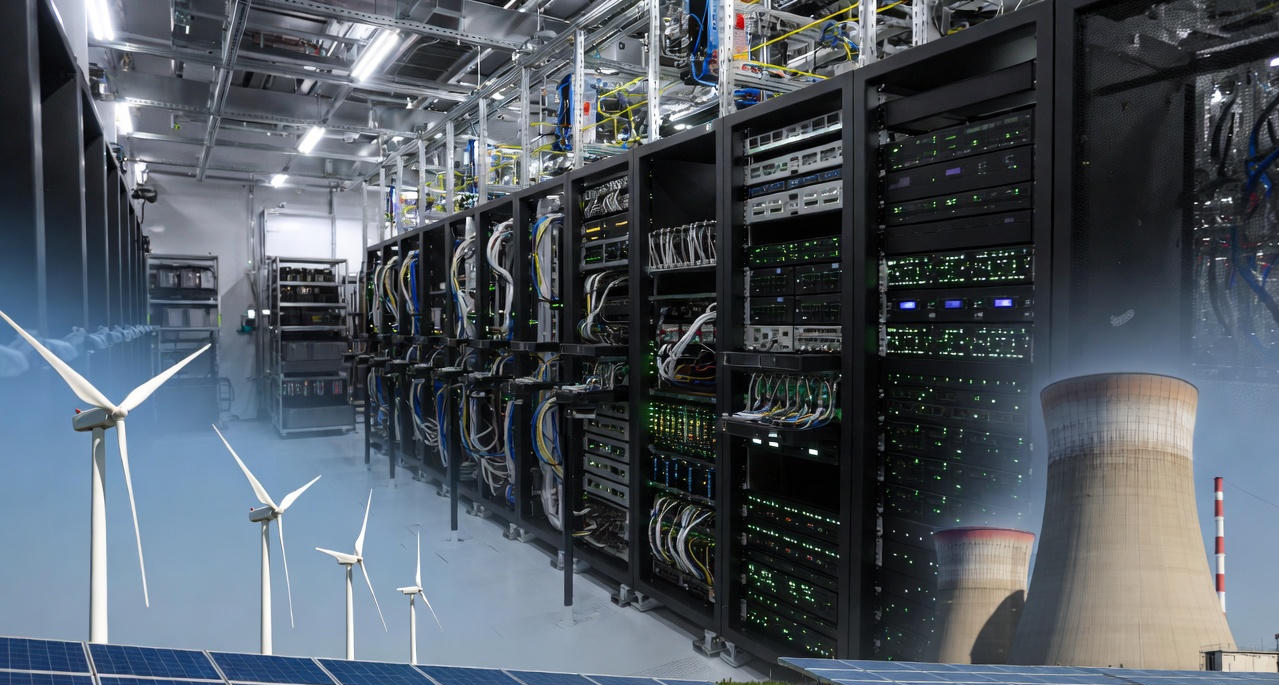
The explosive growth of artificial intelligence has transformed modern life, powering everything from chatbots and image generators to advanced analytics and autonomous systems. Yet behind this digital revolution lies a massive physical infrastructure: data centers packed with servers that train and run AI models. These facilities are extraordinarily energy-intensive, and their rapid expansion is straining power grids, necessitating billions in infrastructure upgrades, and pushing electricity prices higher for households and businesses alike.
As of late 2025, the AI-driven surge in data center demand is no longer a future concern—it’s a present reality reshaping energy markets. Global data center electricity consumption reached approximately 415 terawatt-hours (TWh) in 2024, accounting for 1.5% of worldwide electricity use, according to the International Energy Agency (IEA). In the United States, data centers consumed 183 TWh, or over 4% of national electricity. AI workloads are the primary culprit, with demand from AI-optimized facilities projected to more than quadruple by 2030.
Explosive Growth in Energy Demand
The IEA’s April 2025 report, Energy and AI, paints a stark picture: Global data center electricity use is set to more than double to 945 TWh by 2030 in its base case scenario—equivalent to the current total electricity consumption of Japan. This represents an annual growth rate of about 15% from 2024 to 2030, over four times faster than overall global electricity demand growth.
- United States: Data centers could drive nearly half of U.S. electricity demand growth through 2030. Projections vary, but estimates range from 6.7–12% of national electricity by 2028 (Lawrence Berkeley National Laboratory) to as high as 11.7% by 2030 (McKinsey & Company). By 2030, U.S. data centers alone could consume more power than all energy-intensive manufacturing sectors combined (aluminum, steel, cement, chemicals).
- China and Europe: These regions account for much of the remaining growth, with China projected to add 175 TWh (170% increase) and Europe 45 TWh (70% increase) by 2030.
- Big Tech’s Share: The four largest operators (likely Amazon, Microsoft, Google, and Meta) saw their combined electricity use triple from 35 TWh in 2018 to over 110 TWh in 2023.
AI-specific accelerators like GPUs are the key driver. Training a single large language model can consume energy equivalent to thousands of households annually, while inference (running models) adds ongoing load.
The Ripple Effect: Rising Electricity Prices
The surge isn’t just about total consumption—it’s concentrated in specific regions, overwhelming local grids and driving up costs that are often passed to all ratepayers.
- Wholesale Price Spikes: In areas near data center clusters, wholesale electricity prices have risen up to 267% compared to five years ago (Bloomberg analysis, 2025).
- U.S. Residential Impact: Average household electricity prices increased ~6.5% year-over-year by mid-2025. In data center-heavy states:
- Virginia (home to the world’s largest concentration): Up 13% in some periods.
- Illinois and Ohio: Increases of 16% and 12%, respectively.
- PJM Interconnection (serving 13 states and D.C.): Data centers contributed to $9.3 billion in higher capacity costs for 2025–2026, with total capacity auction prices jumping to $16.1 billion.
- Broader Trends: Nationwide, retail prices rose from 16.41 cents to 17.47 cents per kWh between May 2024 and May 2025. Bank of America noted average utility payments up 3.6% year-on-year in Q3 2025, with further upside expected.
Utilities spread grid upgrade costs (new transmission lines, substations, power plants) across all customers, effectively subsidizing large tech users. This has sparked backlash, with states like Virginia and others debating special rate classes for data centers to shift more costs onto them.
Regional Hotspots and Grid Strain
Data centers cluster in “hubs” for low latency and incentives:
- Northern Virginia (“Data Center Alley”): Hosts thousands of facilities; demand could double state power needs in coming years.
- Other U.S. States: Texas, California, Ohio, Illinois, and Arizona see rapid growth.
- Global: Ireland, Singapore, and Malaysia face similar pressures, with some imposing moratoriums or higher rates for data centers.
Grid connection delays affect ~20% of planned projects, per IEA estimates. In Texas, disorganized integration of large loads like data centers is cited as a top reliability risk.
Big Tech’s Role and Responses
Companies like Microsoft, Google, Amazon, and Meta dominate hyperscale data centers and are investing heavily in solutions:
- Renewables Push: Tech giants finance much new wind and solar via power purchase agreements (PPAs), expected to meet ~50% of data center demand growth by 2030.
- Nuclear Revival: Facing intermittency issues with renewables, Big Tech is turning to nuclear for reliable, carbon-free baseload power.
- Microsoft: 20-year deal to restart Three Mile Island Unit 1 (Pennsylvania).
- Amazon: Acquired a data center campus tied to the Susquehanna nuclear plant; investments in small modular reactors (SMRs).
- Google: Partnerships for geothermal and nuclear restarts (e.g., Iowa’s Duane Arnold plant with NextEra).
- Oracle: Plans for a 1 GW data center powered by three SMRs.
Nuclear currently supplies 15% of data center electricity globally, with natural gas at 26% and renewables 27%. Renewables and gas are leading short-term growth, but nuclear deals signal a long-term shift.
Challenges and Controversies
- Emissions and Transparency: Data center emissions could rise to 300–320 million tons CO2 by 2035, though AI efficiencies in other sectors may offset this. Critics note Big Tech’s reported emissions may undercount by factors of 7x due to reliance on renewable certificates rather than direct supply.
- Water and Local Impacts: Cooling needs strain water resources; some facilities use backup diesel generators, adding pollution.
- Risk of Overbuild: If AI hype cools or efficiencies improve faster than expected, excess infrastructure could leave consumers footing billions in stranded costs.
- Policy Debates: States are pushing data centers to pay more (e.g., Virginia’s new rate classes) or meet efficiency standards.
The Path Forward: Opportunities Amid Pressure
While short-term price hikes are inevitable, AI could enable broader efficiencies—optimizing grids, discovering minerals for renewables, or reducing emissions elsewhere (potentially 5–10% globally by 2030, per Boston Consulting Group).
The AI boom underscores a critical truth: Digital progress demands massive physical energy. Balancing innovation with affordability and sustainability will require coordinated action from tech firms, utilities, regulators, and governments. As 2025 draws to a close, the pressure on electricity costs is a clear signal that the energy transition must accelerate to match AI’s pace. Without it, everyday consumers will continue bearing much of the burden for tomorrow’s technology.