

As we close out 2025, wearable AI is no longer a futuristic concept—it’s a booming reality. Devices like smart glasses, earbuds, watches, and even AI pendants are integrating advanced intelligence to enhance health monitoring, productivity, translation, and daily assistance. But just how big can this market get? Industry forecasts paint a picture of staggering growth, potentially transforming wearable AI into one of the largest consumer tech sectors in the coming decade.
Market analysts project the global wearable AI market to range from $40-70 billion in 2025, exploding to $200-900 billion by the early 2030s, with compound annual growth rates (CAGRs) often exceeding 25-30%. This trajectory rivals the smartphone boom of the 2010s, driven by seamless AI integration, health demands, and big tech investments.
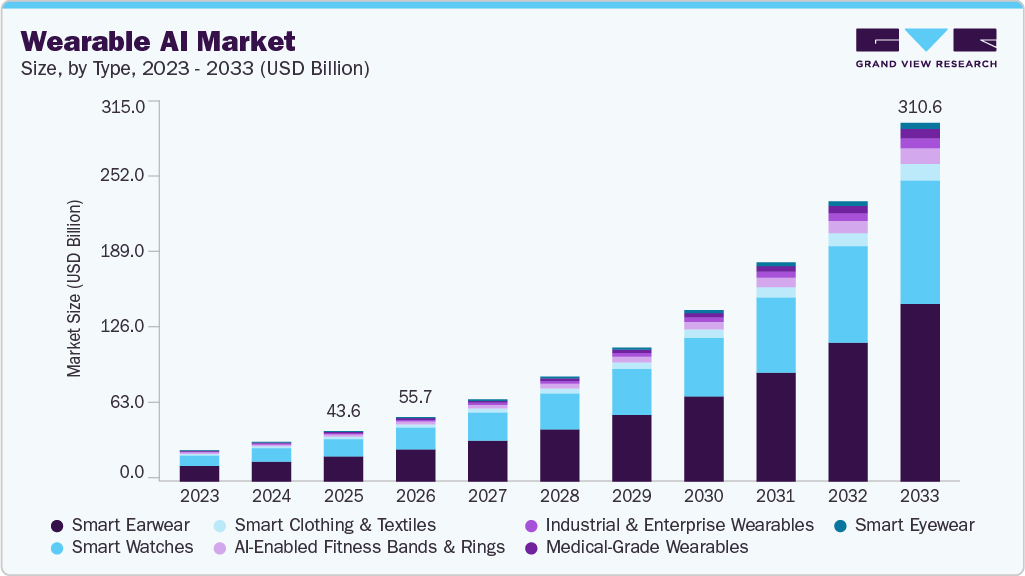
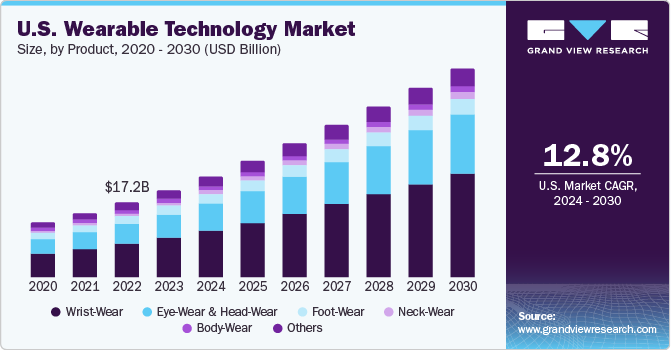
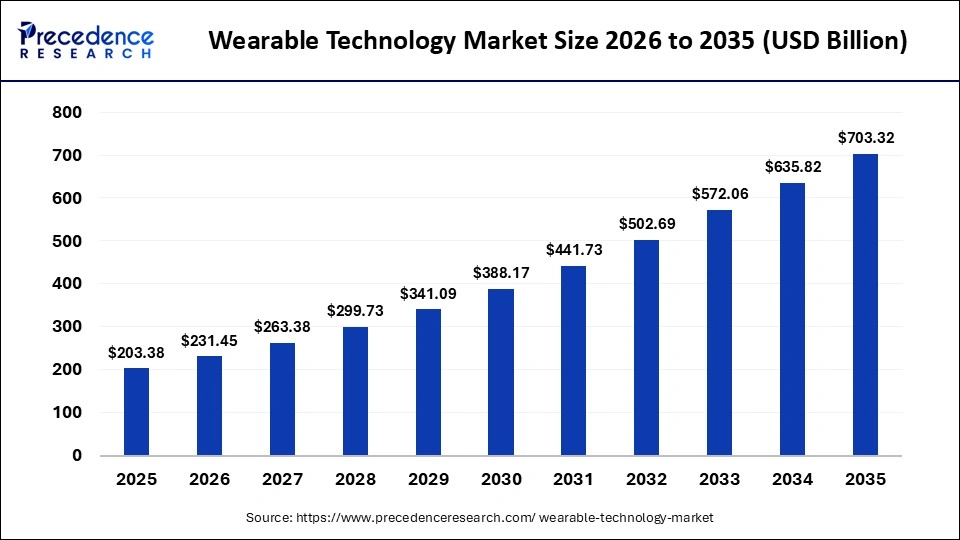
Projections show wearable AI and broader wearable tech markets surging into the hundreds of billions, fueled by AI advancements.
Current Market Snapshot (2024-2025)
The foundation is already strong. In 2024, the wearable AI market was valued between $35-60 billion across reports. For 2025:
- Estimates place it at $32-71 billion, with most clustering around $50 billion.
- Broader wearables (including AI features) are projected at $100-200 billion in 2025.
Key drivers include Apple Intelligence in watches and AirPods, Meta’s Ray-Ban smart glasses, and Amazon’s acquisitions in the space.

The Ray-Ban Meta smart glasses represent a breakout success, blending style with powerful AI features like real-time translation and visual queries.
Long-Term Projections: A Multi-Hundred Billion Dollar Industry
The real excitement lies in the forecasts:
- By 2030-2032: $160-260 billion commonly cited, with some reaching higher.
- By 2034-2035: Optimistic reports predict $368-960 billion, with one outlier at $664 billion in 2034.
CAGRs vary from 17-34%, reflecting differences in scope (pure AI vs. AI-enhanced wearables). Sub-segments amplify this:
- Smart glasses: From ~$2 billion in 2024 to $8-10 billion by 2030, with potential for much more as AR matures.
- Hearables (AI earbuds/headphones): $40-100 billion by 2030-2033.
Overall wearables could hit $400-700 billion by 2035.
These numbers aren’t hype— they’re backed by rising health awareness, edge AI processing, 5G connectivity, and enterprise adoption.
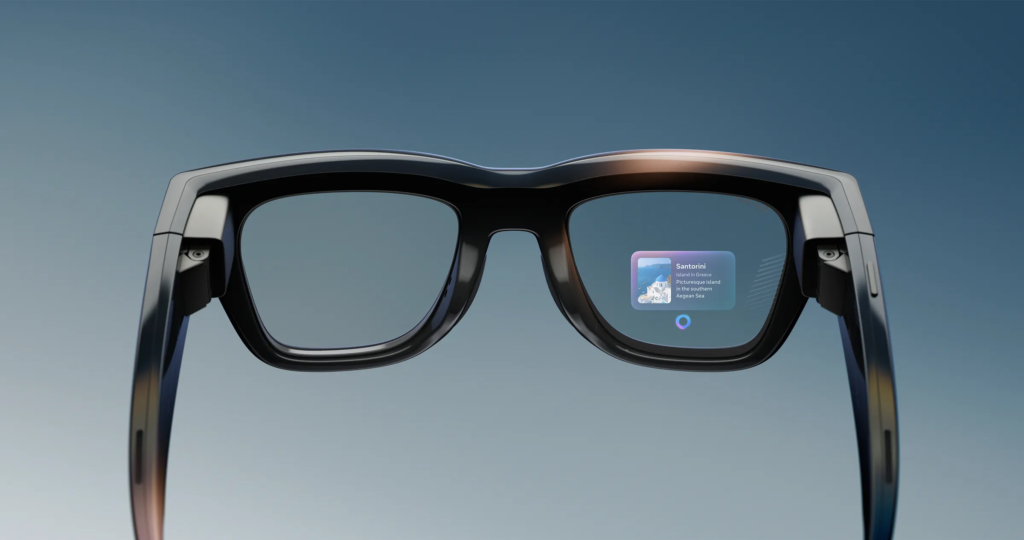
Concept renders of next-gen AI smart glasses hint at the seamless, futuristic integration driving future growth.
Why Wearable AI Could Become Enormously Big
Several factors position wearable AI for massive scale:
- Health and Wellness Boom: AI-powered monitoring for preventive care, elder support, and chronic disease management. With aging populations and post-pandemic health focus, wearables could reduce healthcare costs significantly.
- Seamless Integration Over Standalone Gadgets: Successes like Meta’s glasses show AI thrives when baked into familiar forms (glasses, watches) rather than new pendants.
- Big Tech Consolidation: Acquisitions (Amazon/Bee, Meta/Limitless) signal giants betting big, accelerating innovation and distribution.
- Multimodal AI Advancements: Real-time translation, visual recognition, and contextual assistance make devices indispensable.
- Enterprise and Accessibility: From factory AR glasses to hearing aids for the impaired, non-consumer uses add billions.
- Emerging Markets: Rising incomes in Asia and beyond will drive volume sales of affordable AI wearables.
Challenges Tempering the Hype
Growth won’t be unchecked. Privacy concerns (always-listening devices), battery life, accuracy, and regulatory hurdles (especially in healthcare) could slow adoption. Social stigma around recording pendants has already sparked backlash.
Yet, as AI becomes more on-device and privacy-focused, these barriers are surmountable.
The Future: Ubiquitous AI Companions
By the 2030s, wearable AI could rival smartphones in ubiquity and revenue. Imagine glasses providing AR overlays, earbuds translating languages instantly, or watches predicting health issues before they arise. With shipments potentially in the billions annually, this market isn’t just big—it’s transformative.
Wearable AI products have the potential to become one of the largest tech categories ever, reshaping how we live, work, and stay healthy. The numbers substantiate the excitement: from tens of billions today to potentially trillions in economic impact tomorrow. The revolution is well underway.