
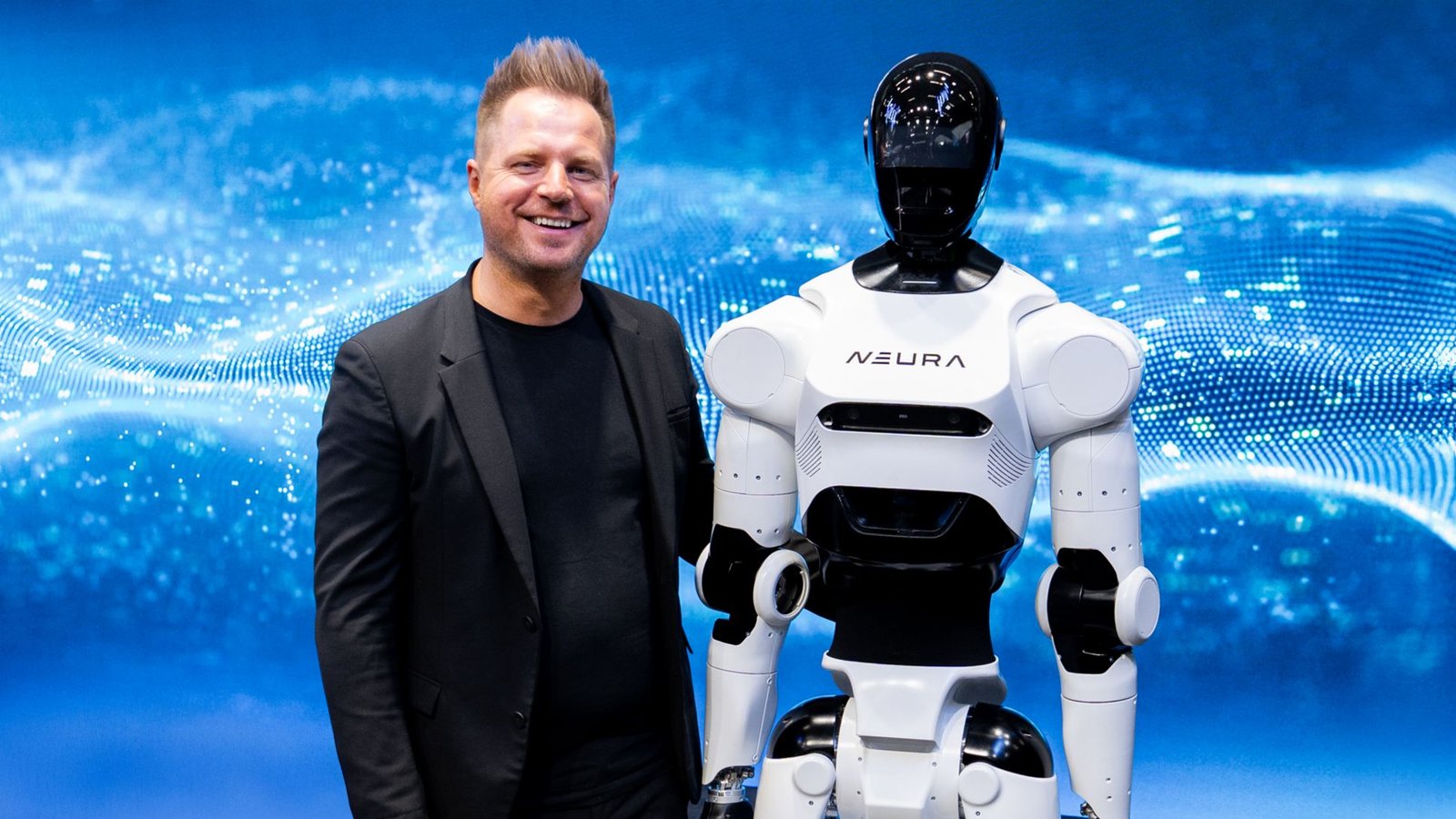
In the rapidly evolving landscape of robotics, few companies have captured as much attention as NEURA Robotics. The German startup, founded in 2019 by David Reger in Metzingen, has positioned itself at the forefront of “cognitive robotics” — machines that don’t just follow scripts but perceive, learn, adapt, and collaborate intelligently with humans in unstructured real-world environments. At the heart of NEURA’s ambitious vision stands the 4NE1 (pronounced “For Anyone”), a versatile humanoid robot family designed for both industrial muscle and everyday assistance.
With a landmark Series C funding round of up to $1.4 billion announced in June 2026 — backed by heavyweights like Tether, NVIDIA, Amazon, Qualcomm, Bosch, and Schaeffler — NEURA is accelerating production and scaling its Neuraverse platform. This positions the 4NE1 as a serious contender in the global humanoid race alongside Tesla Optimus, Figure AI, and Chinese players like Unitree.
The Birth of a Cognitive Humanoid
NEURA Robotics began with a focus on cognitive systems rather than pure hardware. Their early MAiRA robots demonstrated real-time perception and decision-making, laying the groundwork for humanoid ambitions. The first 4NE1 concept debuted around 2022, with progressive generations shown at events like Automatica 2025 and CES 2026.
The Gen 3.5 version unveiled in early 2026 represents a significant leap. Designed in collaboration with Studio F.A. Porsche — the design house behind the iconic Porsche 911 — the 4NE1 combines German engineering precision with sleek, human-friendly aesthetics. It avoids the bulky, industrial look of many competitors, featuring clean lines, organic proportions, and an approachable presence that makes it suitable for shared human spaces.
Technical Specifications: Power Meets Precision
The full-size 4NE1 Gen 3.5 is engineered as a capable industrial and service partner:
- Height: 180 cm (5’11”)
- Weight: 80 kg (176 lbs)
- Payload: Up to 100 kg (220 lbs) peak lift capacity; 15–33 kg continuous/dynamic manipulation
- Walking Speed: Up to 5 km/h
- Runtime: 6–8 hours per charge with hot-swappable dual-battery system enabling 24/7 operation
- Degrees of Freedom: 25+ (with modular options, including exchangeable forearms and a 7th axis for extended reach in some variants)
- Hands: Integrated high-dexterity manipulators
The robot features advanced perception systems, including seven cameras for true 360° vision, a patented Omnisensor for spatial awareness, and full-body artificial skin that detects proximity and touch before physical contact. Force-torque sensors in every joint further enhance safe, precise interaction.
For lighter applications, NEURA offers the 4NE1 Mini:
- Height: 132 cm (about 4’4″)
- Weight: 36 kg
- Payload: ~3 kg
- Runtime: ~2.5 hours
- Target: Research, education, home assistance, and prototyping
Both models share the same core cognitive architecture, making the Mini an accessible entry point while delivering full intelligence in a compact form.
The Brain: Neuraverse and Multimodal AI
Hardware alone doesn’t define the 4NE1 — its software ecosystem is the true differentiator. NEURA’s Neuraverse platform acts as a shared intelligence network. Robots learn tasks individually or in simulation (via NEURA Gym), then upload skills to the cloud for instant distribution across the fleet. This collective learning accelerates deployment dramatically compared to isolated training.
The system integrates NVIDIA Isaac GR00T foundation models and runs on powerful hardware like the NVIDIA Thor T5000 processor (with water cooling on the full-size model). Key AI capabilities include:
- Multimodal perception (vision, audio, tactile)
- Natural language processing and multi-language voice interaction
- Reinforcement learning for adaptive behavior
- Gesture recognition
- Contextual decision-making in dynamic environments
This enables the 4NE1 to handle unstructured settings — navigating changing factory floors, responding to voice commands at home, or adjusting to unexpected obstacles without constant reprogramming.
Safety is paramount. The robot distinguishes humans from objects, operates fenceless, and uses proximity sensing to prevent collisions proactively. Teleoperation and digital twin capabilities provide additional flexibility for complex tasks or remote oversight.
Pricing and Availability: Making Humanoids Accessible
NEURA has taken a transparent approach rare in the industry:
- 4NE1 Gen 3.5: €98,000 (~$105,000) for small quantities; drops to €60,000 (~$65,000) for 20+ units
- 4NE1 Mini: €19,999–€29,999 (~$21,500–$32,000)
Reservations are open with a fully refundable €100 deposit. The Mini is slated for spring 2026 deliveries, while full-size industrial units target late 2026. Each unit ships fully operational with high-dexterity hands, batteries, charging station, and full Neuraverse access.
This pricing strategy, combined with volume discounts and a reported €1 billion order backlog, signals strong market interest. NEURA aims for millions of units by 2030, supported by innovative manufacturing methods like the “Neura Hive” for scalable assembly.
Real-World Applications and Impact
The 4NE1 is built for versatility across sectors:
Industrial & Logistics: Precision assembly, machine tending, palletizing, quality inspection, and heavy material handling in automotive, electronics, and warehousing. Its high payload and cognitive adaptability address labor shortages and unstructured environments better than traditional automation.
Service and Healthcare: Assisting in hospitals, elder care, or hospitality with safe human interaction, object manipulation, and routine tasks.
Home and Education: The Mini version supports household chores, companionship, STEM education, and research prototyping.
Broader Ecosystem: Integration with NEURA’s existing arms, mobile platforms, and the new quadruped robot creates complete automation solutions. Partnerships with NVIDIA, Omron, Kawasaki, and others expand reach.
By tackling the global worker shortage (estimated at over 100 million in manufacturing alone), cognitive humanoids like the 4NE1 could reshape economies, boosting productivity while freeing humans for higher-value creative and strategic work.
Comparisons with Global Competitors
In a crowded field, the 4NE1 stands out for several reasons:
- Vs. Tesla Optimus: Similar height and speed targets, but NEURA emphasizes higher payload (100 kg vs. ~20 kg), earlier commercial availability, and proven cognitive software. Optimus benefits from Tesla’s manufacturing scale ambitions.
- Vs. Figure 02/03: Figure focuses on precision manufacturing with strong AI partnerships; NEURA counters with superior sensing (artificial skin) and fleet learning.
- Vs. Unitree G1/H1: Chinese robots often win on price and agility (faster running in some models), but NEURA offers Western supply chain reliability, advanced safety features, and stronger enterprise support for regulated industries.
- Vs. 1X NEO: Both target accessible pricing, but 4NE1 Mini prioritizes full autonomy over heavy teleoperation reliance.
NEURA’s European roots provide advantages in data privacy, safety standards (strong CE compliance), and proximity to major industrial customers in Germany and the EU.
Challenges and the Road Ahead
Despite momentum, hurdles remain. Humanoid robotics is notoriously difficult — achieving reliable bipedal locomotion, long-term durability, and cost-effective scaling in real environments takes time. Battery technology, regulatory approvals for widespread deployment, and ethical considerations around job displacement will shape adoption timelines.
NEURA addresses these through massive funding, iterative real-world testing (including an AI “robot gym” for training), and a full-stack approach covering hardware, software, and services. The company has grown rapidly to over 600–1,100 employees across global sites, with production in Germany and China.
Why 4NE1 Matters: A Human-Centric Future
The 4NE1 embodies a philosophy summed up in its name: “For Anyone.” It’s not just about replacing labor but augmenting human capabilities — handling dangerous, repetitive, or physically demanding tasks while collaborating safely. Its cognitive intelligence and collective learning platform could accelerate the transition to Physical AI, where robots become intuitive extensions of our world.
With pre-orders live and major funding secured, NEURA Robotics is poised to deliver on the long-promised humanoid revolution. As David Reger and the team push toward series production, the 4NE1 could become the benchmark for safe, intelligent, and accessible embodied AI in Europe and beyond.
Whether in factories alleviating labor shortages or homes assisting daily life, the 4NE1 represents a step toward a future where robots don’t just work for us — they work with us.