
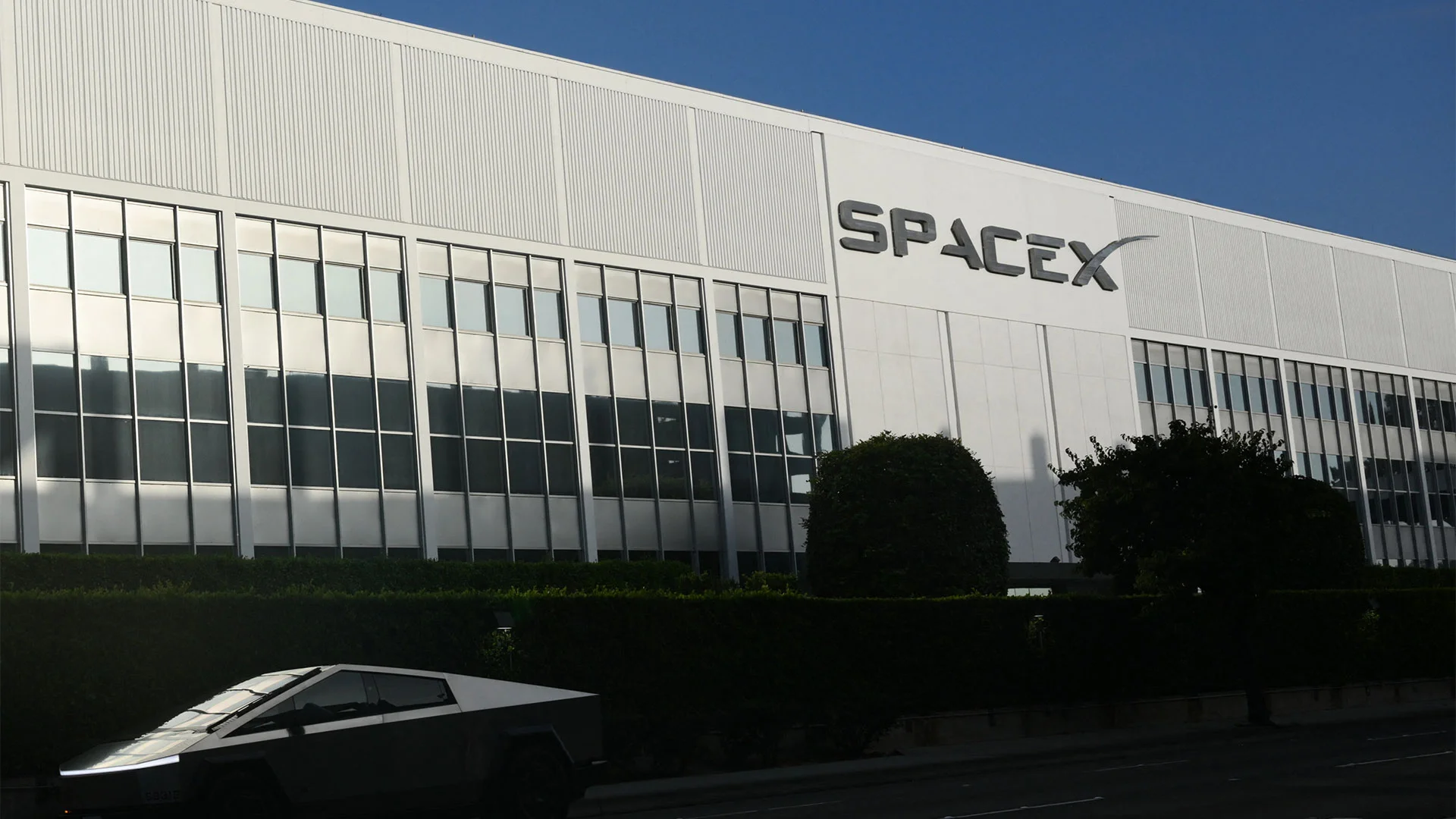
Today, the global financial landscape is witnessing an event of unprecedented scale. Space Exploration Technologies Corp., universally known as SpaceX, has officially transitioned from a closely held private behemoth into the public markets. Making its debut on the Nasdaq Global Select Market, this launch is not merely another high-profile tech IPO; it stands as the single largest stock market debut in global financial history. For years, public market investors could only watch from the sidelines as Elon Musk’s rocket and satellite network re-engineered the economics of low-Earth orbit. Today, the floodgates have officially opened.
The operational and strategic implications of this listing extend far beyond the stock ticker. This move integrates an unmatched array of technological infrastructure under a single, mega-scale publicly traded corporation. From the heavy lift capabilities of the Falcon 9 and the development of Starship to the global telecommunications infrastructure of Starlink, and even the frontier artificial intelligence systems of xAI, the asset base hitting the public eye today is staggeringly vast. This report provides a comprehensive, deep-dive analysis of the structural mechanics of the SpaceX IPO, the fundamental financial indicators driving its current valuation, the underlying operational forces, and the long-term risk vectors that investors must navigate.
1. The Structural Mechanics of the Offering
The metrics underpinning this market launch have redefined the historical benchmarks for corporate listings, eclipsing legacy records held by the likes of Saudi Aramco and Alibaba. Following intense late-night negotiations and months of global institutional book-building, the final pricing parameters were locked in with extreme precision.
- Initial Valuation: $1.77 Trillion to $1.78 Trillion
- IPO Issue Price: $135.00 per share (Class A Common Stock)
- Primary Capital Raised: $75.00 Billion (555.6 million primary shares)
- Maximum Capital (With Over-Allotment): $86.25 Billion (via Greenshoe option execution)
- Total Institutional Demand Book: Over $250.00 Billion (3.3x to 4.0x Oversubscribed)
- Retail Allocation Tier: 25% to 30% of total offering
Unlike standard market flotations where investment banks systematically adjust pricing windows to coax demand from reluctant asset managers, the pricing structure for SpaceX followed a highly non-standard trajectory. Relying on the company’s long-standing leverage in private secondary markets—where its valuation climbed steadily through employee liquidity tenders—the deal’s leadership maintained a rigid baseline of $135.00 per share. The sheer magnitude of the demand book, which cleared $250 billion, demonstrates that institutional appetites were more than willing to meet this aggressive valuation floor.
Furthermore, the structural distribution of the shares represents a stark divergence from historical institutional norms. Traditional tier-one mega-IPOs typically lock down 90% or more of available equity for large-scale asset managers, sovereign wealth funds, and mutual funds, leaving a nominal sliver for everyday retail investors. The SpaceX listing has engineered a democratic allocation model, intentionally carving out between 25% and 30% of the float exclusively for retail brokerages including Fidelity, Charles Schwab, and Robinhood. While this guarantees unprecedented democratic access to the listing, it establishes an environment ripe for intense, retail-driven price discovery during today’s opening sessions.
2. The Underlying Asset Ecosystem
To evaluate SpaceX purely as an aerospace manufacturing entity is to fundamentally misunderstand its corporate architecture. The entity listing today functions as an integrated technology holding ecosystem, combining high-margin recurring utility revenue with high-risk, capital-intensive frontier tech infrastructure.
The Launch Division: Monopolizing Orbital Access
The foundational layer of the company remains its unmatched launch services division. Built upon the operational reliability of the reusable Falcon 9 and Falcon Heavy rocket architectures, SpaceX has effectively secured an absolute near-monopoly on commercial, civil, and defense orbital payloads globally. The division operates with clear structural cost advantages derived from mature vertical integration, automated manufacturing, and rapid refurbishment cycles. Crucially, the long-term enterprise valuation model factors in the operational onboarding of Starship—the fully reusable, super-heavy lift launch system designed to reduce the cost per kilogram to orbit by orders of magnitude. Starship is the critical engine required to support the next phases of deep space exploration and commercial orbital commercialization.
Starlink: The Cash-Flow Engine
While the launch division provides the physical access, Starlink provides the underlying economic engine that justifies the trillion-dollar valuation scale. Operating an active constellation of thousands of low-Earth orbit (LEO) satellites, Starlink has transitioned from an experimental telecommunications network into a globally dominant internet service utility. It serves millions of active commercial, maritime, aviation, governmental, and residential nodes. Because it bypasses traditional terrestrial fiber constraints, Starlink operates with a highly predictable, high-margin recurring revenue model. It acts as the primary near-term cash-flow generator, funding the massive capital expenditure budgets required for deep-space development.
The AI and Social Architecture Integration
What makes this public vehicle uniquely complex is the inclusion of Elon Musk’s broader technology assets outside of Tesla. The corporate entity directly integrates xAI, the frontier artificial intelligence venture responsible for the Grok large language model ecosystem. This structural choice positions SpaceX as the first mega-scale, vertically integrated AI infrastructure firm to hit the public markets. By anchoring xAI’s massive compute clusters directly alongside Starlink’s global data-routing networks and the social media data-funnels of X (formerly Twitter), the combined enterprise forms a closed-loop data, compute, and communications ecosystem that has no direct analog in the public markets.
3. Financial Realities vs. Wall Street Divergence
Weighed against the overwhelming institutional demand and retail enthusiasm, a deep rift has emerged between the company’s capital-raising pitch and the cold analysis of fundamental equity researchers. The core friction centers on the extreme premium baked into the $135.00 IPO price.
Independent equity research firms, including senior analysts at Morningstar, have voiced strong caution, stating that the objective, fundamental fair value of the underlying business sits closer to a fair value of $63.00 per share. To put the current valuation in perspective, at a market capitalization of $1.78 trillion, SpaceX is entering the public market trading at an extraordinary trailing price-to-sales ratio:
$$\text{P/S Ratio} \approx 92\times$$
This multiple is significantly higher than historical tech and aerospace benchmarks. The valuation is further complicated by the company’s balance sheet realities at the time of filing. The group carries approximately $29.1 billion in long-term debt obligations and recorded a consolidated net loss of $4.9 billion over the preceding fiscal year. This loss reflects the aggressive, front-loaded capital expenditures required to build out the Starlink constellation and scale the Starship infrastructure.
Institutional Equity Research Note: “At an entry multiple exceeding 90 times trailing sales, public investors are not buying a traditional business; they are buying an unhedged call option on the absolute monetization of low-Earth orbit, combined with an unprecedented premium on the operational execution of Elon Musk.”
For long-term fundamental investors, the core equation relies on a rapid, hockey-stick expansion of Starlink’s enterprise connectivity margins and a swift reduction in launch costs via Starship. If those milestones face technical or regulatory delays, the gap between the current $135 market price and the underlying corporate fundamentals could contract sharply, exposing early public buyers to significant capital downside.
4. Market Dynamics for Opening Day
Given the highly anticipated nature of the asset and its structural distribution, opening-day trading is expected to be incredibly fast-moving. Institutional trading desks are preparing for several unique market dynamics as the ticker commences live matching.
The Probability of an Initial “Pop”
Because the transaction cleared an order book that was nearly four times oversubscribed, hundreds of billions of dollars in institutional bids were left unfulfilled last night. These asset managers, particularly those bound by mandates to track large-scale technology indexes, are highly likely to enter the open market today to build out their core allocations. This massive demand, colliding with a tightly held float, creates prime conditions for a first-day trading “pop,” potentially driving the price well above the $135.00 threshold during early trading.
Stabilization Mechanisms and Price Defense
To mitigate the risk of extreme downward volatility in the event of macro market weakness, the underwriting syndicate led by Morgan Stanley has established robust market defense parameters. Acting as the central stabilization agent, Morgan Stanley retains the logistical authority to execute open-market purchases of SpaceX stock under the over-allotment framework. If the stock faces heavy selling pressure, these stabilization interventions are designed to provide a firm floor and defend the $135.00 issue price, offering a temporary shock absorber for early market participants.
Volatility Advisory: Given that 25% to 30% of the float is held directly within retail channels, normal institutional price discovery may be heavily disrupted by algorithmic retail momentum trading, creating wide intraday bid-ask spreads and sudden trend reversals.
Fast-Track Index Inclusion
The sheer scale of the $1.78 trillion valuation fundamentally breaks standard index inclusion timelines. Major global index providers, including Nasdaq and MSCI, have already announced the activation of their “expedited entry” protocols. Rather than forcing the market to wait for traditional quarterly rebalancing cycles, index committees are fast-tracking SpaceX for inclusion in major benchmarks—such as the Nasdaq 100—in as little as 15 trading days. Consequently, passive index funds and exchange-traded funds (ETFs) will soon be structurally required to purchase tens of billions of dollars of the stock, providing a massive, predictable wave of institutional buying volume over the coming weeks.
5. Governance and Long-Term Risk Analysis
While the operational achievements of SpaceX are undisputed, the governance framework established for the public corporation introduces a series of structural risks that public equity investors must carefully consider before taking a long-term position.
Absolute Voting Concentration
The corporate charter implemented for the IPO ensures that the public market cannot alter the operational trajectory of the firm. Through a multi-class equity structure, Elon Musk retains absolute control over the enterprise:
$$\text{Musk Voting Power} = 82.4\%$$
This arrangement effectively insulates management from any form of shareholder activism, hostile takeovers, or board-level proxy battles. Public investors are buying into a pure corporate autocracy; the strategic direction, capital allocation choices, and cross-company asset integrations remain solely at Musk’s discretion.
Key-Man Dependency and Cross-Subsidization Vectors
The enterprise carries an acute level of key-man dependency risk. The premium valuation is deeply tied to Musk’s personal brand, regulatory relationships, and visionary execution. Any threat to his ongoing leadership would immediately trigger severe valuation compressions across the stock.
Furthermore, the explicit financial integration of X and xAI creates complex internal transfer pricing and cross-subsidization dynamics. Public compliance teams and auditors will face the difficult task of ensuring that capital raised from public SpaceX investors is not asymmetricly deployed to shore up the balance sheets or compute budgets of the more volatile, adjacent social media and AI segments.
6. Strategic Conclusion for Investors
The SpaceX IPO marks a clear turning point in the history of global capital markets. It represents the ultimate test of whether public market liquidity can comfortably sustain a high-capital-intensity, multi-decade mission focused on building interstellar infrastructure while managing complex governance dynamics.
For momentum traders and index tracking funds, today represents a historic milestone filled with high-volume liquidity and immense trading potential. For long-term retail and value-driven investors, the choice is far more complex. It requires balancing a profound admiration for SpaceX’s undeniable technological dominance against the reality of a premium valuation multiple that leaves zero room for operational error. The historic countdown is complete; the ultimate market journey of SpaceX has officially begun.