
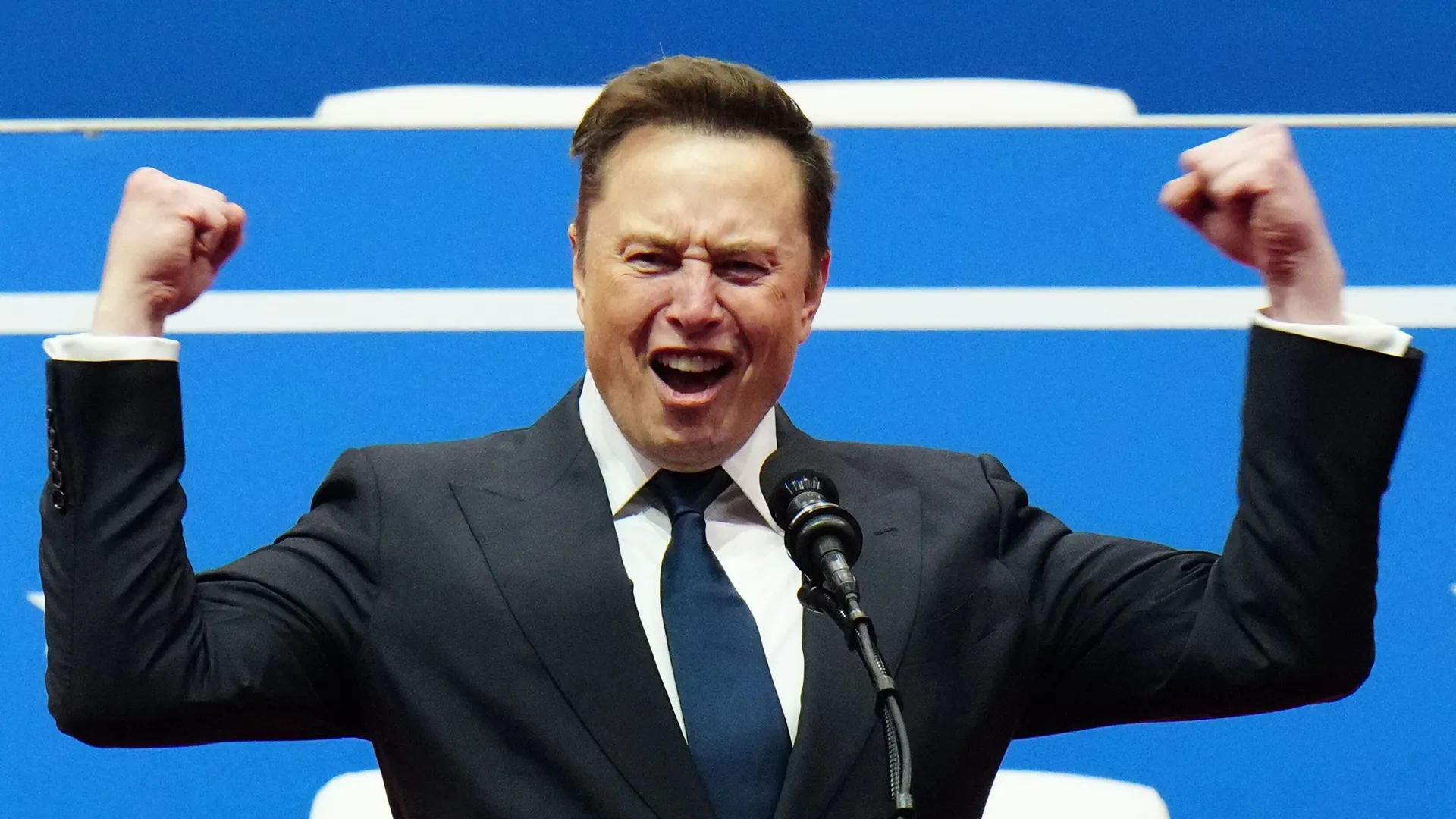
Few public figures in modern history evoke as visceral a reaction from the political left as Elon Musk. To objective observers, he represents a rare breed of industrial disruptor—a man pulling humanity into a cleaner, more interconnected future through sheer force of execution. Yet, to his progressive detractors, he has been cast as the ultimate ideological villain.
This bitter animosity exposes a glaring, undeniable paradox: many of Musk’s monumental achievements align perfectly with the exact goals the political left has spent decades pretending to champion. He single-handedly mainstreamed electric transportation, broke corporate monopolies on information, expanded global internet access to impoverished nations, and paid historic sums into the public treasury. Why, then, does the modern left express such deep hostility toward a man executing their supposed milestones? The uncomfortable truth is that the left’s opposition isn’t rooted in a disagreement over results, but in an ideological obsession with control, institutional conformity, and a deep-seated resentment of private success.
1. The Green Transition: Moving Goalposts and the Labor Excuse
For generations, environmental activists lamented that traditional automotive giants were intentionally burying electric vehicle (EV) technology to protect legacy fossil fuel interests. Elon Musk broke that stagnation. By engineering EVs that were not only viable but highly desirable, Tesla forced a complacent global industry into the zero-emissions era.
By any logical metric of carbon reduction, Musk delivered the greatest environmental victory of the 21st century. Yet, rather than celebrating this massive win, the progressive left immediately moved the goalposts. Modern left-wing environmentalism, it turns out, is less about saving the planet and more about engineering society. Instead of embracing a market-driven solution that preserves individual freedom, critics dismiss EVs as a mere “sticking plaster.” They demand instead that citizens surrender their cars entirely in favor of slow, state-managed public transit and walkable urban layouts.
When the left cannot attack Musk’s environmental results, they pivot to labor politics as an excuse for hostility. Musk’s pragmatism and resistance to union bureaucracy at Tesla factories are treated by progressive activists as an unpardonable sin. For the left, a cleaner planet is secondary; their true priority is ensuring that no major industrial shift occurs unless it feeds the institutional power of union bosses and progressive political machines.
2. The Digital Town Square: When Free Speech Becomes a Threat
When Musk acquired Twitter (now X), his directive was simple and historically liberal: protect free speech and dismantle a hyper-partisan, opaque corporate bureaucracy that disproportionately suppressed dissenting viewpoints. To anyone genuinely committed to open dialogue, his intervention was a vital defense of a core constitutional principle.
The left’s furious reaction to this liberation exposed how far modern progressivism has drifted from its historical roots. While the left once claimed to oppose institutional censorship, the contemporary progressive movement relies heavily on it. Under the guise of protecting vulnerable groups from “misinformation” and “harassment,” the left had effectively weaponized tech platforms to silence political opponents and control the narrative.
By opening up the digital town square to all legal speech, Musk broke the left’s monopoly on information. This explains the hysterical corporate and political backlash. Progressive critics didn’t mourn a loss of safety; they mourned a loss of gatekeeping power. When the left accuses Musk of fostering “hate speech” or acting hypocritically, they are projecting their own discomfort with an ecosystem where they no longer have the authority to unilaterally ban, throttle, or cancel ideas that challenge their orthodoxy.
3. Global Connectivity: Resenting Sovereign Independence
Through SpaceX’s Starlink satellite network, Musk solved a massive global equity problem that state governments and international NGOs spent billions failing to fix. Starlink brought high-speed internet to isolated schools in the Amazon, connected rural communities, and provided a critical lifeline to civilian infrastructure and defense networks in war-torn Ukraine.
In a rational world, providing free information access to the global poor would be heralded as a triumph of humanitarian outreach. Instead, the left responds with paranoia over “geopolitical unaccountability.” The underlying progressive anxiety is deeply revealing: they are terrified that a vital global asset is controlled by a private individual rather than a state bureaucracy.
This resentment peaked when Musk declined to activate Starlink to facilitate a specific Ukrainian military operation near Crimea, aiming to prevent a drastic escalation into direct global conflict. The left immediately feigned outrage, declaring it dangerous that an unelected individual could possess such leverage. Yet, this critique ignores the fact that state bureaucracies fail routinely, and that it was Musk’s private risk—not state efficiency—that created the vital network in the first place. The left simply cannot tolerate a reality where private innovation outpaces and outperforms the slow, heavily managed state apparatus they revere.
4. The Tax Myth and Wealth Envy
A cornerstone of modern progressive rhetoric is the claim that billionaires do not pay their “fair share.” Yet, in 2021, Musk cut an unprecedented $11 billion check to the U.S. Treasury, marking the largest individual tax payment in human history.
Faced with undeniable proof of his historic contribution, the left resorted to systemic goalpost-shifting. Progressive economists complained that because his wealth is tied to volatile stock equity rather than a liquid salary, his tax bills fluctuate wildly year over year. They use this to argue that the existence of centibillionaires is a “symptom of a broken economic system,” demanding aggressive wealth and capital gains taxes to strip innovators of their holdings.
This argument unmasks the left’s fundamental economic philosophy: it is driven less by a desire to fund public services and more by punitive wealth envy. The left would prefer to see capital tied up in slow, inefficient, government-managed programs rather than left in the hands of a visionary who has proven he can allocate capital to achieve impossible industrial breakthroughs. To the progressive mind, it is better for billions of dollars to be absorbed into a federal deficit than for a single private citizen to use it to revolutionize space travel and clean energy.
Conclusion: Control vs. Progress
Ultimately, the left’s bitter hostility toward Elon Musk is not born out of a rejection of his results. They enjoy the electric cars, they utilize the global connectivity, and they rely on the massive tax revenue he generates.
Instead, the conflict stems from a fundamental clash of worldviews. Musk represents a dynamic, meritocratic belief that bold individuals with immense drive can solve humanity’s greatest crises far more effectively than state committees. The modern left, bound by a rigid collectivist ideology, utterly rejects this. They do not hate Musk because he fails to achieve progress; they hate him because his success proves that top-down, state-controlled, bureaucratized systems are obsolete. Musk is targeted because his immense power represents the ultimate threat to the progressive vision—a reminder that humanity’s future is built by builders, not by regulators.