
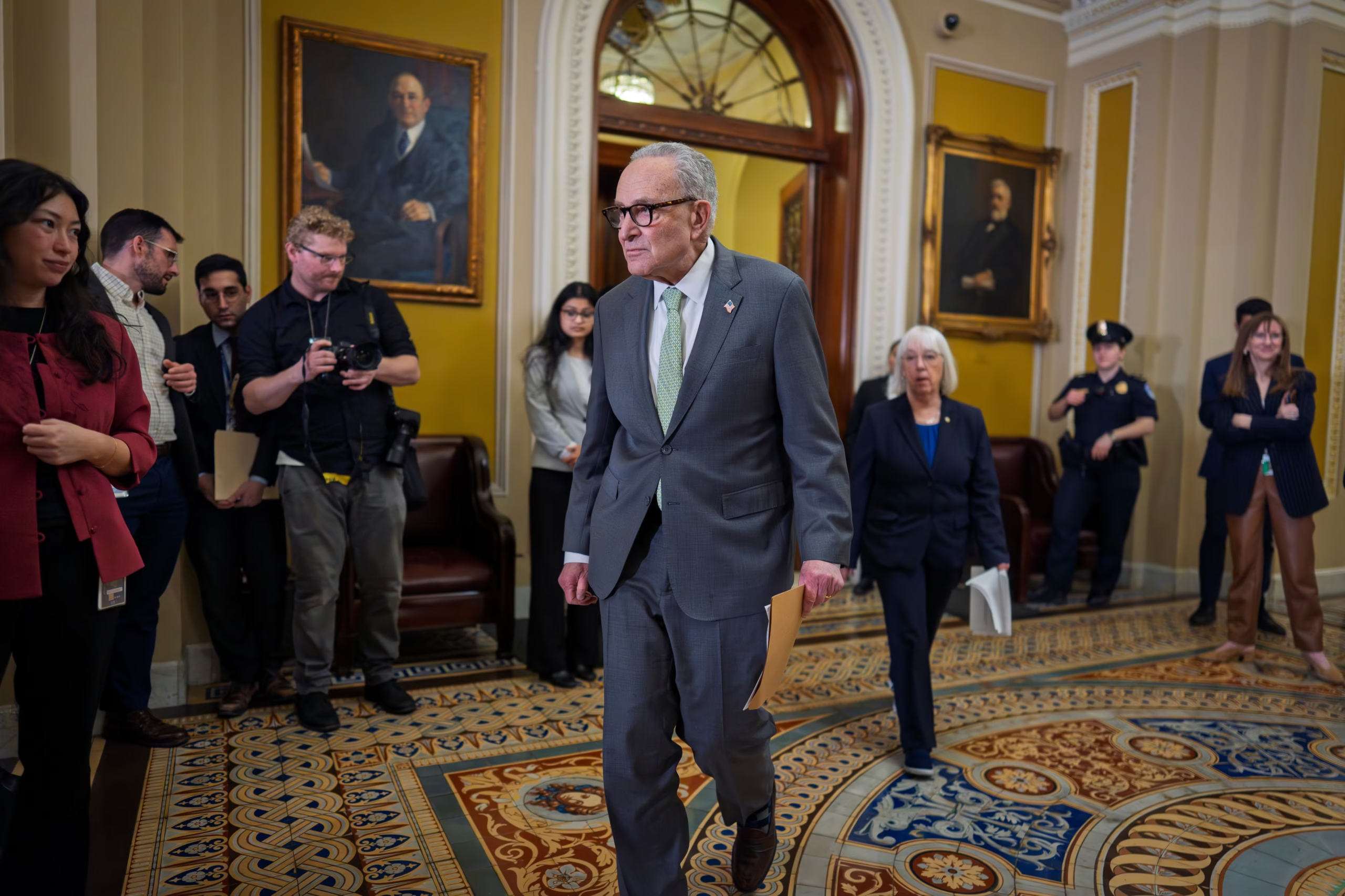
The U.S. Senate made history on June 23, 2026, by passing a war powers resolution aimed at curbing President Donald Trump’s military actions against Iran. Just one day later, lawmakers walked it back in a late-night vote, highlighting the deep divisions within the Republican Party and the practical limits of congressional oversight during an active conflict.
The initial vote marked a rare bipartisan moment in an otherwise polarized Washington. The Republican-controlled Senate approved H.Con.Res. 86 by a narrow 50-48 margin. Four GOP senators—Susan Collins of Maine, Lisa Murkowski of Alaska, Rand Paul of Kentucky, and Bill Cassidy of Louisiana—joined nearly all Democrats to direct the president to remove U.S. armed forces from hostilities against Iran unless Congress explicitly authorized continued action through a formal declaration of war or specific Authorization for Use of Military Force.
This wasn’t just any procedural move. It was the first time both the House and Senate had passed such a measure under the 1973 War Powers Resolution, sending a clear—if largely symbolic—message to the White House. The House had already approved the same concurrent resolution earlier in June by a 215-208 vote, with a small group of Republicans crossing party lines.
Why This Matters: A War That’s Testing Patience
The conflict with Iran erupted on February 28, 2026, when U.S. and Israeli forces launched strikes against Iranian targets. What began as targeted operations has stretched into months of hostilities, with significant financial and human costs. Critics, including many in Congress, argue the engagement lacks proper authorization and has become an expensive quagmire at a time when Americans are focused on domestic priorities.
Senate Minority Leader Chuck Schumer hailed the Tuesday vote as a stand for congressional authority: “The message from the only branch of government with the power to declare war is unmistakable.” Supporters pointed to growing public frustration, with polls showing many Americans view the war as not worth the price tag, which has already climbed into the tens of billions.
For the four Republican defectors, the decision reflected long-held principles or constituent pressures. Rand Paul, a consistent voice for restraint in foreign policy, has long championed limits on executive war powers. Others like Collins and Murkowski often navigate moderate lanes in their states. Their votes underscored cracks in GOP unity on Trump’s foreign policy approach.
The Rapid Reversal: Pressure, Politics, and Pragmatism
The celebration—or at least the headlines—didn’t last long. On June 24, the Senate rejected an attempt to advance a similar war powers measure in a 50-47 vote (with one present), effectively walking back the previous day’s rebuke. Two of the original Republican supporters reportedly shifted or the dynamics changed amid intense behind-the-scenes maneuvering.
Reports indicate President Trump personally confronted Republican senators, berating them over the initial vote during a Capitol Hill meeting. Senate GOP leadership, eager to avoid further fractures, brought forward the procedural vote late Wednesday night. Trump celebrated the outcome on social media, framing it as a win and noting the quick change in momentum.
Why the fast pivot? Several factors appear at play:
- Ongoing Diplomacy: The U.S. and Iran are reportedly in early stages of negotiations to end the conflict. Lawmakers worried that additional congressional pressure could undermine these talks.
- Party Loyalty and Leadership Pressure: In a narrowly divided Senate, maintaining unity is crucial for the Republican agenda. Defying the president openly carries political risks, especially with midterm considerations looming.
- Symbolic vs. Substantive: Concurrent resolutions like H.Con.Res. 86 don’t require the president’s signature and carry limited legal force. While they signal congressional sentiment, they don’t automatically force troop withdrawals. This reality may have made reversal easier for some.
Sen. Bill Cassidy, one of the original yes votes, faced direct criticism from Trump but helped block the follow-up measure. The episode reveals the tension many Republicans feel—balancing oversight responsibilities with support for a president from their own party.
Broader Implications for War Powers and Executive Authority
This back-and-forth isn’t happening in a vacuum. The 1973 War Powers Resolution was passed in the wake of Vietnam to reassert Congress’s role in committing U.S. forces abroad. In practice, presidents from both parties have often tested its limits, arguing for broad commander-in-chief authority.
The Iran case highlights ongoing debates:
- Can Congress realistically check executive military decisions in real time?
- How much does public opinion and war fatigue influence lawmakers?
- What role should bipartisan cooperation play when American lives and treasure are on the line?
Legal experts note that even successful resolutions face enforcement challenges. Trump and his team have previously dismissed such efforts as unconstitutional overreaches. Yet the votes themselves matter—they force public debate, shape narratives, and can influence diplomatic leverage.
What Comes Next?
As of June 25, 2026, the situation remains fluid. The passage of H.Con.Res. 86 stands as a historic bipartisan rebuke, even if its immediate impact is muted. Negotiations with Iran continue, and the war’s unpopularity could fuel more congressional action—or further reversals—depending on how events unfold on the ground.
For everyday Americans, this drama in Washington underscores bigger questions about endless wars, congressional gridlock, and the balance of power. Whether this episode leads to meaningful de-escalation or fades into partisan talking points remains to be seen. One thing is clear: the Senate’s quick pivot shows how quickly political winds can shift in the nation’s capital.