
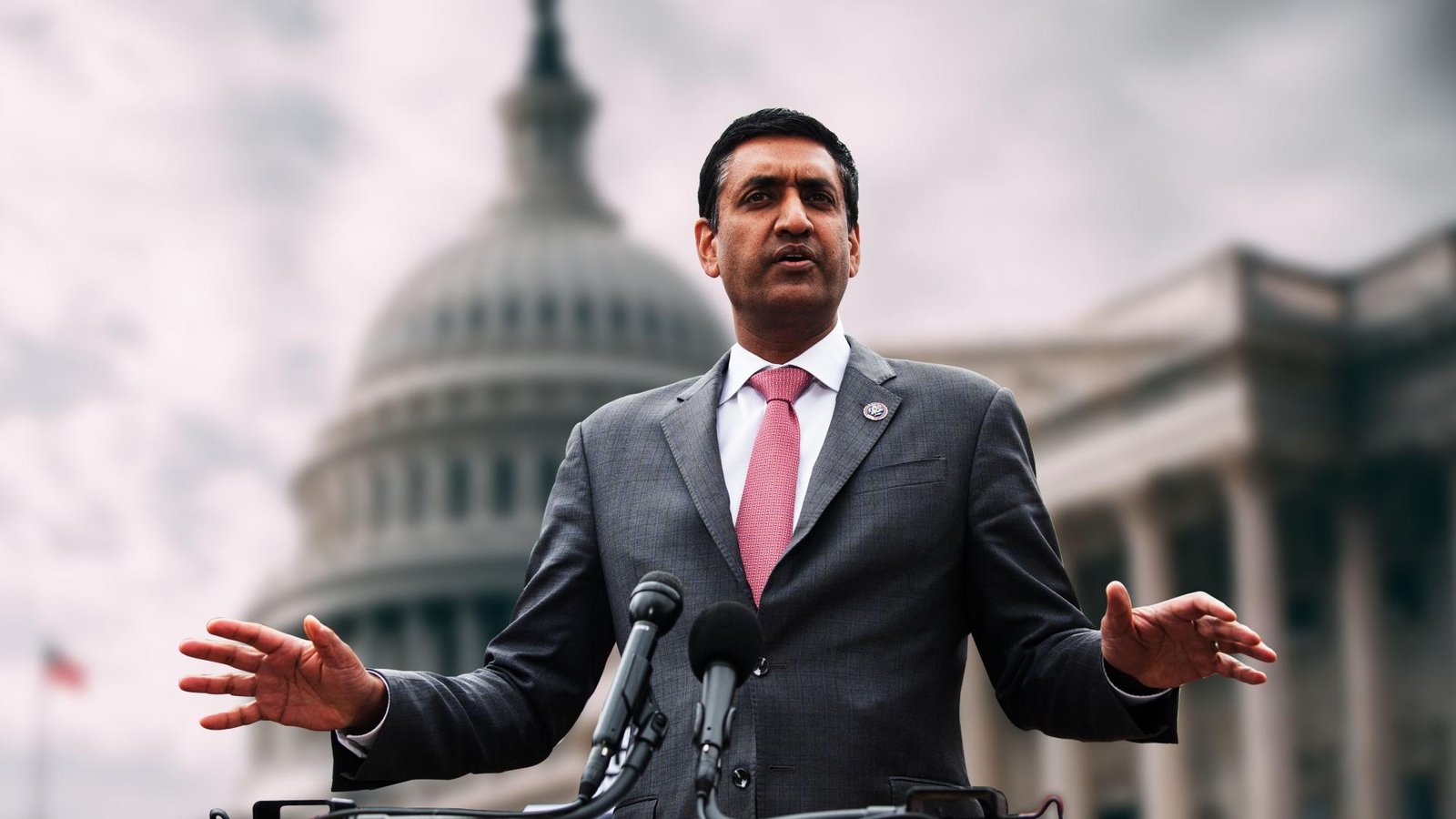
The political landscape in Washington just hit a new level of turbulence. Fresh off becoming the world’s first trillionaire, Elon Musk is facing intense political pushback over his sweeping federal spending cuts. The latest firestorm features a high-stakes clash between the billionaire tech mogul and Democratic Representative Ro Khanna of California, culminating in a threat of legal action.
The feud centers on the Department of Government Efficiency (DOGE) and its controversial approach to cutting foreign aid.
The Spark: What Did Ro Khanna Say?
The drama reached a boiling point after Rep. Khanna appeared on the popular podcast “I’ve Had It.” During the episode, the California progressive took direct aim at the real-world consequences of DOGE’s aggressive budget slashing, specifically highlighting the dismantling of the U.S. Agency for International Development (USAID).
Khanna argued that while Musk’s supporters are celebrating his corporate and economic milestones, the human toll of his government downsizing is being entirely ignored.
“They’re celebrating that he created 4,400 millionaires, but they don’t talk about the 4.5 million children around the world who he possibly sentenced to death by dismantling USAID,” Khanna said during the interview.
The congressman didn’t stop at verbal criticism. He explicitly stated that if Democrats regain control of Congress, “moving on” is not an option. Khanna insisted that Musk must face congressional investigations and formal subpoenas to answer for the policy decisions enacted under DOGE. Podcast host Jennifer Welch backed Khanna’s stance, pointing to the apparent hypocrisy of “pro-life” political factions supporting cuts that harm the world’s most vulnerable populations.
Musk Hints at a Lawsuit: Is Defamation on the Table?
It didn’t take long for Elon Musk to fire back. Known for his aggressive pushback against critics, the DOGE lead indicated that he is considering suing Rep. Khanna over the remarks. Musk and his supporters view the claim that he “sentenced 4.5 million children to death” as highly inflammatory, reckless, and legally defamatory.
However, a legal battle between a billionaire government adviser and a sitting congressman faces massive hurdles. Under U.S. law, the legal bar for public figures to win defamation lawsuits is extraordinarily high. Furthermore, members of Congress are heavily protected by constitutional privileges regarding their political commentary and legislative duties.
Despite the legal complexities, Musk’s willingness to leverage the threat of lawsuits signals a fierce refusal to let political opponents define the legacy of his fiscal reforms.
The Core of the Debate: What’s Happening to USAID?
The public spat reflects a massive ideological divide over the rapid, unilateral restructuring of the federal government. At the center of this specific fight is the survival of foreign aid.
The Argument for DOGE’s Cuts
Supporters of Musk’s efficiency campaign argue that federal agencies like USAID have operated for decades with massive budgets, severe redundancies, and little accountability to American taxpayers. Proponents assert that sweeping reductions are a necessary, overdue correction to rein in the national debt and curb government overreach. From their perspective, streamlining or absorbing these functions into other departments ensures that American resources are utilized more effectively.
The Warning From Critics and Public Health Experts
On the other side of the aisle, humanitarian organizations, public health experts, and lawmakers like Khanna warn that cutting global aid isn’t just a bureaucratic shift—it has an immediate body count.
USAID funding supports critical global initiatives, including:
- The U.S. President’s Emergency Plan for AIDS Relief (PEPFAR): Providing life-saving antiretroviral medicine to millions.
- Anti-Malaria Programs: Distributing sprays and treatments that cannot be paused without causing massive disease spikes.
- Basic Interventions: Supplying clean water, nutrition, and medical resources to children facing severe malnutrition and preventable diseases like pneumonia.
Public health models have warned that halting these funds abruptly, rather than phasing them out over time to allow for contingency planning, cuts off critical supply chains and leaves millions of vulnerable people in developing nations completely exposed.
A Relationship Turned Sour
What makes this feud particularly notable is that it wasn’t always this hostile. Rep. Ro Khanna—whose Silicon Valley district includes Tesla’s Fremont assembly plant—initially urged his fellow Democrats to keep an open mind about DOGE. In late 2024, Khanna suggested that Democrats should work with Musk to target actual waste, particularly within the massive, bloated defense contractor budget.
However, as DOGE shifted away from standard advisory reports and began actively freezing agency funding and halting federal payments, Khanna’s stance shifted to fierce opposition. He has labeled the extra-constitutional authority wielded by unelected mega-donors as “unconstitutional, wrong, and immoral.”
With Musk doubling down on his cost-cutting mission and Washington progressives demanding a wealth tax and accountability, this legal and political standoff is far from over.