
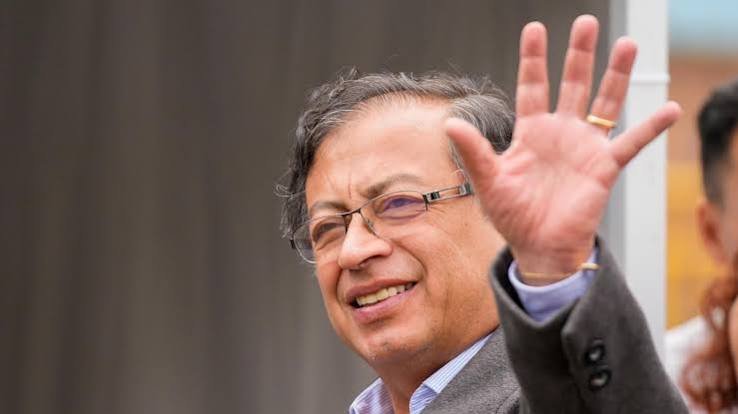
Colombia’s outgoing President Gustavo Petro has refused to accept the preliminary results of the June 21 presidential runoff, throwing the country’s political future into uncertainty. With nearly all votes counted, right-wing candidate Abelardo de la Espriella holds a razor-thin lead over left-wing senator Iván Cepeda, Petro’s political ally.
The contest, one of the closest in recent Colombian history, pits two starkly different visions for the nation against each other. As tensions rise, many Colombians are left wondering what comes next for Latin America’s third-largest economy.
A Polarizing Runoff and Razor-Thin Margin
Voters headed to the polls amid high stakes and deep divisions. Preliminary tallies show de la Espriella, a lawyer and political outsider known as “El Tigre,” securing about 49.7% of the vote compared to Cepeda’s roughly 48.7%. That’s a margin of just a few hundred thousand votes out of more than 26 million cast.
De la Espriella, endorsed by U.S. President Donald Trump, campaigned on a tough “law and order” platform. He promises aggressive action against crime, cartels, and armed groups, including military-led security policies and economic reforms to attract investment. His supporters see him as a fresh face who can restore security and prosperity after years of leftist governance.
Cepeda, a human rights activist and senator from Petro’s Historic Pact coalition, positioned himself as a defender of social progress. He advocated continuing “total peace” efforts, rural development, and progressive reforms. Many viewed the election as a referendum on Petro’s polarizing legacy.
The first round on May 31 already surprised pollsters. De la Espriella outperformed expectations with around 44%, edging out Cepeda’s 41%. A runoff was inevitable, and the final stretch was intense.
Petro’s Strong Rejection: “I Do Not Accept the Preliminary Count”
Shortly after results began rolling in, Petro took to social media to declare he does not recognize the preliminary (pre-conteo) figures released by the National Civil Registry. He insists on waiting for the full judicial scrutiny (escrutinio) process.
His main concerns include alleged irregularities in vote-counting software, discrepancies in voter rolls, and the addition of hundreds of thousands of questionable entries. Petro has also raised alarms about potential foreign interference, pointing fingers at everything from election technology providers to Trump’s public endorsement of de la Espriella, which he called unacceptable meddling.
“As president, I do not accept the results of the preliminary count,” Petro stated. He emphasized that only the final, court-reviewed outcome will be legitimate, though he has stopped short of rejecting the entire democratic process.
This isn’t the first time Petro has challenged early tallies. He raised similar objections after the first round, fueling debate about trust in Colombia’s institutions.
International Observers Push Back
Not everyone shares Petro’s skepticism. The European Union’s Electoral Observation Mission described the vote count as “transparent, orderly, and fluid.” They explicitly rejected claims of widespread fraud.
Colombian electoral authorities have certified earlier stages of the process, and manual verification continues. Reversals at this stage are rare, but the close margin means every vote counts—and every allegation gets scrutiny.
What This Means for Colombia
The election highlights Colombia’s deep polarization. Supporters of de la Espriella celebrate a potential shift toward security and economic pragmatism. Petro’s base fears a rollback of social gains and renewed conflict.
If confirmed, de la Espriella would take office in August 2026. His victory would align Colombia with a broader rightward trend in Latin America, joining leaders emphasizing tough-on-crime approaches.
For now, the country waits. The full scrutiny process could take days or weeks. Petro has promised to respect the final judicial decision, but his public doubts have already heightened tensions.
Looking Ahead: Stability or More Turmoil?
Colombia has a strong democratic tradition, but this contested count tests its resilience. Citizens on all sides hope for a peaceful resolution that upholds the will of the voters.
The coming days will be critical. Will Petro’s challenges lead to formal legal battles, or will the process move forward smoothly? As one of the region’s most important democracies, Colombia’s handling of this moment will resonate far beyond its borders.