
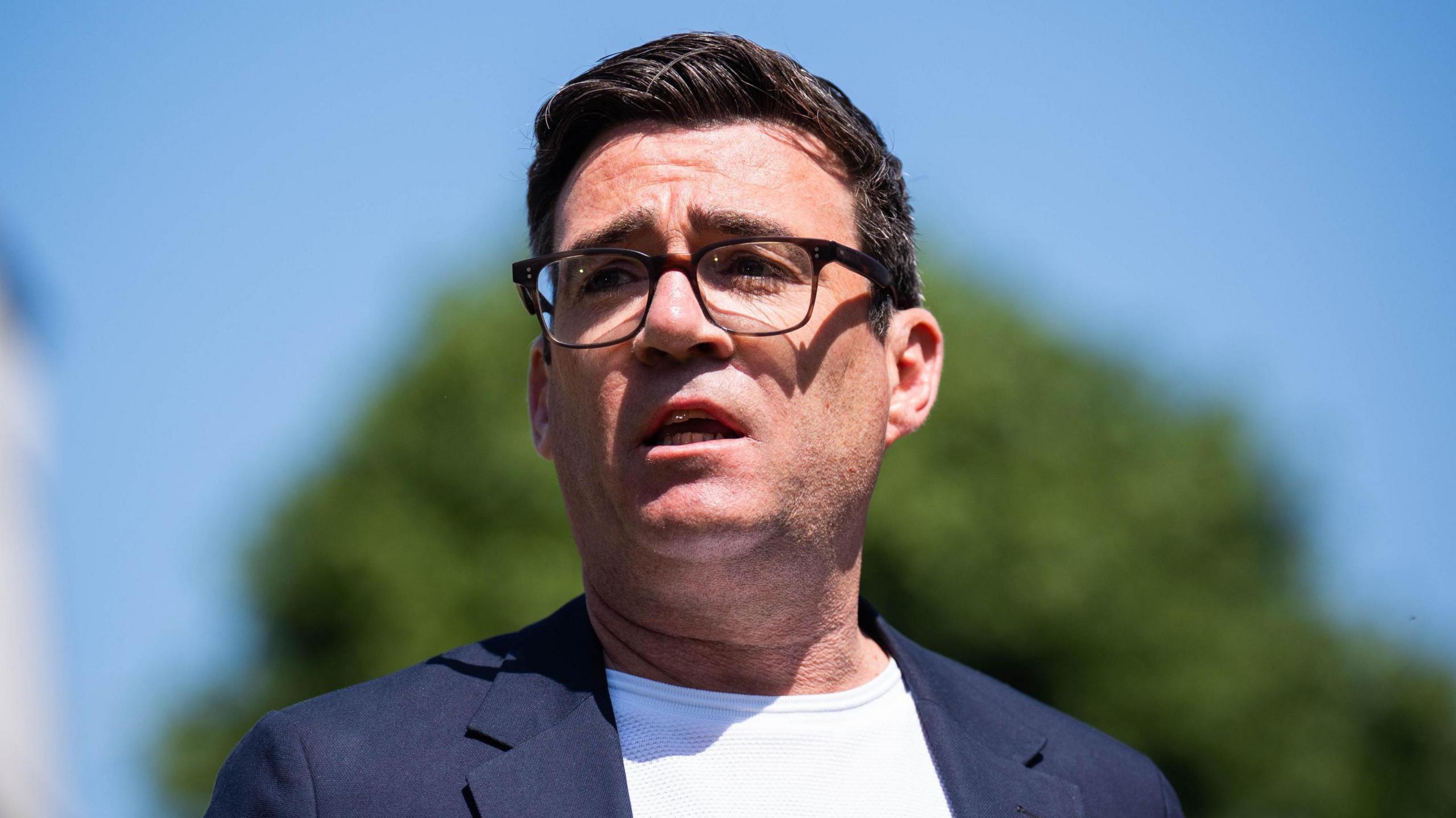
The political landscape of the United Kingdom has been fundamentally reshaped in the span of a single morning. In a dramatic series of events that has left Westminster spinning, Keir Starmer has officially announced his resignation as Prime Minister, just as the newly elected Member of Parliament for Makerfield, Andy Burnham, was formally sworn into the House of Commons.
The dual developments mark the end of a turbulent chapter for the Labour government and signal a rapid, potentially historic transition of power. With key rivals already clearing the field, the UK could see a new Prime Minister in Downing Street within weeks.
The Fall of Keir Starmer: Why the Prime Minister Stepped Down
Standing outside the famous black door of 10 Downing Street, an visibly emotional Keir Starmer delivered a concise, deeply personal address to the nation. Acknowledging the immense political reality of recent months, Starmer confirmed that he will stand down as leader of the Labour Party and Prime Minister once a successor is formally chosen.
Starmer’s departure comes after intense, mounting pressure from within his own parliamentary party and cabinet. Despite achieving a historic landslide election victory less than two years ago, his administration has been plagued by sliding poll numbers, internal policy pivots, and a fierce electoral threat from Nigel Farage’s Reform UK.
Behind closed doors over the weekend, more than half a dozen cabinet ministers reportedly told Starmer that his time was up. In his resignation speech, Starmer defended his record, noting his initial drive to rescue a party he inherited in a “financially and morally bankrupt” state and leave Britain “stronger and fairer.” However, acknowledging his severe public approval ratings, he noted it was time to step aside.
“When I leave the biggest job in the country, I shall spend more time on the most important job,” Starmer said, his voice breaking as he paid tribute to his family. “Being the best husband I can to my fantastic wife, Vic… and being the best dad I can to my beautiful children.”
Starmer intends to remain in office until Parliament returns in September to ensure an orderly handover, allowing him to represent the United Kingdom at the upcoming NATO summit. However, the rapidly moving political machinery in Westminster suggests his departure from Number 10 may happen much sooner.
Andy Burnham’s High-Stakes Return to Westminster
As the removal vans prepare for Downing Street, all eyes have shifted to the House of Commons, where Andy Burnham was officially sworn in as the MP for Makerfield.
Burnham’s return to the green benches is the culmination of a high-stakes, meticulously planned political gamble. Just over a month ago, the incumbent Labour MP for Makerfield, Josh Simons, voluntarily resigned his seat specifically to trigger a by-election. This self-sacrifice allowed Burnham—then serving as the high-profile Mayor of Greater Manchester—to seek a return to Parliament. Under Labour Party rules, any candidate for the party leadership must be a sitting member of the Parliamentary Labour Party (PLP).
The gamble paid off spectacularly. In the Makerfield by-election, Burnham secured an emphatic victory, claiming 55% of the vote and a commanding majority of over 9,200 votes, thoroughly crushing a heavily funded challenge from Reform UK. Because the Greater Manchester Mayoralty cannot legally be held by a sitting MP, Burnham’s victory automatically disqualified him from his mayoral post, freeing him to launch an immediate bid for the highest office in the land.
The Path to Power: A Leadership Coronation?
Shortly after being sworn in, Burnham wasted no time in confirming his intentions, officially declaring his candidacy for the Labour leadership. He called for an “orderly and responsible” transition that delivers “stability, seriousness, and a continued focus” on the country’s most pressing issues.
What was expected to be a brutal, summer-long civil war within the Labour Party has instead transformed into what looks like a swift coronation.
In a move that stunned Westminster, former Health Secretary Wes Streeting—previously considered Burnham’s most formidable rival for the leadership—announced he would not stand. Instead, Streeting threw his full support behind Burnham, urging the party to unite rather than “spend the summer exaggerating small differences.”
Expected Timeline for the Transition of Power:
- July 9: The Labour Party’s National Executive Committee (NEC) is scheduled to officially open leadership nominations. Candidates require the backing of 81 MPs to make the ballot.
- The Threshold: Burnham’s allies report that he already has the confirmed backing of well over 200 MPs, easily clearing the required threshold.
- July 16–17: Because Streeting’s exit effectively clears the field of major heavyweights, Burnham may stand entirely unchallenged. If no other candidate emerges to force a wider ballot of the party membership, Andy Burnham could be subbed in as Prime Minister as early as July 16 or 17.
Who is Andy Burnham? The Profile of a Future Prime Minister
To understand the political ideology now driving toward Downing Street, one must look at the unique, decades-long journey of the man often dubbed the “King of the North.”
Early Life and Entry Into Politics
Born in Old Roan, Lancashire, in 1970, Andrew Murray Burnham grew up in a working-class Roman Catholic family in Merseyside. The son of a telephone engineer and a receptionist, his upbringing heavily influenced his subsequent political outlook. He attended local state schools before earning a place at Fitzwilliam College, Cambridge, where he studied English.
Burnham entered the Westminster bubble early, working as a researcher for legendary Labour figure Tessa Jowell before being elected as the MP for Leigh in 2001.
The New Labour Years and the Hillsborough Legacy
Under the governments of Tony Blair and Gordon Brown, Burnham enjoyed a rapid rise through the ministerial ranks. He served as Chief Secretary to the Treasury, Culture Secretary, and ultimately Health Secretary from 2009 to 2010.
However, his most defining moment in Parliament came from the backbenches. As a staunch supporter of Everton FC and a proud Scouser, Burnham was instrumental in pushing the government to reopen the investigation into the 1989 Hillsborough Disaster. After being heckled by fans at a memorial service in 2009, Burnham used his political capital to help establish the Hillsborough Independent Panel, which ultimately exposed a massive police cover-up and vindicated the families of the 97 victims. It remains a watershed moment that solidified his reputation as a politician willing to fight the establishment.
From Defeat to the Mayoralty
Burnham ran for the Labour leadership twice—first in 2010, finishing fourth, and again in 2015, where he ran a cautious establishment campaign and finished a distant second to Jeremy Corbyn. Recognizing that the political weather in Westminster had changed, Burnham made a radical choice: he left Parliament entirely to run for the newly created position of Mayor of Greater Manchester in 2017.
It was in Manchester that “Brand Burnham” was truly forged. Free from the constraints of party whips, he adopted a fiercely independent, regional style of governance. He clashed openly with the central government during the COVID-19 pandemic over financial support for the North, earning national headlines and immense local popularity. He successfully brought Manchester’s chaotic bus network back under public control via the “Bee Network”—the first major deregulation reversal outside London in decades.
What Will an Andy Burnham Premiership Look Like?
Burnham’s return to Westminster is explicitly built on a platform of rebalancing the UK economy away from London. In his Makerfield victory speech, he claimed the nation’s political system is broken and that voters had chosen “more power for the North and everywhere forgotten by Westminster.”
An ally of Burnham has already hinted at an ambitious policy platform aimed at reversing decades of privatization, focusing heavily on public transport infrastructure, regional devolution, and social care reform—a lifelong policy passion of Burnham’s dating back to his time as Health Secretary.
Faced with a formidable threat from Reform UK on the right and a public weary of economic stagnation, Burnham’s looming premiership will be a high-stakes test of whether regional, delivery-focused politics can restore faith in a deeply fractured British electorate.